What is influencer marketing?
Influencer marketing is the practice of partnering with creators to co-create or sponsor content. It taps their credibility and community to reach brand goals. Done well, it blends authentic storytelling with clear disclosure and often sits at the center of the creator economy.
Brands frequently seed long-term relationships, such as brand ambassadors, because trust compounds over time. The content shines where voice and on-camera trust matter most, especially in short-form video and episodic storytelling.
Core components and mechanics
- Creator types
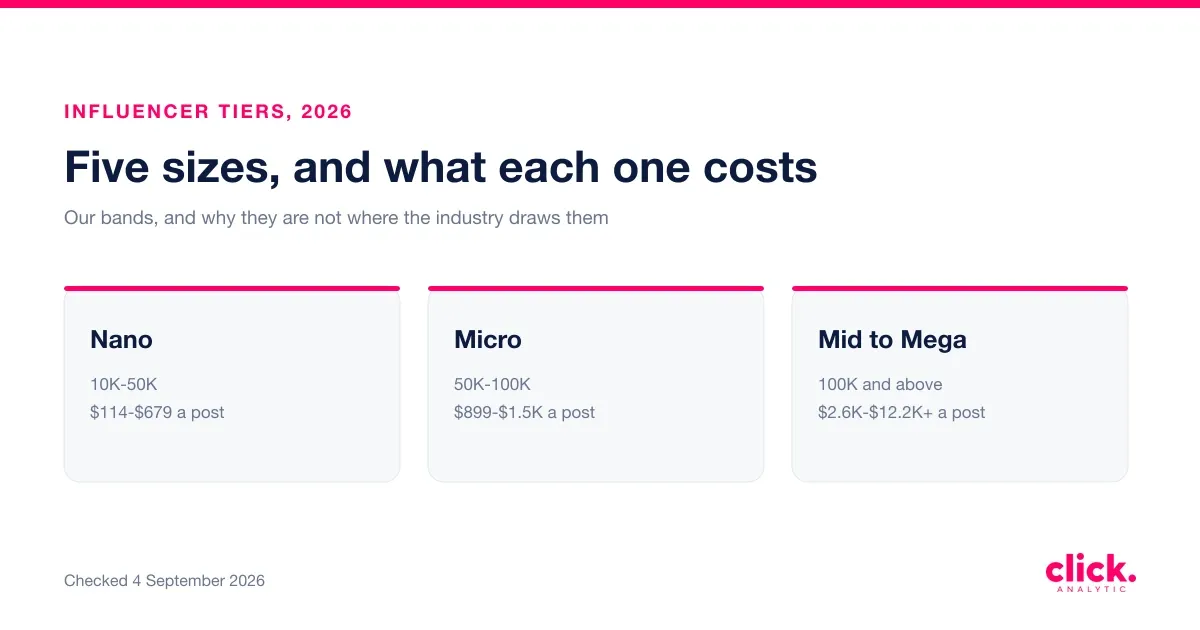
- Mega-influencers: 1M+ followers; best for tentpole reach.
- Macro: 100k-1M; balanced reach for launches.
- Micro: 10k-100k; strong engagement; targeted conversions.
- Nano: <10k; hyper-local trust; great for UGC.
- Contract types and KPIs
- Sponsored posts: awareness and mid-funnel metrics (reach, impressions, engagement).
- Long-term ambassadorships: sentiment and share of voice.
- Affiliate partnerships: CTR, conversions, CPA.
- Co-created content/UGC licensing: asset quality and reuse rate.
- Content formats
- Short-form video, Stories, YouTube integrations, blog reviews, newsletters.
- Creator-led content often shines where voice and trust matter most.
Creators can contribute explainers, Q&As, or user-generated content to brand-owned channels, with review for accuracy, tone, and disclosure. Source: Influencer Marketing Hub benchmarks.
A credible creator recommendation and a polished brand post serve different roles. Compare them by trust, control, reach, and measurement.
For audience behavior context, see Pew Research Center’s 2021 data on social media use.
Creator content in brand-owned channels
Creator content can strengthen brand-owned channels when review and disclosure rules are clear. Examples include expert Q&As, tutorials, and creator-sourced user-generated content. Keep editorial approval separate from commercial terms so the final material remains accurate and transparent.
For platform credibility signals and trust metrics, see Kantar’s Trust in Advertising findings.
To explore creator discovery and campaign workflows, see our Influencer Marketing Platform.
What is social media marketing?
Social media marketing is the sum of paid, owned, and earned activities on social platforms. It distributes content, manages communities, and runs ads to reach target audiences and drive outcomes.
Scope and components
- Organic: Content calendars, community replies, and user-generated content amplification.
- Paid: Campaigns, targeting, and budgeting across funnel objectives.
- Platform tactics include TikTok trends, Instagram Reels, X threads, LinkedIn thought leadership, and YouTube explainers.
For platform demographics and usage behavior, see Pew Research Center’s 2021 survey on social media use.
Key differences: influencer marketing vs social media marketing
If you’re deciding between the two, start here with quick answers.
- Content ownership: Creators lead (influencer) vs brand/content team leads (social).
- Trust vs scale: Creators bring authenticity; social provides scalable reach.
- Cost model: Creator fees vs media spend and production.
- Measurement: Authenticity signals vs attribution and CPA.
- Cadence: Creator-driven episodic content vs frequent publishing in social channels.
- Decision lever: Audience intimacy and credibility vs scale and control.
Decision cues
- Niche product launch or community play? Favor micro-influencers for credibility.
- Funnel-building and predictable conversions? Social media marketing with paid ads.
- Need authority and reach? Combine creator expertise with brand editorial review.
Compare influencer marketing and brand-owned social media by trust, control, cost, and publishing cadence.
ROI and measurement: influencer marketing vs social media marketing ROI
To compare ROI, use a simple formula and consistent attribution. This keeps the math clear and helps you scale what works.
Core formula
Campaign ROI (%) = (Attributed contribution before marketing cost - Campaign cost) / Campaign cost x 100
Attributed contribution before marketing cost = Attributed conversions x Average order value (AOV) x Contribution margin
Campaign cost (K) includes creator fees or media spend + production.
Example (conceptual)
Attributed conversions (C) x AOV (A) x contribution margin (M) = attributed contribution before marketing cost (AC).
ROI = (AC - K) / K x 100.
Attribution models matter. Last-click favors direct-response. Multi-touch shares credit across touchpoints. Data-driven MMM helps long-term cross-channel insight. For a primer on attribution, see Google Analytics attribution models.
When creators and paid social run together, a holdout test gives a fairer read than each platform's own attribution. Run ads only in matched control regions or audience cells and creators plus ads in the test cells, over the same window. Send conversions to Meta through the Pixel and the Conversions API, and tag every creator link with UTMs so GA4 counts the same events.
Core metrics to track across both channels include engagement rate, reach, CTR, CPA, CAC, LTV, and ROAS. Centralizing these in a dedicated influencer performance tracking dashboard makes it far easier to compare campaigns side by side and identify which creators are actually driving conversions.
Industry patterns: B2B SaaS often wins with social + thought leadership, while consumer brands gain with creator campaigns plus paid amplification. See the Sprout Social Index for benchmarks and patterns.
Benchmarks and cautionary notes: platform norms shift quickly; use external benchmarks as context, not targets. See Pew and McKinsey for broader trends and data-driven guidance.
For a worked estimate, multiply attributed conversions by average order value and contribution margin, then compare that contribution with the full campaign cost.
Keep CTR, conversion rate, CPA, ROAS, and LTV:CAC beside the ROI estimate so one metric does not hide weak performance elsewhere.
Source: Influencer Marketing Hub benchmarks for creator performance ranges.
AI in social media content creation
AI now helps with ideation, scripting, asset generation, optimization, and reporting. Teams use AI to scan trends, draft captions, version creative, and forecast performance. Humans keep editorial voice and accuracy.
Tools and workflows
- Ideation and trend discovery: surface topics and questions; validate with editors for nuance. For broader context, see McKinsey on how AI will transform marketing.
- Script and caption drafting: AI drafts, humans edit for tone and authenticity. Use a style guide for consistency.
- Image/video creation and editing: accelerate storyboards and cuts; disclose synthetic elements and secure creator approval.
- Optimization and testing: automate headline and thumbnail testing; pair with QA for context.
- Review workflow: AI can assist research and metadata, while a human reviewer retains final authority for accuracy and disclosure.
Ethics and governance: use the OECD AI principles for trustworthy AI and the Partnership on AI resources.