
Where a public TikTok email lives
TikTok gives a creator two profile surfaces and no public email or contact button: its account-types page lists a website link as the one profile contact feature, for General accounts with 1,000 followers and for Verified Business accounts. A creator who wants brand enquiries types an address into the bio, or adds a link to a site that carries one. Everything else a username can lead you to is a profile the same person runs somewhere else.

The bio is where most published addresses are. The link is the second place: TikTok lets an account add a website link once it has at least 1,000 followers, or a Verified Business Account.
Older guides describe linked Instagram and YouTube buttons. Those are gone: the help centre says TikTok "no longer supports links that open or log you into other social media apps". A creator who wants you on Instagram now puts the Instagram web address in the link.

The third place is the creator's other surfaces. An Instagram professional account can show a contact button that TikTok has no equivalent for, and a YouTube channel can carry a business email in its About section. Those routes are covered below, and in the Instagram email guide for that platform's own paths.
Do you need this creator, or fifty like them?
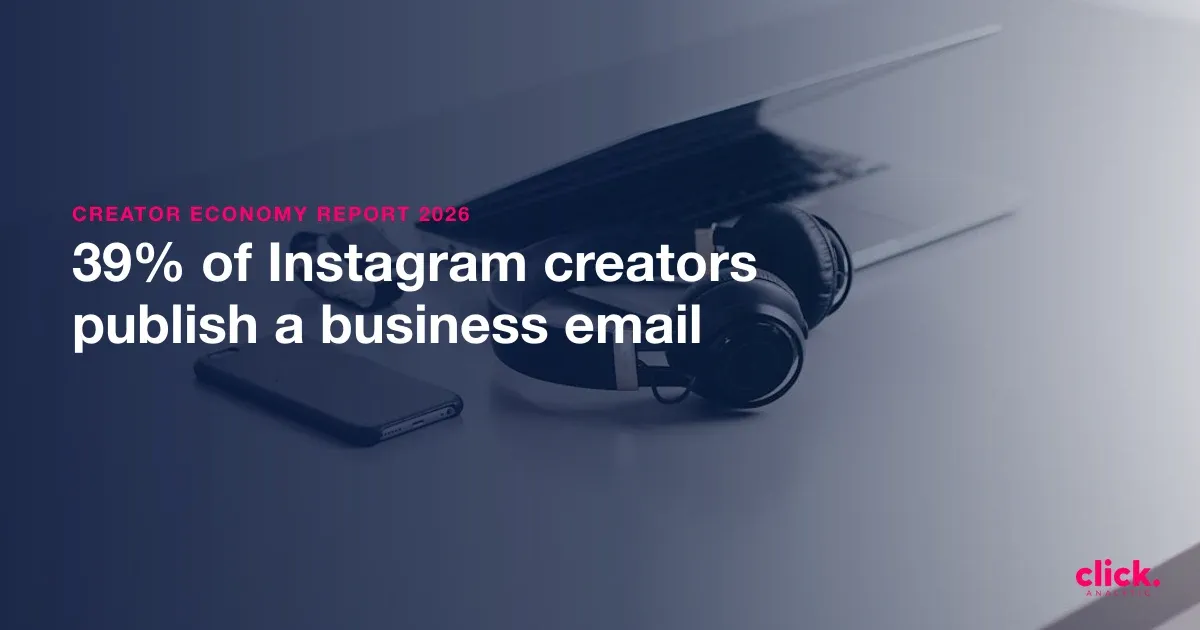
Most people who search for one TikTok creator's email do not need that creator. They need a creator like that one: same niche, same audience, same size, and willing to answer. On TikTok that matters more than anywhere else: by the Creator Economy Report's count below, the profile route yields an address for about one creator in twenty.
Chip-ing, a golf technology company, is the clean example. Rather than chase the famous golfers, Thomas Sandel built a programme of creators whose audiences matched his buyers and ran the outreach from one place: one creator alone produced 2.3 million views and the campaign passed 4 million. Shop Balou did the same for fashion and got back eight to ten hours a week, with dozens of copy-pasted emails turning into one campaign with automated, personalised follow-ups.
The mechanics are two filters. Start from the creator you wanted and search for their lookalikes, which our discovery calls Creator Lookalikes and Audience Lookalikes: the first finds similar content, the second finds creators with a similar audience. Then tick Email Address under the advanced filters so every result has a public address. On TikTok that filter is the difference between a list that is 5% usable and a list that is 100% usable.
If you still need that one specific person, the rest of this guide is for you.
Can you see the email of someone else's TikTok account?
No. This is the most searched version of the question in Spanish, and the honest answer is short. A TikTok profile shows what its owner typed into the bio and linked under it, and nothing else. The email used to log in, the phone number, and the addresses of a private account's followers are account data, not profile data, and no page, extension or "finder" reads them. Password recovery exists for the owner, and using it on someone else's account is an attack, not research.
The one email a username can lead you to is the one the creator chose to publish. That is the whole subject of this page.
What happened when TikTok contact data was collected at scale
Three dated facts, worth knowing before you buy a list.
- 1 August 2020. A Hong Kong company, Social Data Trading Limited, left a database of nearly 235 million scraped profiles open on the internet, 42.1 million of them TikTok accounts, with about one in five records carrying a phone number or an email. It was taken down about three hours after disclosure. Many of the large "TikTok email databases" sold since were built the same way: profiles read at scale, not addresses the creators handed over.
- 13 October 2022. TikTok opened Creator Marketplace to brands as "TikTok's official platform for brand and creator collaborations", with over 800,000 creators and Invite Links that reach a creator who has not signed up: the route TikTok built for the message a stranger cannot send by DM.
- October 2023 and 4 April 2024. The FTC warned creators twice about recruiters posing as brands: free products and pay, then a request for banking details. The tell it names is a sender "using a personal account, email, or number not affiliated with the company", and pressure to sign fast. Read from the brand's side: a real offer from a personal Gmail now looks like the scam creators were told to delete.
1. Read the bio, including addresses written to dodge scrapers
Open the exact profile and read the whole bio. Creators who want enquiries write the address plainly, often after a word such as business, collabs, bookings, PR or mgmt. Creators who want enquiries but not scrapers write it as "name at gmail dot com" or split it across lines; a scraper skips it, a person reads it. Copy the address carefully and check what it is for: a shop-support inbox or a press address is a real address for a different purpose.
A bio that names a manager without an address is still a lead. Search the manager's name, confirm the relationship on the agency's own site, and write there.
2. Open the profile link
The link under the bio is the creator's own routing. A link-in-bio page often carries a Work with me or Contact button that the short bio cannot. A media kit states the preferred address and the representation. A store has a support inbox that reaches a human.
Open only links that clearly belong to the creator: same name, same face, a domain that links back. TikTok opens profile links in its own browser and may ask you to open the page in your device's browser. That is a safety measure on all accounts, not a sign about the link.

A search for the username plus "website", "media kit" or "management" finds the same pages when the profile carries no link at all, and search engines index the bio text, so an address the creator published months ago can surface in the snippet.
3. The creator's other surfaces
Cross-platform creators publish contact details on the platform that has the feature for it.
- Instagram. A professional account can show an Email button in the app, added when the owner sets up the account and shown only if they choose to. The Instagram guide walks through it.
- YouTube. The channel's About section carries a business email behind a View email address control whenever the owner added one.
- Everything else the creator runs. A newsletter has a reply address, a podcast has a contact page, and a LinkedIn profile belongs to the person rather than the persona.
Match the face, the handle and the niche before you trust any of them. Keep the TikTok username in your record so the outreach team knows which account prompted the campaign.
4. A TikTok email finder, for one profile or a whole list
When the public route stops, an email finder reads the same three places across every profile in an index, so you are not opening them by hand. Enter the username in the TikTok Email Finder, confirm it is the right profile, and compare the address with the creator's current pages before writing.

For a campaign, run it the other way round. Filter the niche first: followers, engagement rate, the creator's location, gender and age, and the topics in their posts. Then tick Email Address so every result can be written to, review recent posts and audience quality, and reveal contact data only for the profiles you approve.


The order matters because of the 4.6%. A thousand TikTok creators picked for fit contain about fifty with an address on the profile; the finder returns those, and the rest are the ones for step 5. A result is contact intelligence, not permission to send anything.