Una lista de precios de influencers es el conjunto de tarifas y condiciones que los creadores (o sus agentes) proporcionan, la base para presupuestar, negociar y prever las campañas de influencers. Para los responsables de marketing, es la forma más rápida de estimar el coste del marketing de influencers y alinear su modelo de precios con KPI específicos. Las listas de precios van desde tarjetas de tarifas públicas hasta presupuestos totalmente negociados. Leerlas correctamente te ayuda a evitar gastos excesivos, derechos de uso desajustados y un rendimiento débil. Esta guía desglosa los impulsores de la fijación de precios, los modelos habituales, las instantáneas de plataformas, los guiones de negociación y las plantillas listas para usar. Se irá con una visión calibrada de los rangos típicos y un proceso práctico para construir un presupuesto de campaña defendible. Para un contexto más amplio sobre la monetización y el empaquetado de los influencers, consulte cómo ganan dinero los influencers, qué es un paquete de pr, kit de prensa para influencers, qué son las listas blancasy modelo de acuerdo de marketing de influencers.
Lectura rápida: Aspectos esenciales de la fijación de precios de los influencers
- Impulsores de los preciosTamaño de la audiencia, índice de participación, plataforma, derechos de uso y valor de la producción
- Modelos de preciospor puesto, paquetes, retenedores y opciones basadas en el rendimiento
- Tamaño del mercado en 2025: La industria del marketing de influencers alcanzó los $32.550 millones en todo el mundo
- Tendencias presupuestarias62% de las marcas están aumentando sus presupuestos para influencers; 30%+ invierten más de $5 millones
- HerramientasPlantillas de listas de precios y calculadoras de tarifas: le ayudarán a comparar y negociar.
¿Qué es una lista de precios para influencers?
Una lista de precios de influencers es una lista o tarjeta de tarifas que muestra las tarifas estándar de un creador y los términos que las acompañan, por ejemplo, el precio por publicación, el precio por historia, los derechos de uso y las tarifas de exclusividad. Algunos creadores publican listas de precios estáticas; lo más habitual es que veas un presupuesto inicial basado en tu briefing, personalizado en función de los entregables, los derechos y los plazos. Donde verá listas de precios:
- Directamente de los creadores (DM o correo electrónico), a menudo como PDF/Cubierta/Página de notificaciones
- Agencias de talentos que representan a múltiples creadores
- Marketplaces/plataformas de influencers que estandarizan el “precio por post”
- Agencias de relaciones públicas y marketing que integran a los creadores en una campaña
Cuando solicite una lista de precios, pida datos específicos que se correspondan con sus indicadores clave de rendimiento. Unas instrucciones precisas dan lugar a comparaciones más claras y menos sorpresas.
Lista de solicitud
- Entregablesnúmero y tipo (por ejemplo, 1 Reel + 3 Stories), especificaciones de contenido
- PlataformasDónde se publicará; política de publicación cruzada
- Utilizaciónuso orgánico, uso de pago, canales, zonas geográficas, duración
- ExclusividadCategoría y plazo
- Información sobre la audienciaDatos demográficos, principales mercados, indicadores de participación de los últimos 90 días
- Condiciones de pagoDepósitos, condiciones netas, política de revisión, anulación
Guión de solicitud de plantillas
“Por favor, comparte tu lista de precios actual (precio por post / precio por historia / derechos de uso / tarifa de exclusividad), además de datos demográficos de la audiencia y métricas de engagement de los últimos 90 días.” Fuente: Influencer Marketing Hub benchmark report; HypeAuditor engagement benchmarks (consultado en septiembre de 2025).
Factores clave que determinan el precio de los influencers
Las tarifas de una lista de precios proceden de un conjunto coherente de variables. Conocerlas te ayuda a interpretar cualquier tarifa y a entender lo que cobran los influencers.
Tamaño de la audiencia (seguidores)
Definición: Tamaño de la audiencia del creador por plataforma. Nivelesnano (1K-10K), micro (10K-100K), medio (100K-500K), macro (500K-1M), mega (>1M). Orientación: Empieza por el nivel de seguidores, pero la participación y la adecuación al nicho suelen superar al tamaño en bruto. La investigación muestra que 39% de las marcas eligieron a los nanoinfluenciadores como sus socios más probables en 2025.
Tasa de compromiso
Definición(me gusta + comentarios + guardados) / seguidores × 100. Los vídeos pueden incluir visualizaciones o compartidos. Orientación: Un alto nivel de compromiso permite cobrar tarifas más altas, en comparación con las normas de la categoría. Los creadores con tasas de participación superiores a 8% pueden obtener precios superiores de 30-50%.
Diferencias entre plataformas
Definición: Los formatos impulsan el esfuerzo y el impacto: posts, carruseles, Reels, Shorts, YouTube largos, artículos de LinkedIn. Orientación: Las tarifas dependen de la plataforma. YouTube tiene la media más alta, $675 por colaboración, debido a las exigencias de producción. Instagram tiene una media de $364 y TikTok de $350.
Complejidad de los contenidos y valor de producción
Definición: Guiones, rodajes en varias localizaciones, edición profesional, animaciones. Orientación: 10-100% elevación para una mayor complejidad creativa.
Derechos de uso y licencias
Definición: Reutilización más allá del puesto: orgánica, de pago, listas blancas, recortes. Orientación: La reutilización a corto plazo añade 20-50%; el uso a largo plazo o perpetuo añade 100-300%. Los derechos de uso de contenidos pueden aumentar los costes de la campaña hasta 39%.
Tarifas de exclusividad
Definición: No hay endosos para los competidores durante un período. Orientación: Se espera una subida de 5-50% en función de la categoría y la talla del creador.
Selección de regiones y audiencias
Definición: Los mercados con mayor PIB o poder adquisitivo tienen precios más altos. Orientación: Los microinfluencers estadounidenses con 50.000 seguidores pueden cobrar $2.000 por un Instagram Reel; los creadores europeos equivalentes cobran $1.400-$1.600.
Complejidad de la campaña, plazos y número de entregas
Definición: Vuelos únicos frente a vuelos, plazos ajustados, revisiones. Orientación: La agrupación reduce el coste por envío; los gastos de envío urgente añaden 10-25%. La demanda estacional aumenta durante el Black Friday, las vacaciones y la vuelta al cole.
Reputación del creador y demanda del nicho
Definición: Los expertos en la materia que gozan de confianza pueden exigir primas por rendimiento. Orientación: Los nichos como las finanzas, la tecnología y la sanidad superan a los contenidos generales de estilo de vida. Consejo rápido: Pregunte por el rendimiento medio de los últimos 90 días por formato (p. ej., visualizaciones de Reel) en lugar de las métricas de toda la vida. La actualidad importa.
Modelos de fijación de precios de los influencers y rangos típicos
Las marcas ven varios modelos de precios comunes en las tarjetas de tarifas. Todas las cifras que figuran a continuación son estimaciones centradas en Estados Unidos para 2025-2026; los costes reales varían en función del nicho, la región, la participación y las condiciones contractuales.
Por mensaje / Por imagen (único)
Qué es: Un único post publicado con pie de foto y una etiqueta/enlace. Palancas: Agrupar varias entradas; añadir historias; aclarar los derechos de uso; garantizar la puntualidad de los informes. Gama indicativa (EE.UU., 2025-2026):
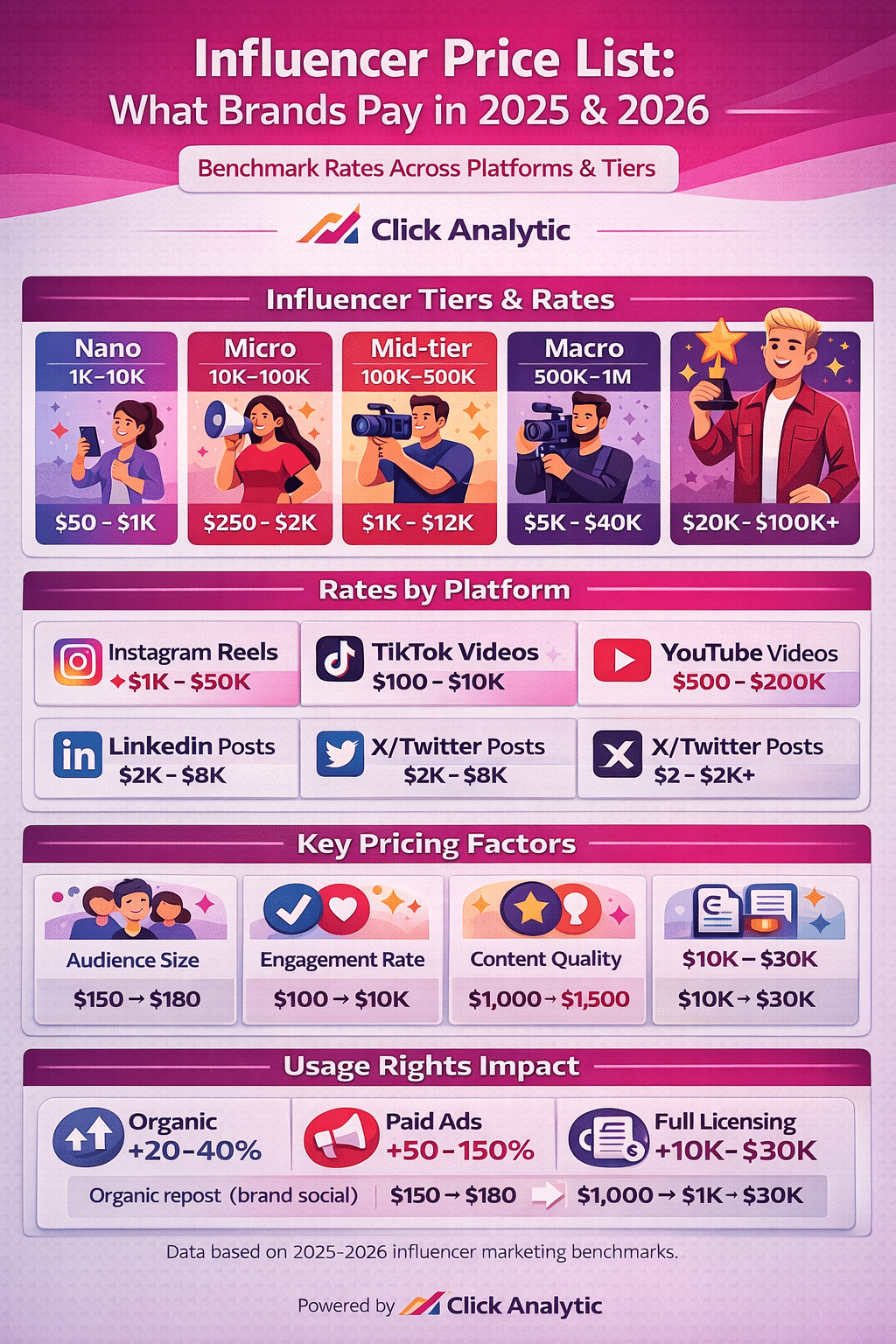
- Nano (1K-10K): $50-$500 (algunos cobran hasta $1.000 con un compromiso excepcional)
- Micro (10K-100K): $250-$2.000
- Nivel medio (100.000-500.000): $1,000–$5,000
- Macro (500K-1M): $5,000–$20,000+
- Mega (1M+): $20,000–$100,000+
Por historia / Por instantánea
Qué es: Contenido de corta duración, a menudo vendido en paquetes de 3-5 fotogramas. Gama indicativa (US, estimación):
- Nano: $20-$150
- Micro: $150-$800
- Nivel medio: $800-$3.000
- Macro+: $3,000+
Por vídeo / formato largo (YouTube, vídeo IG largo)
Qué es: Un vídeo producido que incluye guion, edición, miniatura y divulgación. Alcance indicativo (YouTube, US):
- Micro: $500-$5.000
- Nivel medio: $5,000–$20,000
- Macro+: $20,000–$200,000+ (production-dependent)
Vídeos cortos / Reels (TikTok, Instagram)
Qué es: 15-60 segundos, alto engagement; activos alineados con las tendencias. Gama indicativa (US):
- Micro: $250-$2.000
- Nivel medio: $2,000–$10,000
- Macro+: $10,000+
Nota: Los Instagram Reels alcanzan tasas 32% más altas que los vídeos de TikTok ($288 frente a $217 de media), según el informe 2025 de Collabstr.
Paquetes y campañas multipuesto
Descuento por volumen (por ejemplo, 3 posts + 6 historias en 60 días). Descuento típico: 10-30% frente al precio individual.
Retenciones mensuales / Asociaciones en curso
Cuota mensual fija por un número determinado de publicaciones y activaciones. Según el informe 2025 de Influencer Marketing Hub, 54% de las marcas utilizan ahora modelos de retención o asociación en lugar de publicaciones puntuales. Los contratos a largo plazo cuestan entre 40 y 60% menos por publicación que las colaboraciones puntuales.
Modelos basados en resultados (CPA / Afiliación / Rev Share)
Cuota básica más baja con incentivos vinculados a las conversiones rastreadas. Requiere normas UTM y ventanas de atribución claras. Bueno para impulsar las ventas directas con un ROI medible.
Licencias / Precios basados en el uso (derechos de medios de pago)
Tarifas por reutilizar contenidos de creadores fuera de su canal: medios de pago, listas blancas, uso de sitios web, medios de venta al por menor.
Lista de precios de influencers por niveles y plataformas (2025-2026)
Esta completa tabla de precios le ayuda a comparar de un vistazo los rangos típicos por nivel y plataforma. Los rangos son ilustrativos; ajústelos según el nicho, el compromiso, los derechos y la región.
| Nivel | Seguidores | Plataforma | Entregables | Gama típica (USD) |
|---|---|---|---|---|
| Nano | 1K-10K | 1 Carrete | $150-$1.000 | |
| Nano | 1K-10K | 1 piso (3 cuadros) | $50-$250 | |
| Micro | 10K-100K | TikTok | 1 vídeo corto | $250-$2.000 |
| Micro | 10K-100K | YouTube | 60-120s integración | $500-$5.000 |
| Micro | 10K-100K | 1 post de liderazgo intelectual | $1,500–$4,000 | |
| Nivel medio | 100K-500K | 1 rollo + 3 pisos | $3,000–$12,000 | |
| Nivel medio | 100K-500K | YouTube | Vídeo dedicado | $5,000–$20,000 |
| Macro | 500K-1M | TikTok | 1 vídeo | $10,000–$40,000 |
| Macro | 500K-1M | YouTube | Vídeo dedicado | $20,000–$200,000+ |
| Mega | 1M+ | Multiplataforma | Paquete de lanzamiento | $50,000–$500,000+ |
Derechos de uso y licencias
Comprender cómo afectan los derechos de uso a la fijación de precios es fundamental para elaborar presupuestos precisos. Esta tabla muestra los aumentos típicos al reutilizar contenidos de creadores.
| Tipo de uso | Elevación típica frente al tipo de base | Ejemplo de cláusula | Cuándo utilizar |
|---|---|---|---|
| Republicación orgánica (brand social) | +20-40% (6 meses) | “La marca puede volver a publicar en canales sociales propios durante seis meses en [mercados]. Sin medios de pago”.” | Amplificación social sin anuncios |
| Redes sociales de pago (Spark/lista blanca) | +50-150% (6-12 meses) | “Uso social de pago para [canales] en [mercados] durante [duración]”.” | Anuncios de rendimiento con cara de creador |
| Web/comunicaciones/CRM | +25-75% (6-12 meses) | “Uso de web/ecomm/CRM; [duración]”.” | PDP, correo electrónico, páginas de destino |
| Medios de comunicación minoristas/OOH | +75-200% (6-12 meses) | “Medios minoristas y OOH; se requiere el consentimiento de talentos; [duración/mercados]”.” | En tiendas, anuncios en comercios, vallas publicitarias |
| Medios de pago permanentes | +100-300% | “Uso perpetuo de medios de pago en todos los canales y mercados”.” | Raros; normalmente se evitan a menos que sean esenciales |
Precios por plataforma
La plataforma y el formato determinan los precios. He aquí instantáneas rápidas y prácticas de los principales canales con referencias para 2025-2026.
Precios de Instagram Influencer
Formatos: feed imagen, carrusel, Reel, historias, en directo. Tarifas 2025:
- Instagram Reels: $1,000-$50,000+ (formato de mayor demanda)
- Publicaciones en Instagram: $500-$30.000 (disminución de la participación; tasas más bajas)
- Historias de Instagram: $300-$10.000 (vida útil más corta; nivel inferior)
- Publicaciones en carrusel de Instagram: $600-$15.000 (engagement medio)
Notas: Los carretes tienen un precio superior porque el algoritmo de Instagram los favorece en gran medida: los creadores obtienen 67% más alcance de media que las publicaciones de feeds. El acceso a listas blancas o etiquetas de socios aumenta el coste.
Precios de los influencers en YouTube
Formatosvídeo dedicado, integraciones mid-roll, cortometrajes. Tarifas 2025:
- Micro (10K-100K subs): $500-$5.000 por integración
- Nivel medio (100.000-500.000 abonados): $5.000-$20.000 por vídeo
- Macro (500K-1M subs): $10.000-$20.000+ por vídeo
- Mega (1M+ subs): $20.000-$200.000+ por vídeo
Notas: Las exigencias de producción y los descubrimientos a largo plazo elevan los honorarios. Los límites claros de revisión y los derechos sobre miniaturas son elementos contractuales comunes. YouTube tiene la tarifa media por colaboración más alta: $675.
Precios de TikTok Influencer
Formatosvídeo de formato corto, compras en directo y activos listos para Spark Ads. Tarifas 2025:
- Nano (1K-10K): $5-$250 por vídeo
- Micro (10K-50K): $25-$125 por vídeo
- Nivel medio (50.000-5.000.000): $125-$2.000 por vídeo
- Macro (500K-1M): $2.000-$10.000 por vídeo
- Mega (1M+): $5.000-$10.000+ por vídeo
Notas: La creatividad y la velocidad impulsadas por las tendencias tienen primas. Los creadores de comercio probados cobran más. Los mejores TikTokers, como Charli D'Amelio, pueden ganar más de 10.000 euros por una sola publicación.
Precios de LinkedIn Influencer
FormatosPublicaciones: artículos de opinión, carruseles, artículos largos. Tarifas 2025:
- 50K seguidores: $3,000-$8,000 por post
- Prima B2B: 50-150% por encima de las tarifas equivalentes de Instagram
Notas: El matiz B2B y el potencial de captación de clientes potenciales hacen que las tarifas de LinkedIn sean más altas que el número de seguidores equivalente en otras plataformas. Los paquetes suelen incluir desarrollo y moderación de contenidos.
Precios de Twitter/X Influencer
Tarifas 2025: $2 por publicación por cada 1.000 seguidores (intervalo: $2-$2.000+) Notas: Generalmente la plataforma más asequible para el marketing de influencers. Las tarifas varían en función del estado de verificación y el posicionamiento como líder de opinión.
Twitch / Precios del streaming
Formatosintegración en streaming, colocación de productos, enlaces de afiliación. 2025 Media: $238 por colaboración Notas: Los contratos especifican los plazos de lectura y los incentivos. Las retransmisiones en directo e interactivas fomentan fuertes conexiones con la audiencia, pero requieren menos postproducción que el vídeo pulido.
Precios de los contenidos generados por los usuarios (CGU)
2025 Media: $198 por pieza (aumento interanual de 93% en la oferta de los creadores) Tarifas especializadas: $1.500-$5.000 por vídeo de 30 segundos para expertos en CGU Notas: Los creadores de contenidos generados por terceros han aumentado vertiginosamente, lo que ha reducido los precios generales gracias al incremento de la oferta. Los hombres influyentes ganan 40% más que las mujeres creadoras de media, a pesar de que las mujeres representan 72% del mercado.
Fijación de precios para influencers específicos del sector
Las tasas de influencia varían drásticamente según el sector. Esto es lo que cabe esperar de los nichos especializados en 2025-2026:
Moda y belleza
- Prima sobre el estilo de vida general: 20-40%
- Colaboraciones en moda de lujo: $50,000–$500,000+
- Microinfluenciadores de moda de gran consumo: $1.500-$5.000
Finanzas e inversión
- Micro-influencers: $2,000–$6,000
- Macro-influencers: $20,000–$60,000
- Los costes de cumplimiento se añaden 15-25% a las tarifas básicas
Tecnología y SaaS
- Precios basados en el rendimiento (base + incentivo por cliente potencial)
- Retenciones de embajador de 12 meses: 40-60% de ahorro frente a un pago único
- B2B audiencias comando 50-150% premium
Sanidad y medicina
- Prima básica: 15-25% sobre las tarifas generales
- Los requisitos de certificación afectan a los precios
- Los siniestros regulados aumentan los costes de cumplimiento
Bienestar y suplementos
- Gama: $1,500–$10,000
- La credibilidad y el cumplimiento de la normativa son esenciales
Cómo leer y comparar eficazmente las listas de precios de los influencers
Analizar los términos es tan importante como el precio del titular. Utilice esta práctica lista de lectura.
Lista de lectura
- EntregablesLista de todos los elementos y especificaciones (formato, longitud, resolución, longitud del pie de foto, ubicación del enlace).
- Ventanas de contabilización: rangos de publicación, horarios y caducidad de los contenidos (en su caso)
- Plataformas incluidasPublicación principal + publicaciones cruzadas; reposiciones incluidas y cuántas
- Uso y licenciasalcance, geografías, canales, duración
- Exclusividaddefinir la categoría, el territorio, la duración y el ámbito de aplicación
- Revisiones: número incluido y plazos de entrega
- Métricas e informes: qué métricas, formato y calendario de los informes
- Condiciones de pagodepósitos, plazos netos, normas de facturación, recargos por demora
- Anulaciones / fuerza mayor / devolucionesSoluciones en caso de problemas con el correo en directo
Señales de alarma
- No hay un lenguaje claro sobre derechos de uso
- “Derechos ”ilimitados" por un módico precio
- Sin métricas de audiencia ni datos no verificables
- Sin plazos de entrega
- Promesas de información vagas y sin concretar
- Recuentos de seguidores inflados con poco compromiso (comprueba si hay seguidores falsos)
Guiones de negociación
Descuento por volumen: “Si nos comprometemos a X puestos durante Y meses, ¿cuál es su tarifa por paquete?”.” Derechos de uso: “Queremos un uso social remunerado durante 6 meses en EE.UU.: ¿qué incremento aplicaría?”.” Desglose de resultados: “Podemos ofrecer una tarifa plana reducida más un CPA por conversiones verificadas, ¿es aceptable?”.” Anclaje: “Basándonos en puntos de referencia recientes para creadores de este tamaño, nuestro objetivo es $X por Carrete”.”
Estrategias presupuestarias y de negociación para responsables de marketing
Traducir los objetivos de la campaña en un presupuesto defendible para los influencers y en una postura de negociación.
Proceso presupuestario paso a paso
- Fijar el objetivo y los KPI (concienciación, consideración, adquisición)
- Convertir el KPI en una métrica de costes objetivo (por ejemplo, CPM o CPA objetivo)
- Asignación de resultados a los indicadores clave de rendimiento por formato y plataforma
- Elabore un presupuesto basado en listas de precios de 10 a 20 tarjetas de tarifas y escenarios de modelos (core, stretch, conservador)
- Añadir un imprevisto (10-20%) por gastos de producción, derechos y acometidas
- Decidir la combinación de pagos (base frente a incentivos por resultados)
Buenas prácticas de negociación
- Ancla con datos: “Basándonos en referencias recientes para creadores de este tamaño, nuestro objetivo es $X por Carrete”.”
- Pagos por etapas: 50% en la aceptación, 50% en la entrega y métricas.
- Proteger el uso: “Esta tarifa sólo cubre las publicaciones orgánicas; la reutilización de medios de pago se negociará por separado”.”
- Pedir artículos de confecciónPreacuerda umbrales de incumplimiento grave.
- Ofrecer valor a largo plazo: Los retenedores permiten ahorrar 10-30% cuando los calendarios y los pagos son predecibles.
Estudios de casos y ejemplos prácticos
Ejemplo A - Programa B2B SaaS de 6 meses
Objetivo: Generar MQLs con CPL objetivo de $200. Estrategia8 publicaciones sobre liderazgo intelectual en LinkedIn; 12 demostraciones de productos de microinfluenciadores; 3 macroentrevistas en YouTube. Coste (ilustrativo):
- LinkedIn puestos medios x8 = $12.000
- 12 microdemostraciones @ $800 = $9.600
- 3 macro YouTube @ $15.000 = $45.000
- Imprevistos = $8.000
- Total ≈ $74.600
Modelo de resultados: Impresiones 1,8M; CTR 0,9%-1,5%; leads ≈ 1.944; blended CPL ≈ $38 (sólo modelo). Lecciones: Los mensajes preaprobados, las UTM y las pruebas desde múltiples ángulos reducen las variaciones.
Ejemplo B - Lanzamiento de un producto de consumo
Objetivo: Aumento de la notoriedad y las ventas directas durante 2 semanas. Mezclar20 microinfluenciadores para Reels; 5 macrocreadores; redes sociales de pago para los mejores. Coste:
- 20 microcarretes a $1.000 = $20.000
- 5 macropaquetes a $12.000 = $60.000
- Impulso social pagado = $10.000
- Total ≈ $90.000
Pensamiento ROI: 2,5M de visualizaciones; 1,5% CTR; 3% conversión; AOV $60 → ingresos ≈ $67.500 (modelo). Utiliza pruebas de incrementalidad para comprobar la precisión. Consejo: Extraiga las medianas de los creadores de los últimos 90 días y modele los escenarios mejor/medio/peor antes del lanzamiento.
Buenas prácticas para contratos, derechos de uso y renovaciones
Los contratos convierten una tarjeta de tarifas en una campaña aplicable. Incluye estas cláusulas para evitar disputas posteriores.
Plantillas de cláusulas esenciales
Entregables: “El creador entregará X entradas publicadas en Y fecha(s). Especificaciones: [formato, resolución, relación de aspecto, requisitos de pies de foto/enlaces]”.” Uso/Licencia: “Se concede a la marca una licencia no exclusiva para utilizar el Contenido para [canales], durante [duración] en [geografías]. La reutilización en medios de pago requiere consentimiento y tarifa aparte”.” Exclusividad: “El creador no promocionará productos de la competencia en [categoría] durante [X meses] dentro de [geografía]”.” Pago y facturación: “Depósito de 50%; saldo en 30 días tras la aprobación; recargo por demora X%”.” Makegood & cancelación: “Si un puesto no se publica debido a un error del creador, se enviará un puesto de sustitución en un plazo de 14 días sin coste adicional”.” Informes y verificación: “Publicar las métricas en un plazo de 7 días; acceso a las perspectivas previa solicitud”.” FTC y divulgación: “FTC endorsement guidelines followed; paid promotions disclosed (#ad, #sponsored)”.”
Preguntas más frecuentes (FAQ)
¿Qué es una lista de precios para influencers y por qué es importante para las marcas?
Es la tarjeta de tarifas de un creador que muestra las tarifas estándar y los derechos. Vincula los costes a resultados concretos, lo que ayuda a las marcas a comparar precios y planificar presupuestos con precisión.
¿Cómo se determinan los precios de los influencers en 2025?
Los precios dependen del nivel de audiencia, la tasa de participación, la plataforma, la complejidad de la producción y la concesión de licencias. La tarifa final dependerá del modelo elegido (por publicación, paquete, contrato o actuación), el uso y la exclusividad.
¿Cuál es la diferencia entre precio por entrada y precio por artículo?
El precio por entrada cubre una entrada de alimentación permanente con una vida útil más larga; el precio por historia cubre el contenido de corta duración, que a menudo se vende en paquetes. En ambos casos, incluya requisitos de información y clics/enlaces.
¿Cobran los influencers por los derechos de uso y cuánto suelen costar?
Sí. Los derechos de uso aumentan la reutilización del contenido más allá de la publicación original: orgánico (20-40%), redes sociales de pago (50-150%), web/CRM (25-75%) o uso perpetuo (100-300%).
¿Cuánto cobran los microinfluenciadores en comparación con los macroinfluenciadores?
Los microinfluenciadores suelen cobrar $250-$2.000 por publicación; los macrocreadores cobran $5.000-$20.000+. Siempre hay que tener en cuenta la participación, el nicho y los derechos de uso.
¿Qué plataforma suele tener los índices de influencia más altos y por qué?
YouTube cobra las tarifas más altas (una media de $675 por colaboración) debido a las exigencias de producción y al descubrimiento de contenidos a largo plazo. Instagram Reels y LinkedIn también tienen tarifas superiores para casos de uso específicos.
¿Cómo debo leer y comparar las listas de precios de influencers de agencias o creadores?
Estandarizar los entregables, los derechos y los plazos. Convierta los costes en términos por entrega y registre los aumentos de derechos para reflejar los verdaderos costes totales.
¿Existen descuentos típicos para colaboraciones a largo plazo o acuerdos multicampaña?
Sí. Los paquetes o retenedores permiten ahorrar 10-30% cuando los calendarios y los pagos son predecibles. 54% de las marcas utilizan ahora modelos de retenedores.
¿Qué datos debo solicitar al evaluar la lista de precios de un influencer?
Solicite las impresiones de los últimos 90 días, el alcance, la participación específica del formato, los datos demográficos de la audiencia y pruebas de las conversiones, si están disponibles.
¿Cuánto cuesta el marketing de influencers para las pequeñas empresas?
Las pequeñas empresas pueden empezar con nano y microinfluencers a $50-$500 por post. Muchos nanoinfluenciadores aceptan productos regalados para colaborar. Presupuesta $1.000-$5.000 para las pruebas iniciales de la campaña.
Conclusión y próximos pasos
Ahora tienes una visión actual de la lista de precios de los influencers: qué impulsa las tarifas, cómo elegir un modelo de precios para influencers y qué pagar por plataforma y nivel. Recuerda cuatro principios:
- Los derechos importanDefinir por escrito los derechos de uso y la exclusividad.
- Evalúe correctamenteCompara por plataforma, formato y participación, no sólo por seguidores.
- Vinculación con los KPItraduzca las tarifas en objetivos CPM/CPA antes de comprometerse.
- Contrato claroBloqueo de entregas, plazos, informes y productos finales.
Próximos pasos:
- Descargar el modelo de lista de precios (Google Sheets)
- Abra la calculadora de tarifas (Hojas/Excel)
- Hable con nuestro equipo para obtener una lista de precios de influencers a medida y una evaluación comparativa
Artículos relacionados:
- Plataforma de marketing de influencers
- ¿Qué es un microinfluenciador?
- ¿Qué es un paquete de relaciones públicas?
- Influencer Media Kit
- ¿Qué son las listas blancas?
- Plantilla de acuerdo de marketing de influencers
- Cómo ganan dinero los influencers
- Estrategias de marketing de influencers
- Cómo encontrar personas influyentes para su marca