Hailey Bieber Victoria Secret became one of the most discussed brand partnerships of 2026 when Victoria’s Secret named her the face of its Valentine’s Day campaign.
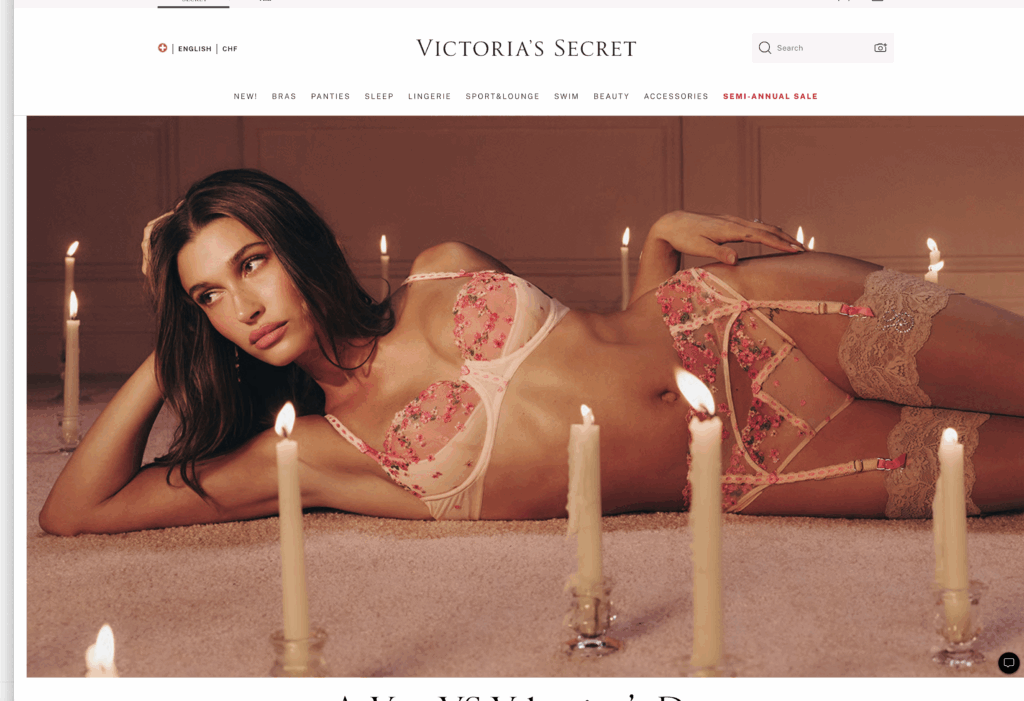
On the surface, it looks like a classic celebrity endorsement.
Big brand. Big name.
But look closer and this collaboration says a lot more about where Victoria’s Secret is headed, why Hailey Bieber fits that shift, and what modern marketers can learn from it.
This isn’t about lingerie.
It’s about relevance, culture, and how legacy brands rebuild trust with younger audiences.
Déjame explicarte 👇
What Happened: Hailey Bieber Becomes the Face of Victoria’s Secret Valentine’s Campaign
Victoria’s Secret selected Hailey Bieber as the lead figure for its Valentine’s Day campaign, positioning her across visual assets and social channels as part of its ongoing VS Collective strategy.
Ver esta publicación en Instagram
This matters for two reasons:
1️⃣ Hailey is not a traditional Victoria’s Secret “Angel”
2️⃣ The campaign tone is intentionally modern, soft, and culture-aligned rather than provocative or theatrical
Instead of spectacle, the brand leaned into relatable confidence, intimacy, and creator-driven storytelling.
This approach fits directly into Victoria’s Secret’s multi-year repositioning strategy rather than standing alone as a one-off activation.
Let’s rewind on Victoria’s Secret’s repositioning strategy 👇
Why Victoria’s Secret Needed a Comeback?
To understand why this partnership matters, you need to understand what Victoria’s Secret went through.
From Category Leader to Cultural Disconnect
At its peak, Victoria’s Secret dominated the U.S. lingerie market, controlling up to ~80% market compartir. For years, the brand didn’t just lead the category. It defined it.
Then the landscape shifted.
- New competitors like Aerie y Savage X Fenty gained traction by focusing on inclusivity and authenticity
- Cultural expectations changed faster than the brand adapted
- Public controversies accelerated trust erosion
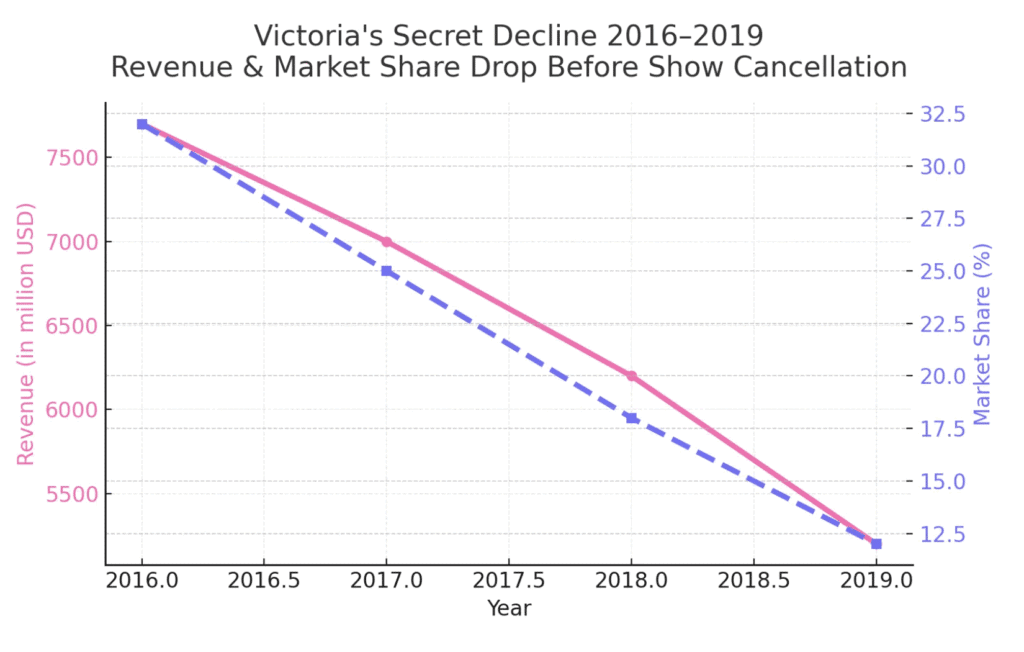
By the late 2010s, Victoria’s Secret had lost 20%+ of its market share, no longer owning culture the way it once did.
Sales Pressure and Brand Fatigue
This cultural shift showed up in the numbers.
Victoria’s Secret’s annual revenue declined from its 2010s peak to around $6B in recent years, signalling not just slower growth, but a deeper relevance issue.
One of the biggest signals?
The cancellation of the iconic Victoria’s Secret Fashion Show.
That moment marked the end of an era, and the start of a difficult transition.
If you want to learn more about Victoria’s Secret’s struggles and their full comeback strategy, check this article.
The Gen Z Problem
Awareness was never the issue.
Engagement was.
Gen Z didn’t reject lingerie.
They rejected what Victoria’s Secret represented at the time.
And that meant the comeback couldn’t rely on nostalgia. It had to be cultural.
Now let’s explore why Hailey represents that change 👇
Hailey Bieber Is Not a Classic Victoria’s Secret Model (And That’s the Point)
One of the smartest things about this partnership is what Hailey Bieber is not.
❌ She was never a Victoria’s Secret Angel.
❌ She’s not tied to the fantasy-driven era people pushed away from.
Instead, Hailey entered the picture in 2021 as part of the VS Collective, right when the brand publicly committed to change.
That collective wasn’t about perfection. It was about modern identity.
Fast forward to 2026, and she’s now leading a flagship campaign.
This isn’t a random celebrity booking.
👉 It’s a long-term evolution of the partnership.
Old Victoria’s Secret sold aspiration from above.
New Victoria’s Secret sells confidence people can relate to.
Hailey embodies that shift 👇
Why Hailey Bieber Is a Strategic Fit for the New Victoria’s Secret
This partnership works not because Hailey is famous, but because she aligns with how influence works today.
She Represents Modern Femininity, Not Performative Fantasy
Hailey’s appeal isn’t loud or theatrical.
It’s controlled.
Intimate.
Effortless.
That tone matches how younger consumers interpret confidence and desirability today. The campaign doesn’t try to shock or provoke. It tries to conecte.
For a brand rebuilding trust, that matters more than visibility.
Her Influence Converts, Not Just Impressions
Hailey Bieber’s influence isn’t theoretical.
She didn’t just attach her name to Rhode.
She incarnated it.
Ver esta publicación en Instagram
In under three years, Rhode grew into a $1B brand (see the full playbook here), largely driven by Hailey’s cultural pull rather than traditional advertising.
The Rhode iPhone case launch is the perfect example.
It didn’t trend because of paid media.
It trended because Hailey took a mirror selfie.
Ver esta publicación en Instagram
That’s not reach.
That’s cultural momentum.
When Hailey adopts something, formats move. Products move. Trends move.
This is exactly the type of influence brands are chasing in 2026.
But not only that, Hailey’s audience on social media was a perfect fit as well 👇
Audience Match: Why Hailey Bieber’s Audience Fits Victoria’s Secret’s Target
This is where the partnership becomes hard to argue against.
Hailey Bieber Audience Demographics (Instagram + TikTok)
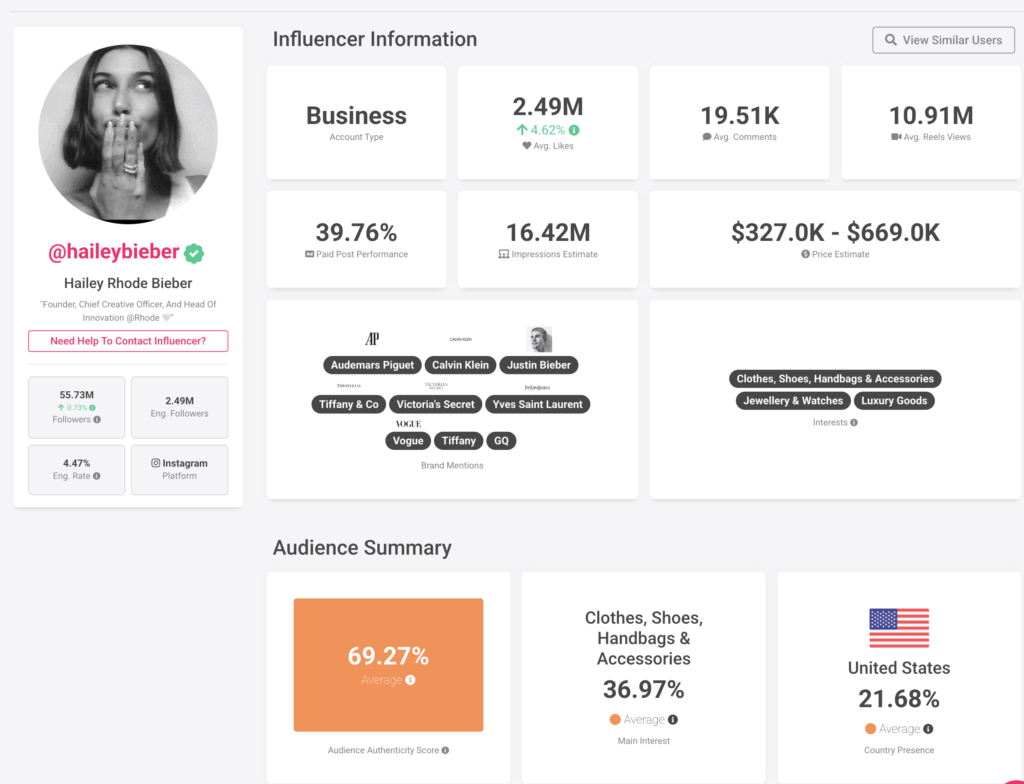
Across platforms, Hailey Bieber has 70M+ followers, but the composition matters more than the number.
On Instagram (data from Click Analytic):
• ~80% of her audience is 18–34
• 70%+ is female
• Average Reel views are in the multi-millions
On TikTok (data from Click Analytic):
• Audience skews even younger
• Strong female majority
• Average video views remain extremely high relative to follower count
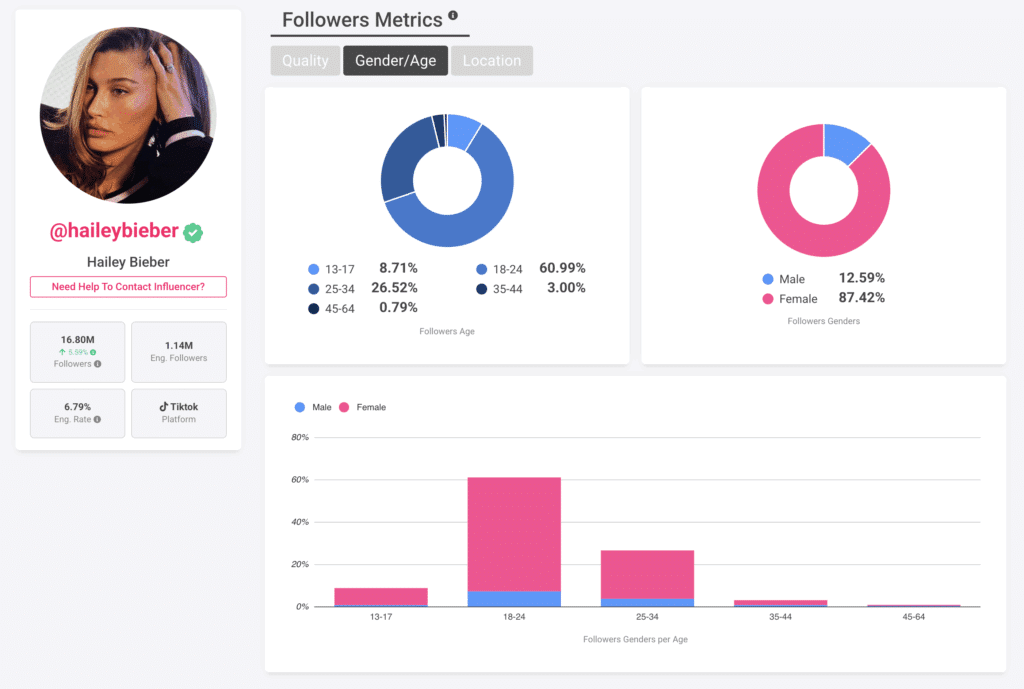
💡 This is exactly the demographic Victoria’s Secret lost, and is actively trying to win back.
Audience Overlap: Proof This Isn’t a Cold Bet
The overlap data makes the strategy even clearer:
👉12% of Victoria’s Secret’s Instagram followers already follow Hailey Bieber
👉 18% of Hailey Bieber’s followers already follow Victoria’s Secret
(data from Click Analytic)
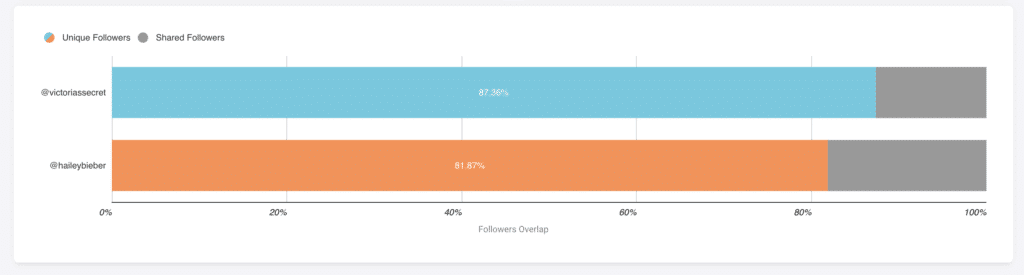
This isn’t about introducing the brand to a brand-new audience.
It’s about activating a shared cultural space.
From a marketing perspective, that’s significantly lower risk and higher upside.
Campaign Performance: Early Signals From the Hailey Bieber Victoria Secret Collaboration
While it’s still early, performance signals are strong:
🔥 13.6M total Instagram views across Victoria’s Secret campaign content
🔥 ~992K views on TikTok for collaboration-related posts
🔥 1.9M likes on Hailey’s behind-the-scenes repost alone
@victoriassecret Romance looks like this 💋 #victoriassecret 1TP5Día de San Valentín ♬ Classy saxophone jazz in the hotel lounge(1461808) – ricca
What’s especially interesting is what didn’t happen yet.
Hailey hasn’t posted a dedicated campaign Reel or TikTok on her own channels. That leaves meaningful upside for future activations.
This suggests the partnership is being paced strategically rather than fully front-loaded.
Now here’s what you can learn from it as a marketer 👇
What Marketers Can Learn From Hailey Bieber x Victoria’s Secret
This collaboration offers several lessons for modern brands:
- Long-term creator partnerships beat one-off endorsements
Hailey’s role evolved over years. That continuity builds trust. - Cultural relevance beats shock value
Modern audiences respond to authenticity, not spectacle. - Audience overlap matters more than raw reach
Shared followers reduce friction and increase conversion potential. - Founders who embody brands outperform traditional ambassadors
Hailey’s Rhode success reinforces her credibility as more than a model.
This is creator marketing as brand strategy, not media buying.
Is Hailey Bieber the Right Ambassador for Victoria’s Secret?
If the goal were noise, there were louder options.
If the goal were nostalgia, there were safer ones.
But if the goal is rebuilding cultural relevance with Gen Z and Millennials, Hailey Bieber makes sense.
She represents where Victoria’s Secret is going, not where it’s been.
And that’s what real brand comebacks look like.
Reflexiones finales
En Hailey Bieber Victoria Secret partnership isn’t about lingerie.
It’s about how legacy brands re-enter culture without forcing it.
Victoria’s Secret didn’t choose Hailey because she’s famous.
They chose her because she carries cultural trust with the exact audience they need.
For marketers, this case is a reminder:
Relevance isn’t bought.
-> It’s borrowed, from the right voices, over time.
And when done well, it compounds.