Se você já olhou para um relatório de campanha e se perguntou por que as impressões são maiores do que o alcance, you’re not alone…
A diferença entre Alcance e Impressões é uma das seguintes os tópicos mais incompreendidos em marketing 🤔
No entanto, a compreensão Alcance vs. Impressões afeta diretamente a forma como você avalia o desempenho, aloca o orçamento e informa os resultados às partes interessadas.
To understand how these metrics fit into a broader measurement framework, explore our complete guide to social media KPIs.
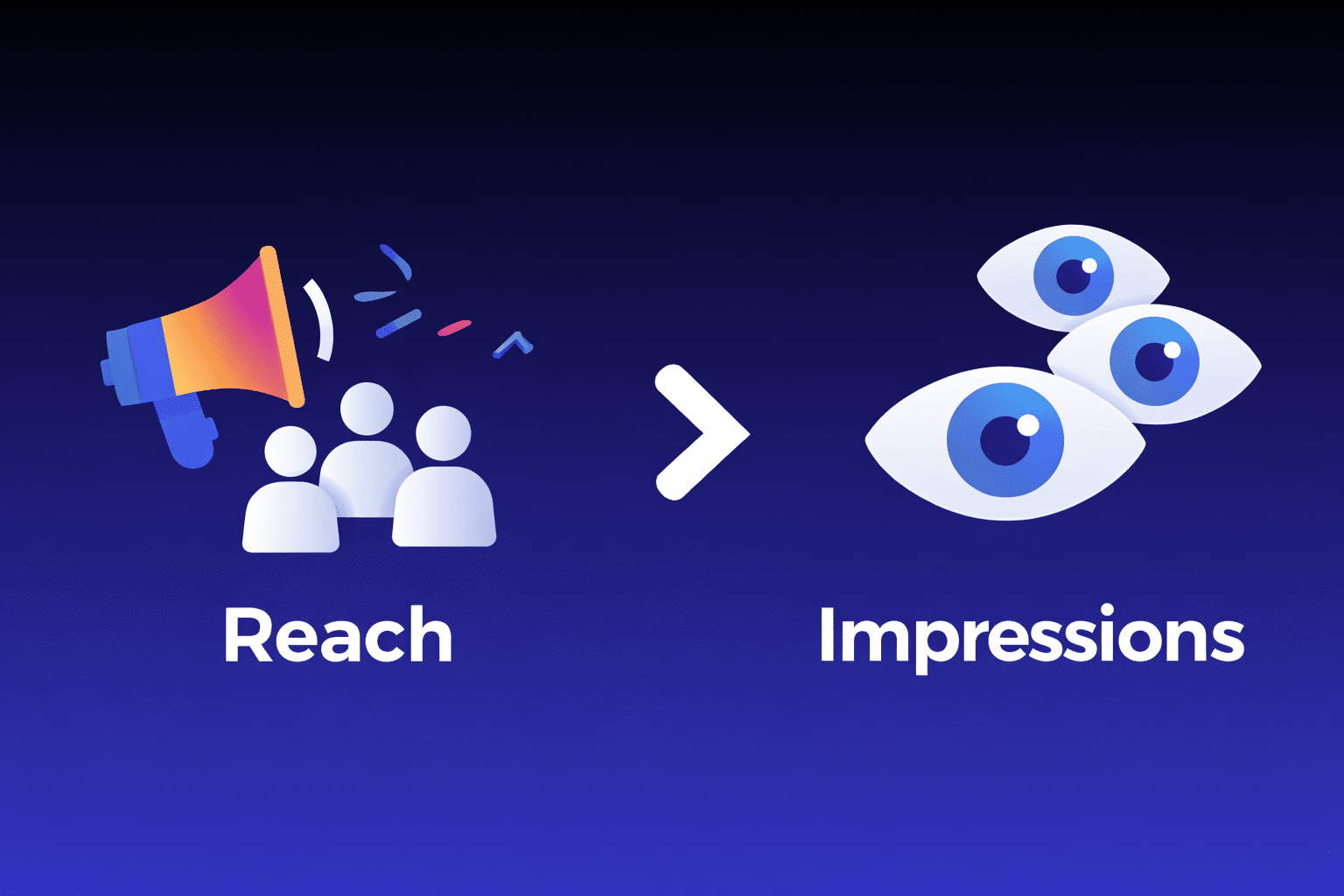
Neste guia, você aprenderá:
-
O que o alcance e as impressões realmente medem
-
As principais diferenças entre eles
-
Exemplos reais no Instagram e no TikTok
-
Qual métrica priorizar dependendo de sua meta
-
Como os profissionais de marketing e as marcas devem informar ambos corretamente
Vamos detalhar isso 👇
O que é alcance (definição simples)
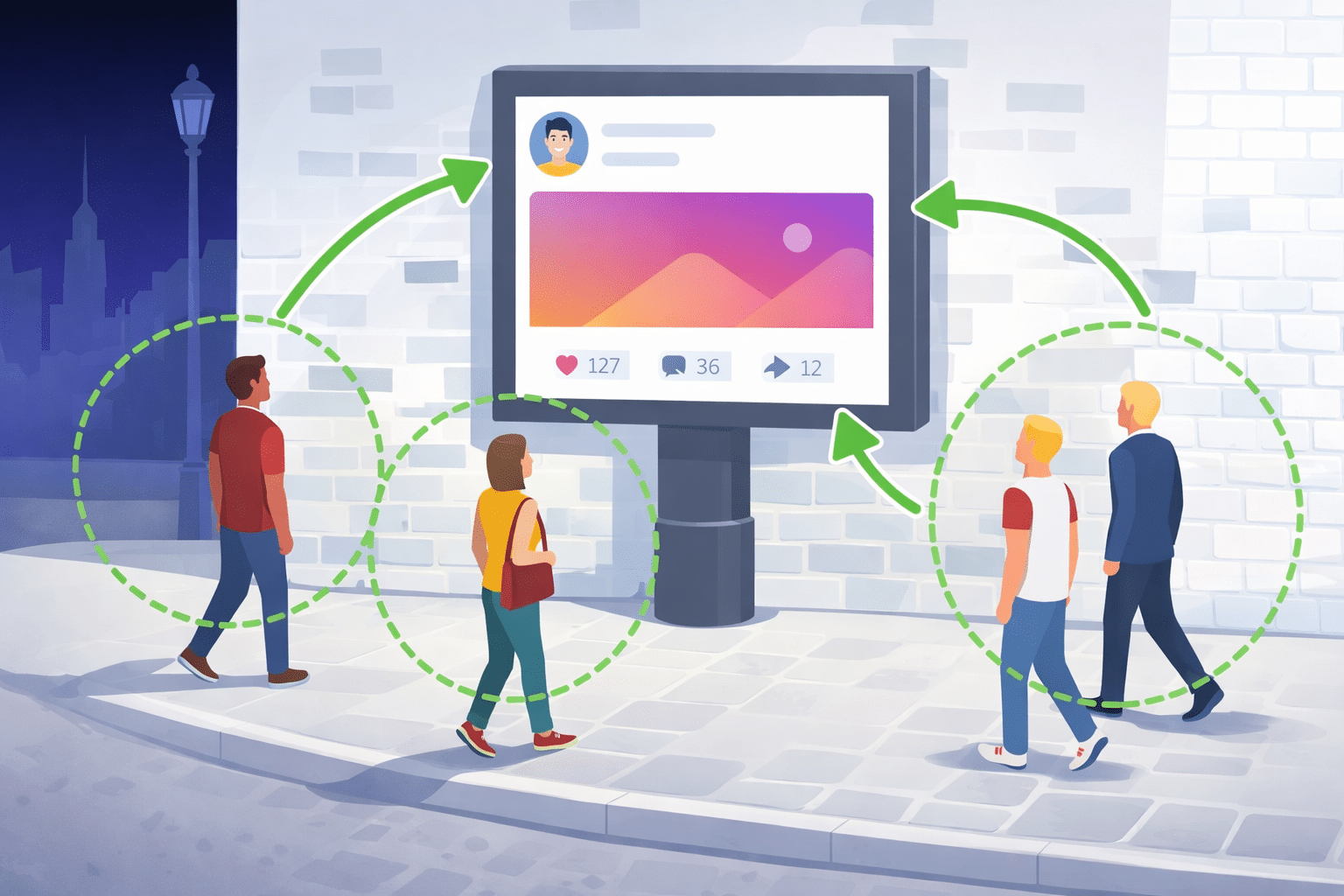
Alcance é o número de pessoas únicas que veem seu conteúdo pelo menos uma vez.
Se 100 usuários diferentes virem sua publicação, seu alcance será de 100.
Mesmo que alguns deles o vejam várias vezes, eles ainda contam uma vez.
O Reach responde a uma pergunta central:
-> Quantas pessoas meu conteúdo alcançou?
Por que o alcance é importante
-
Medidas exposição
-
Útil para reconhecimento da marca
-
Indica até que ponto seu conteúdo se espalha além do seu público-alvo existente
Alcance orgânico vs. pago
-
Alcance orgânico vem de feeds, recomendações e compartilhamentos
-
Alcance pago vem de anúncios e posts impulsionados
O alcance é especialmente importante quando sua meta é apresentar-se a novas pessoas.
O que são impressões? (Definição simples)
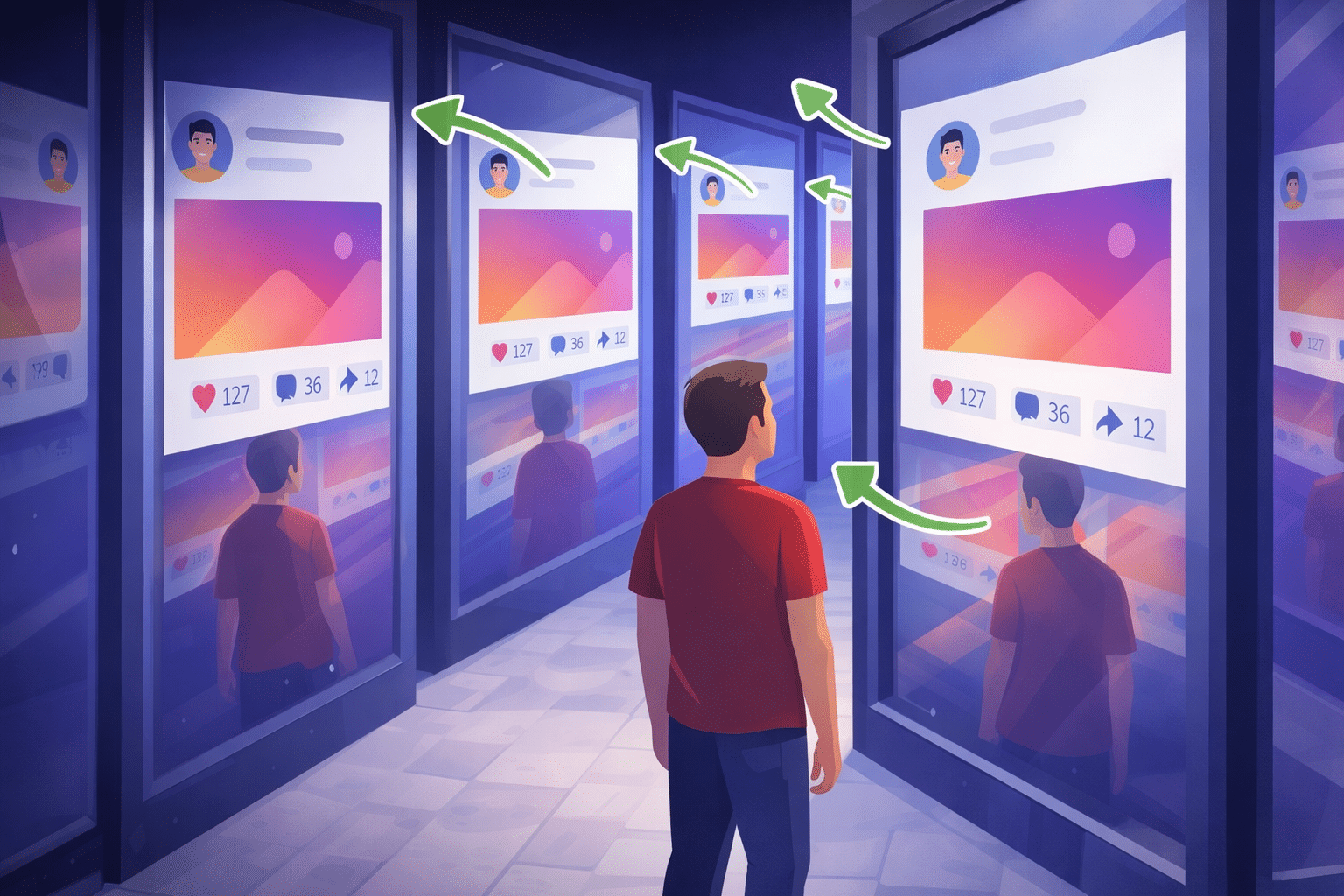
Impressões medir o número total de vezes seu conteúdo é exibido.
Ao contrário do alcance, as impressões pode contar a mesma pessoa várias vezes.
Se um usuário vir sua publicação três vezes, isso equivale a:
👉 Alcance: 1
👉 Impressões: 3
As impressões respondem a uma pergunta diferente:
-> Com que frequência meu conteúdo foi exibido?
Por que as impressões são importantes
-
Medidas visibilidade e repetição
-
Útil para anúncios, narração de histórias e memorização
-
Ajuda a entender frequência
Na maioria das plataformas, as impressões são contadas quando o conteúdo é servido, não necessariamente clicados ou assistidos por completo.
Alcance x Impressões: Comparação lado a lado
Entender o alcance versus impressões fica muito mais fácil quando você vê as duas métricas uma ao lado da outra.
Embora muitas vezes sejam usados de forma intercambiável, Alcance vs. Impressões medem duas coisas muito diferentes. Um deles se concentra em quantas pessoas únicas viu seu conteúdo. A outra se concentra em com que frequência foi mostrado.
Observá-los lado a lado ajuda os profissionais de marketing a escolher rapidamente o KPI certo com base nas metas da campanha, seja o reconhecimento da marca, o desempenho do influenciador ou a otimização da mídia paga.
A tabela abaixo divide o alcance e as impressões de forma simples e visual 👇
| Métricas | Alcance | Impressões |
|---|---|---|
| Medidas | Usuários únicos | ▶️ Exibição total |
| A mesma pessoa contou duas vezes? | ❌ Não | ✅ Sim |
| Melhor para | 🌐 Conscientização | 🔁 Frequência |
| Usado em | 📈 Análise de crescimento | ⚙️ Otimização |
Em resumo:
👉 Alcance quantas pessoas
👉 Impressões =. quantas vezes
Mas o verdadeiro poder vem do uso conjunto de ambos.
Alcance versus impressões e frequência (fórmula principal)
Há uma relação simples que todo profissional de marketing deve conhecer:
Frequência = Impressões ÷ Alcance
Exemplo:
-
Alcance: 1,000
-
Impressões: 3,000
-
Frequência: 3
Isso significa que a pessoa média viu seu conteúdo três vezes.
Por que isso é importante:
A baixa frequência pode significar uma lembrança fraca
A alta frequência pode indicar fadiga, especialmente em anúncios
Exemplos reais em plataformas de mídia social
A compreensão do alcance versus impressões fica muito mais clara quando você analisa como as plataformas realmente distribuem o conteúdo.
O Instagram e o TikTok não expõem o alcance de forma tão transparente quanto as visualizações, especialmente para criadores e marcas que trabalham em escala. É por isso que os profissionais de marketing geralmente precisam estimar o alcance com base em visualizações e padrões de comportamento.
Abaixo estão maneiras práticas e realistas de pensar sobre isso 👇
Alcance versus impressões no Instagram
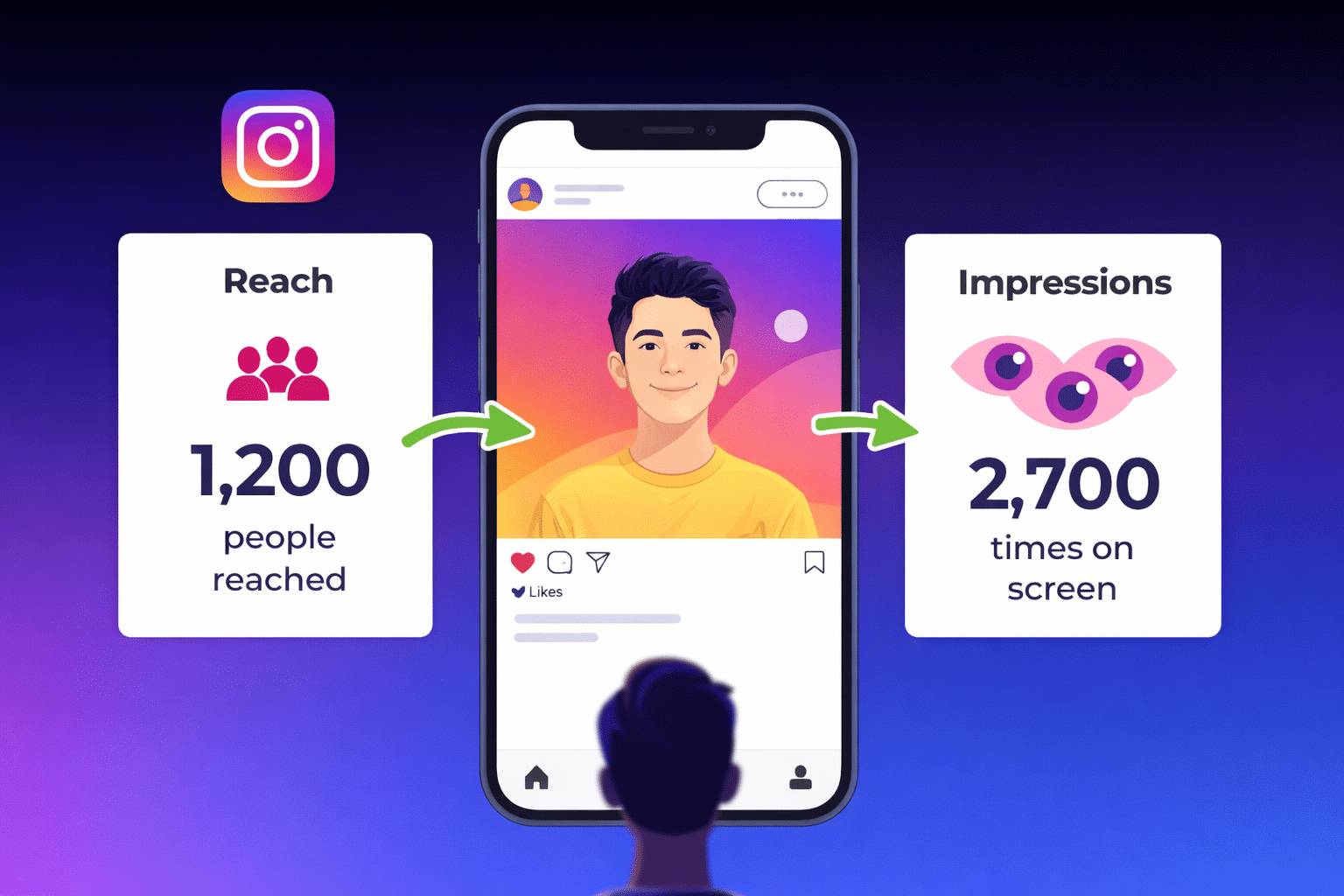
No Instagram, é importante saber isso:
-
Os carretéis geralmente geram mais impressões do que alcance
-
O conteúdo é exibido várias vezes para os mesmos usuários
-
Uma grande parte das visualizações vem de não seguidores, especialmente para carretéis
Um típico Instagram Reel pode:
-
Gerar 40.000 visualizações
-
Alcance 18.000 a 25.000 usuários únicos
-
Resultado em 1,6 a 2,2 impressões por pessoa
Como o alcance é normalmente estimado a partir das visualizações (Instagram)
O Instagram não fornece publicamente uma fórmula fixa, Mas, com base em estudos de criadores e no comportamento da plataforma, os profissionais de marketing geralmente usam essa lógica:
Alcance estimado ≈ Visualizações ÷ Frequência
Onde:
-
A frequência média para Reels geralmente varia entre 1,5 e 2,5
-
Os Reels de melhor desempenho tendem a ser exibidos repetidamente para usuários engajados
Exemplo
-
Visualizações do carretel: 40,000
-
Frequência estimada: 2
-
Alcance estimado ≈ 20.000
Essa estimativa está alinhada com a forma como o Instagram prioriza:
-
Exposição repetida a usuários engajados
-
Distribuição além dos seguidores sem saturação total
Por que isso é importante
-
As visualizações por si só aumentam o desempenho percebido
-
O Reach ajuda você a entender tamanho fiel ao público
-
Para comparar os criadores, é necessário normalizar as impressões em relação ao alcance
Alcance vs. Impressões no TikTok
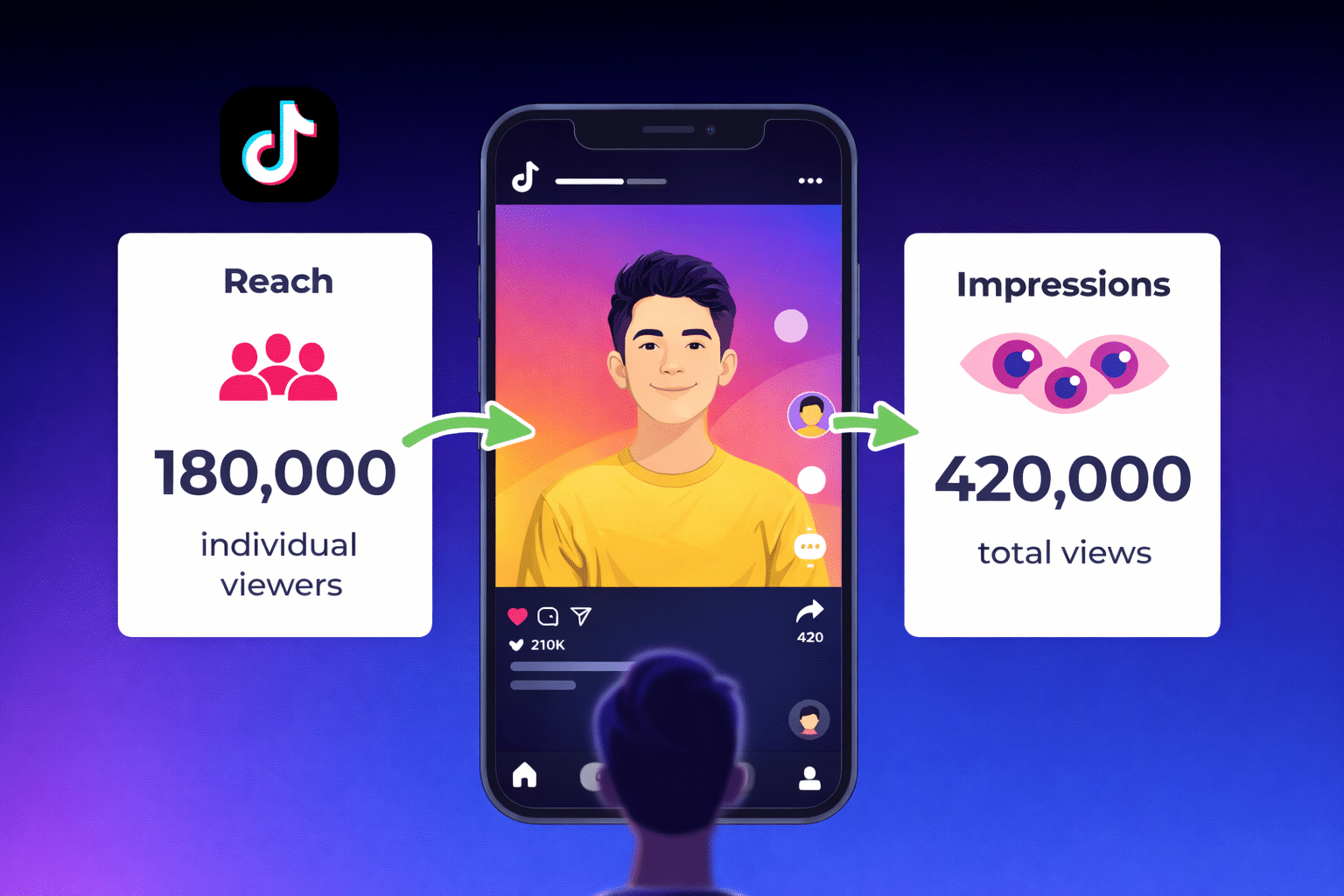
O TikTok tem um comportamento muito diferente.
No TikTok:
-
Os vídeos são distribuídos em várias ondas algorítmicas
-
O mesmo usuário pode ver o mesmo vídeo várias vezes
-
As visualizações são dimensionadas mais rapidamente do que o alcance único
Um vídeo do TikTok com:
-
100.000 visualizações
-
Pode alcançar apenas 55.000 a 75.000 usuários únicos
Isso porque o TikTok favorece muito:
-
Assistir novamente
-
Looping
-
Redistribuição de conteúdo para grupos de interesse comprovado
Como o alcance é estimado a partir das visualizações no TikTok
Com base no comportamento da plataforma e nos relatórios dos criadores, os profissionais de marketing geralmente aplicam uma suposição de frequência mais baixa do que o Instagram, mas ainda maior que 1.
Uma faixa de trabalho comum:
-
Frequência média do TikTok: 1.3-1.8
Alcance estimado ≈ Visualizações ÷ 1,3 a 1,8
Exemplo
-
Visualizações no TikTok: 100,000
-
Frequência presumida: 1,5
-
Alcance estimado ≈ 66.000
Frequências mais altas geralmente sinalizam:
-
Grande valor de repetição
-
Conteúdo sendo reenviado para o mesmo público
-
Impulso viral em vez de alcance mais amplo
Principais informações sobre o TikTok
Visualizações altas nem sempre significam uma exposição mais ampla.
Eles geralmente significam maior repetição dentro dos mesmos grupos de interesse.
Alcance versus impressões no marketing de influência
É nesse ponto que muitos relatórios deixam a desejar.
Em campanhas de criadores:
-
Programas de alcance quantas pessoas foram expostas
-
As impressões mostram quão forte foi a repetição da narrativa
O conteúdo do influenciador se beneficia de frequência natural.
Ver o mesmo criador várias vezes parece menos intrusivo do que os anúncios.
É por isso que as impressões são mais importantes do que muitas marcas imaginam.
Relatórios de desempenho em escala
Em Análise de cliques, estimamos as impressões entre:
-
Histórias do Instagram
-
Publicações no Instagram
-
Instagram Reels
-
Vídeos do TikTok
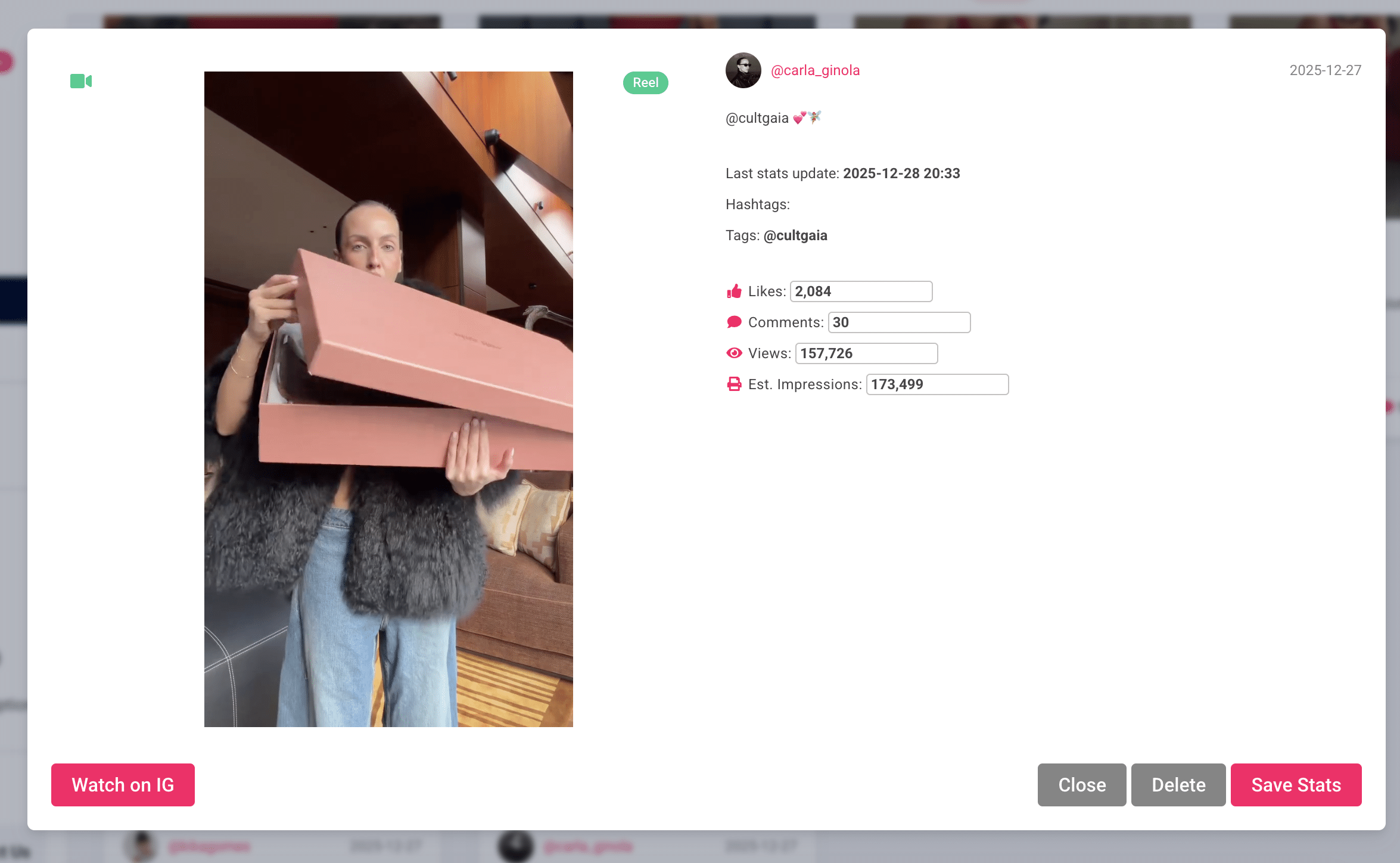
Isso permite que os profissionais de marketing Automatize os relatórios de desempenho, comparar os criadores de forma justa e evitar depender de dados inconsistentes da plataforma nativa.
O resultado é um relatório mais claro e uma análise mais rápida da campanha.
Alcance versus impressões na publicidade paga
Na mídia paga, as impressões desempenham um papel mais importante.
-
O CPM é baseado em impressões
-
O retargeting se baseia na repetição
-
Impressões altas com baixo alcance podem indicar superexposição
Exemplo:
Campanhas de prospecção → priorizar o alcance
Campanhas de retargeting → priorizar impressões e frequência
O contexto é tudo.
Alcance vs. Impressões por objetivo de campanha
| Objetivo da campanha | Métrica primária | Métrica de suporte |
|---|---|---|
| Conhecimento da marca | 🟠 Alcance | 🟡 Impressões |
| Lançamento do produto | 🟠 Alcance | Frequência |
| Retargeting | 🟡 Impressões | Frequência |
| Semeadura de influenciadores | 🟠 Alcance | 🟡 Impressões |
O erro não é escolher a métrica errada.
É escolher um sem contexto.
O que é um “bom” alcance ou impressão?
Não existe uma referência universal.
Mas as faixas típicas ajudam a definir as expectativas.
O alcance orgânico geralmente representa um fração de seguidores
As impressões dos influenciadores geralmente excedem o alcance devido à repetição
As impressões pagas são dimensionadas de acordo com o orçamento e o tamanho do público
Sempre avalie o desempenho em relação à meta da campanha, não de forma isolada.
Erros comuns que os profissionais de marketing cometem
Tratar as impressões como pessoas
Alcance dos relatórios sem frequência
Comparação de campanhas com objetivos diferentes
Usar métricas de vaidade em vez de KPIs
Métricas sem contexto levam a decisões ruins.
Como usar o alcance e as impressões juntos
Uma estrutura simples:
1️⃣ Defina sua meta de campanha
2️⃣ Escolha seu KPI principal
3️⃣ Use a segunda métrica como validação
Isso mantém os relatórios honestos e acionáveis.
Como informar o alcance versus as impressões (sem enganar as partes interessadas)
Os bons relatórios são assim:
-> “Atingimos 120.000 usuários únicos”
-> “Com uma frequência média de 2,6”
-> “Resultando em uma forte lembrança da mensagem”
Evite relatar apenas as impressões.
Sempre explique o que eles representam.
Alcance vs. Impressões: Folha de dicas
💡 Uso alcance quando você quiser exposição
💡 Uso impressões quando a repetição é importante
💡 Uso ambos para entender o impacto real
Alcance vs. Impressões: PERGUNTAS FREQUENTES
Qual é a diferença entre alcance e impressões?
O alcance conta os usuários únicos. As impressões contam o total de visualizações.
Por que as impressões são mais altas do que o alcance?
Porque a mesma pessoa pode ver o conteúdo várias vezes.
Um alcance maior é sempre melhor?
Somente se a conscientização for seu objetivo.
Qual métrica é mais importante para os influenciadores?
Ambos. O alcance mostra a exposição. As impressões mostram o poder de contar histórias.
O alcance pode ser maior do que as impressões?
Não. As impressões são sempre iguais ou superiores ao alcance.
Conclusão
O alcance e as impressões não são rivais.
Eles apenas medem coisas diferentes.
O Reach lhe diz quantas pessoas viu seu conteúdo.
As impressões lhe dizem quantas vezes foi mostrado.
Quando você olha para Alcance vs. Impressões juntos, as coisas ficam mais claras:
-
Você entende o alcance de seu conteúdo
-
Você vê se as pessoas o viram uma ou várias vezes
-
Você tem uma noção melhor do impacto real
A maioria dos erros acontece quando as equipes analisam apenas um número.
Impressões altas sem alcance podem significar repetição.
Um alto alcance sem impressões pode significar um recall fraco.
Reach and impressions are just two of many performance indicators marketers monitor across platforms.
Os bons profissionais de marketing não buscam grandes números.
Eles olham para o métrica certa para o objetivo certo, e explicam os resultados de uma forma que todos entendem.
É nesse momento que Alcance versus Impressões deixam de ser confusos e começam a ser úteis.