Eine Influencer-Preisliste ist die Arbeitsgrundlage für Gebühren und Bedingungen, die von den Urhebern (oder ihren Vertretern) bereitgestellt werden - die Basis für die Budgetierung, Verhandlung und Prognose von Influencer-Kampagnen. Für Marketingverantwortliche ist es der schnellste Weg, die Kosten für Influencer-Marketing zu schätzen und Ihr Preismodell an bestimmten KPIs auszurichten. Die Preislisten reichen von öffentlichen Preislisten bis hin zu vollständig ausgehandelten Kostenvoranschlägen. Wenn Sie sie richtig lesen, können Sie überhöhte Ausgaben, unpassende Nutzungsrechte und schwache Leistungen vermeiden. In diesem Leitfaden werden Preistreiber, gängige Modelle, Plattform-Snapshots, Verhandlungsskripte und gebrauchsfertige Vorlagen erläutert. Sie erhalten einen Überblick über die typischen Preisspannen und einen praktischen Prozess zur Erstellung eines vertretbaren Kampagnenbudgets. Weitere Informationen zur Monetarisierung und Verpackung von Influencern finden Sie unter Wie verdienen Influencer Geld?, was ist ein pr-paket, Influencer-Medienpaket, Was ist Whitelisting?und Influencer-Marketing-Vertragsvorlage.
Schnell gelesen: Grundlagen der Preisgestaltung für Influencer
- Treiber für die PreisgestaltungGröße der Zielgruppe, Engagementrate, Plattform, Nutzungsrechte und Produktionswert
- PreisbildungsmodellePro-Post, Pakete, Retainers und leistungsbezogene Optionen
- 2025 Marktgröße: Die Influencer-Marketing-Branche erreicht weltweit $32,55 Milliarden
- Haushaltsentwicklung62% der Marken erhöhen ihre Influencer-Budgets; 30%+ investieren über $5 Millionen
- Werkzeuge: Vorlagen für Preislisten und Tarifrechner helfen Ihnen bei der Bewertung und Verhandlung
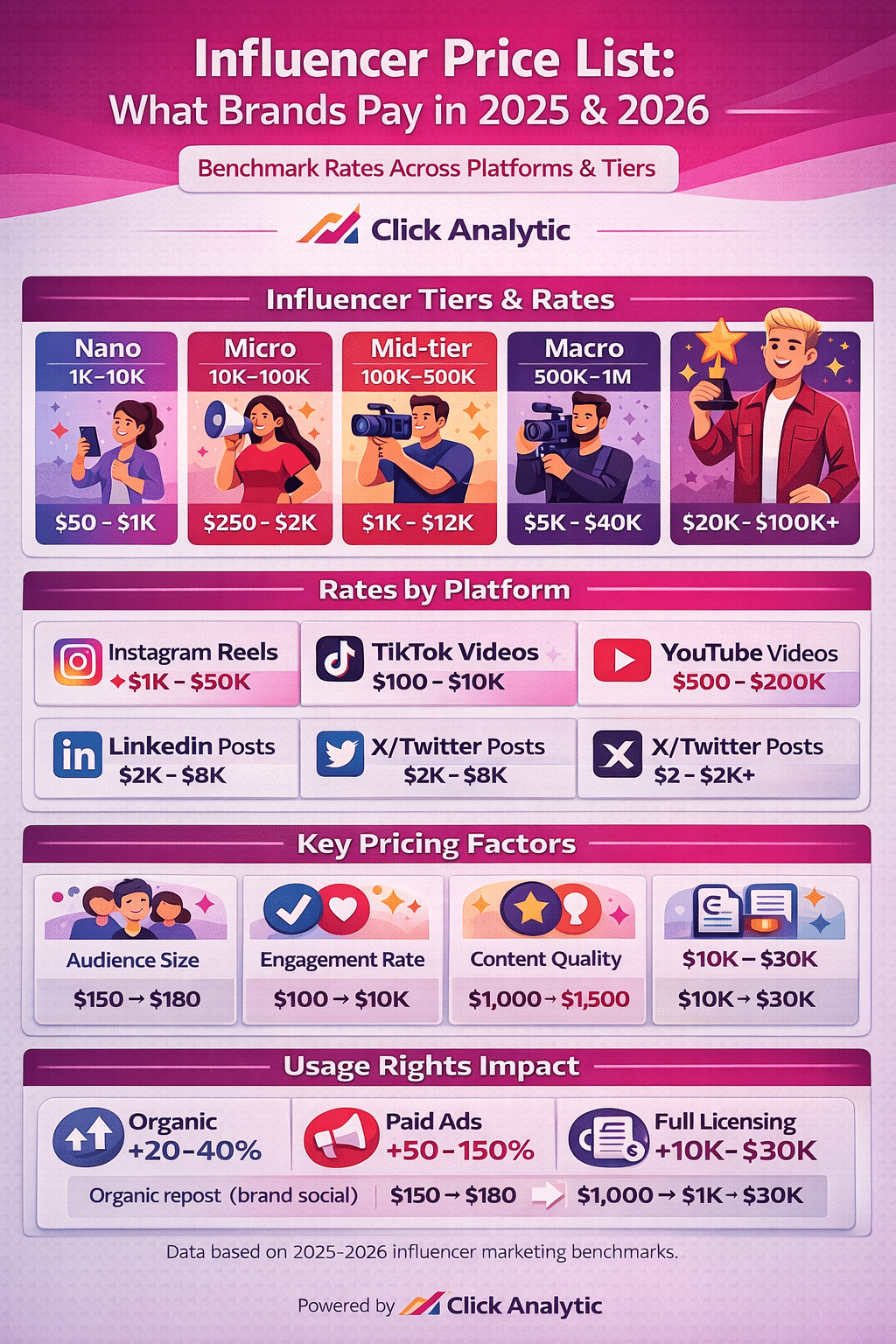
Was ist eine Influencer-Preisliste?
Eine Influencer-Preisliste ist eine Liste oder Preisliste, die die Standardgebühren eines Urhebers und die damit verbundenen Bedingungen enthält - z. B. Preis pro Beitrag, Preis pro Story, Nutzungsrechte und Exklusivitätsgebühren. Einige Kreative veröffentlichen statische Preislisten. Häufiger sehen Sie ein Startangebot, das auf Ihrem Briefing basiert und auf die zu erbringenden Leistungen, Rechte und den Zeitplan zugeschnitten ist. Hier finden Sie die Preislisten:
- Direkt von den Urhebern (DM oder E-Mail), oft als PDF/Deck/Notion-Seite
- Talentagenturen, die mehrere Urheber vertreten
- Influencer-Marktplätze/Plattformen, die den “Preis pro Beitrag” standardisieren”
- PR-/Marketing-Agenturen verpacken Kreative in eine Kampagne
Wenn Sie eine Preisliste anfordern, fragen Sie nach spezifischen Angaben, die Ihren KPIs entsprechen. Ein knappes Briefing sorgt für bessere Vergleiche und weniger Überraschungen.
Checkliste anfordern
- LiefergegenständeAnzahl und Art (z. B. 1 Reel + 3 Stories), Inhaltsangaben
- Plattformen: wo sie veröffentlicht wird; Cross-Posting-Politik
- VerwendungOrganische Nutzung, bezahlte Nutzung, Kanäle, Geografie, Dauer
- Ausschließlichkeit: Kategorie und Zeitrahmen
- Einblicke des PublikumsDemografische Daten, Top-Märkte, Engagement-Metriken der letzten 90 Tage
- ZahlungsbedingungenAnzahlungen, Nettobedingungen, Revisionspolitik, Stornierung
Skript für Vorlagenanforderung
“Bitte teilen Sie uns Ihre aktuelle Preisliste mit (Preis pro Beitrag / Preis pro Story / Nutzungsrechte / Exklusivitätsgebühr) sowie die demografischen Daten des Publikums und die Engagement-Metriken der letzten 90 Tage.” Quelle: Influencer Marketing Hub Benchmark Report; HypeAuditor Engagement Benchmarks (Zugriff im September 2025).
Schlüsselfaktoren für die Preisgestaltung von Influencern
Die Gebühren auf einer Preisliste ergeben sich aus einer Reihe von Variablen. Wenn Sie diese kennen, können Sie jede Preisliste interpretieren und verstehen, was Influencer berechnen.
Größe des Publikums (Follower)
Definition: Größe des Publikums des Urhebers nach Plattform. Ebenennano (1K-10K), micro (10K-100K), mid-tier (100K-500K), macro (500K-1M), mega (>1M). Leitfaden: Beginnen Sie mit der Follower-Ebene, aber Engagement und Nischenpassung schlagen oft die reine Größe. Untersuchungen zeigen, dass 39% der Marken Nano-Influencer als ihre wahrscheinlichsten Partner im Jahr 2025 wählen.
Engagement-Rate
Definition(Gefällt mir + Kommentare + Speichern) / Follower × 100. Videos können Views oder Shares enthalten. Leitfaden: Ein starkes Engagement ermöglicht höhere Gebühren im Vergleich zu den Normen der Kategorie. Creators mit Engagement-Raten über 8% können 30-50% Premium-Preise erzielen.
Plattform-Unterschiede
Definition: Formate steigern Aufwand und Wirkung - Posts, Karussells, Reels, Shorts, lange YouTube- und LinkedIn-Artikel. Leitfaden: Erwarten Sie plattformspezifische Preise. YouTube hat aufgrund der Produktionsanforderungen mit $675 pro Zusammenarbeit den höchsten Durchschnittspreis. Bei Instagram liegt der Durchschnitt bei $364, bei TikTok bei $350.
Komplexität der Inhalte und Produktionswert
Definition: Drehbuchgestaltung, Dreharbeiten an mehreren Orten, professionelle Bearbeitung, Animationen. Leitfaden: 10-100% Uplift für höhere kreative Komplexität.
Nutzungsrechte und Lizenzierung
Definition: Wiederverwendung über den Beitrag hinaus - organisch, bezahlt, Whitelisting, Kürzungen. Leitfaden: Kurzfristige Wiederverwendung erhöht die Kosten um 20-50%; langfristige oder unbefristete Nutzung um 100-300%. Nutzungsrechte für Inhalte können die Kampagnenkosten um bis zu 39% erhöhen.
Ausschließlichkeitsgebühren
Definition: Keine Vermerke für Konkurrenten während einer bestimmten Zeit. Leitfaden: Rechnen Sie mit einem Aufschlag von 5-50% je nach Kategorie und Statur des Urhebers.
Regionale und zielgruppenspezifische Ausrichtung
Definition: Märkte mit höherem BIP oder höherer Kaufkraft verlangen höhere Preise. Leitfaden: In den USA ansässige Mikro-Influencer mit 50.000 Followern können $2.000 für ein Instagram-Reel verlangen; entsprechende europäische Creators verlangen $1.400-$1.600.
Komplexität der Kampagne, Zeitpläne und Anzahl der zu liefernden Ergebnisse
Definition: Einmalige Flüge, kurze Bearbeitungszeiten, Revisionen. Leitfaden: Bündelung senkt die Kosten pro Lieferung; Eilzuschläge erhöhen die Kosten um 10-25%. Saisonale Nachfragespitzen 20-30% während des Schwarzen Freitags, der Feiertage und der Schulanfangsphase.
Schöpferische Reputation und Nischennachfrage
Definition: Fachleute, denen man vertraut, können Prämien für ihre Leistung verlangen. Leitfaden: In Nischen wie Finanzen, Technik und Gesundheitswesen werden 15-40% höhere Prämien verlangt als bei allgemeinen Lifestyle-Inhalten. Kurzer Tipp: Fragen Sie nach dem Median der Leistung der letzten 90 Tage nach Format (z. B. Reel Views) und nicht nach Lifetime-Kennzahlen. Die Aktualität ist wichtig.
Influencer-Preismodelle und typische Spannen
Marken sehen mehrere gängige Preismodelle auf Tarifkarten. Alle nachstehenden Zahlen sind auf die USA bezogene Schätzungen für 2025-2026; die tatsächlichen Kosten variieren je nach Nische, Region, Engagement und Vertragsbedingungen.
Pro-Beitrag / Pro-Bild (einmalig)
Was es ist: Ein einzelner veröffentlichter Beitrag mit Überschrift und einem Tag/Link. Hebel: Bündeln Sie mehrere Beiträge; fügen Sie Geschichten hinzu; klären Sie die Nutzungsrechte; sorgen Sie für eine zeitnahe Berichterstattung. Vorläufige Spanne (US, 2025-2026):
- Nano (1K-10K): $50-$500 (einige verlangen bis zu $1.000 bei außergewöhnlichem Engagement)
- Mikro (10K-100K): $250-$2,000
- Mittlere Ebene (100K-500K): $1,000–$5,000
- Makro (500K-1M): $5,000–$20,000+
- Mega (1M+): $20,000–$100,000+
Pro-Story / Pro-Snap
Was es ist: Kurzlebige Inhalte, die oft in Paketen von 3-5 Bildern verkauft werden. Vorläufige Spanne (US, Schätzung):
- Nano: $20-$150
- Mikro: $150-$800
- Mittlere Ebene: $800-$3,000
- Makro+: $3,000+
Pro Video / Langform (YouTube, langes IG-Video)
Was es ist: Ein produziertes Video mit Drehbuch, Schnitt, Miniaturansicht und Veröffentlichung. Vorläufige Reichweite (YouTube, US):
- Mikro: $500-$5,000
- Mittlere Ebene: $5,000–$20,000
- Makro+: $20,000–$200,000+ (production-dependent)
Kurzvideos / Reels (TikTok, Instagram)
Was es ist: 15-60 Sekunden, hohes Engagement; auf den Trend abgestimmte Assets. Vorläufige Reichweite (US):
- Mikro: $250-$2,000
- Mittlere Ebene: $2,000–$10,000
- Makro+: $10,000+
Hinweis: Laut dem Bericht von Collabstr aus dem Jahr 2025 erzielen Instagram Reels 32% höhere Raten als TikTok-Videos (durchschnittlich $288 gegenüber $217).
Gebündelte Pakete & Multi-Post-Kampagnen
Ermäßigter Preis pro Lieferung für ein bestimmtes Volumen (z. B. 3 Beiträge + 6 Geschichten über 60 Tage). Typischer Rabatt: 10-30% gegenüber Einzelpreisen.
Monatliche Honorare / Laufende Partnerschaften
Feste monatliche Gebühr für eine bestimmte Anzahl von Beiträgen und Aktivierungen. Laut dem Bericht 2025 von Influencer Marketing Hub nutzen 54% der Marken inzwischen Retainer- oder Partnerschaftsmodelle anstelle von einmaligen Posts. Langfristige Retainer kosten 40-60% weniger pro Beitrag als einmalige Partnerschaften.
Leistungsabhängige Modelle (CPA / Affiliate / Rev Share)
Niedrigere Grundgebühr mit Anreizen, die an verfolgte Konversionen gebunden sind. Erfordert UTM-Standards und klare Zuordnungsfenster. Gut für die Förderung von Direktverkäufen mit messbarem ROI.
Lizenzierung / nutzungsabhängige Preisgestaltung (bezahlte Medienrechte)
Gebühren für die Wiederverwendung von Inhalten von Urhebern außerhalb ihres Kanals - bezahlte Medien, Whitelisting, Website-Nutzung, Einzelhandelsmedien.
Influencer-Preisliste nach Stufe und Plattform (2025-2026)
Mit dieser umfassenden Preistabelle können Sie auf einen Blick die typischen Preisspannen nach Stufe und Plattform vergleichen. Die Spannen sind illustrativ; passen Sie sie je nach Nische, Engagement, Rechten und Region an.
| Ebene | Follower | Plattform | Liefergegenstände | Typischer Bereich (USD) |
|---|---|---|---|---|
| Nano | 1K-10K | 1 Trommel | $150-$1.000 | |
| Nano | 1K-10K | 1 Geschichte (3 Rahmen) | $50-$250 | |
| Mikro | 10K-100K | TikTok | 1 Video in Kurzform | $250-$2.000 |
| Mikro | 10K-100K | YouTube | 60-120s Integration | $500-$5.000 |
| Mikro | 10K-100K | 1 Beitrag zum Thema Vordenker | $1,500–$4,000 | |
| Mittlere Ebene | 100K-500K | 1 Rolle + 3 Geschichten | $3,000–$12,000 | |
| Mittlere Ebene | 100K-500K | YouTube | Spezielles Video | $5,000–$20,000 |
| Makro | 500K-1M | TikTok | 1 Video | $10,000–$40,000 |
| Makro | 500K-1M | YouTube | Spezielles Video | $20,000–$200,000+ |
| Mega | 1M+ | Multiplattform | Startpaket | $50,000–$500,000+ |
Auswirkungen von Nutzungsrechten und Lizenzen auf den Preis
Für eine genaue Budgetplanung ist es wichtig zu verstehen, wie sich Nutzungsrechte auf die Preisgestaltung auswirken. Diese Tabelle zeigt typische Aufschläge bei der Wiederverwendung von Inhalten von Urhebern.
| Verwendungsart | Typischer Uplift im Vergleich zum Basiszinssatz | Beispielklausel Sprache | Wann zu verwenden |
|---|---|---|---|
| Organische Wiederveröffentlichung (Brand Social) | +20-40% (6 Monate) | “Die Marke darf sechs Monate lang in [Märkten] auf eigenen sozialen Kanälen reposten. Keine bezahlten Medien.” | Soziale Verstärkung ohne Werbung |
| Bezahlte soziale Netzwerke (Spark/Whitelist) | +50-150% (6-12 Monate) | “Bezahlte soziale Nutzung für [Kanäle] in [Märkten] für [Dauer]”.” | Leistungsanzeigen mit Erstellergesicht |
| Web/ecomm/CRM | +25-75% (6-12 Monate) | “Web/ecomm/CRM-Nutzung; [Dauer]”.” | PDPs, E-Mail, Landing Pages |
| Einzelhandelsmedien/OOH | +75-200% (6-12 Monate) | “Einzelhandelsmedien und OOH; Zustimmung der Talente erforderlich; [Dauer/Märkte]”.” | Werbung in Geschäften, im Einzelhandel, auf Plakatwänden |
| Dauerhaft bezahlte Medien | +100-300% | “Ständige Nutzung bezahlter Medien über alle Kanäle und Märkte hinweg”.” | Selten; in der Regel vermeiden, wenn nicht unbedingt erforderlich |
Plattformspezifische Preisübersichten
Plattform und Format bestimmen die Preisgestaltung. Hier finden Sie schnelle, umsetzbare Momentaufnahmen für die wichtigsten Kanäle mit Benchmarks für 2025-2026.
Preise für Instagram-Influencer
Formate: Feed Bild, Karussell, Reel, Geschichten, Live. 2025 Preise:
- Instagram Reels: $1.000-$50.000+ (Format mit der höchsten Nachfrage)
- Instagram-Feed-Beiträge: $500-$30.000 (abnehmendes Engagement; niedrigere Raten)
- Instagram Stories: $300-$10.000 (kürzere Lebensdauer; niedrigere Stufe)
- Instagram Karussell-Beiträge: $600-$15.000 (mittelgroßes Engagement)
Anmerkungen: Für Rollen werden hohe Preise verlangt, weil der Algorithmus von Instagram sie stark bevorzugt - die Ersteller erhalten im Durchschnitt 67% mehr Reichweite als Feed-Posts. Whitelisting oder Partner-Label-Zugang erhöht die Kosten.
Preise für YouTube-Influencer
Formate: spezielle Videos, Mid-Roll-Integrationen, Kurzfilme. 2025 Preise:
- Mikro (10K-100K Teilnehmer): $500-$5.000 pro Integration
- Mittlere Ebene (100K-500K Abonnenten): $5.000-$20.000 pro Video
- Makro (500K-1M Abonnenten): $10.000-$20.000+ pro Video
- Mega (1M+ Abonnenten): $20.000-$200.000+ pro Video
Anmerkungen: Produktionsanforderungen und langfristige Entdeckungen führen zu höheren Honoraren. Klare Obergrenzen für Überarbeitungen und Rechte an Miniaturansichten sind gängige Vertragselemente. YouTube hat mit durchschnittlich $675 die höchste Rate pro Zusammenarbeit.
TikTok-Influencer-Preise
Formate: Kurzvideos; Live-Shopping; Spark Ads-fähige Assets. 2025 Preise:
- Nano (1K-10K): $5-$250 pro Video
- Mikro (10K-50K): $25-$125 pro Video
- Mittleres Niveau (50K-500K): $125-$2.000 pro Video
- Makro (500K-1M): $2.000-$10.000 pro Video
- Mega (1M+): $5.000-$10.000+ pro Video
Anmerkungen: Trendgesteuerte Kreativität und Schnelligkeit bringen Prämien. Bewährte kommerzielle Schöpfer verlangen mehr. Top-TikTokers wie Charli D'Amelio können $10.000+ für einen einzigen Beitrag verdienen.
LinkedIn Influencer Preisgestaltung
Formate: Vordenker-Beiträge, Karussells, Langform-Artikel. 2025 Preise:
- 50K Follower: $3.000-$8.000 pro Beitrag
- B2B-Prämie: 50-150% über den entsprechenden Instagram-Tarifen
Anmerkungen: Die B2B-Nuance und das Lead-Potenzial treiben die Preise auf LinkedIn in die Höhe, die über den entsprechenden Followerzahlen auf anderen Plattformen liegen. Die Pakete beinhalten oft die Entwicklung und Moderation von Inhalten.
Twitter/X Influencer Preisgestaltung
2025 Preise: $2 pro Beitrag pro 1.000 Follower (Bereich: $2-$2.000+) Anmerkungen: Im Allgemeinen die günstigste Plattform für Influencer-Marketing. Die Preise variieren je nach Verifizierungsstatus und Positionierung als Vordenker.
Twitch / Streaming-Preise
Formate: On-Stream-Integrationen, Produktplatzierungen, Affiliate-Links. 2025 Durchschnitt: $238 pro Zusammenarbeit Anmerkungen: In den Verträgen werden Lesezeiten und Anreize festgelegt. Interaktive Live-Streams fördern eine starke Bindung an das Publikum, erfordern aber weniger Nachbearbeitung als polierte Videos.
UGC (Benutzergenerierte Inhalte) Preisgestaltung
2025 Durchschnitt: $198 pro Stück (Anstieg um 93% gegenüber dem Vorjahr bei den Herstellern) Spezialisierte Tarife: $1.500-$5.000 pro 30-Sekunden-Video für UGC-Experten Anmerkungen: UGC-Ersteller sind in die Höhe geschossen und haben durch das erhöhte Angebot die Gesamtpreise gedrückt. Männliche Influencer verdienen im Durchschnitt 40% mehr als weibliche Creators, obwohl Frauen 72% des Marktes ausmachen.
Branchenspezifische Preisgestaltung für Influencer
Die Influencer-Raten variieren je nach Branche dramatisch. Hier sehen Sie, was Sie für spezielle Nischen in den Jahren 2025-2026 erwarten können:
Mode & Schönheit
- Prämie für allgemeine Lebensführung: 20-40%
- Kollaborationen im Bereich Luxusmode: $50,000–$500,000+
- Mode-Mikro-Influencer für den Massenmarkt: $1.500-$5.000
Finanzen & Investieren
- Micro-influencers: $2,000–$6,000
- Macro-influencers: $20,000–$60,000
- Erfüllungskosten erhöhen den Grundtarif um 15-25%
Technik & SaaS
- Leistungsabhängige Preisgestaltung üblich (Basis + Anreiz pro Lead)
- 12-monatige Botschafter-Retentionen: 40-60% Ersparnis gegenüber einmaliger Zahlung
- B2B-Zielgruppenbefehl 50-150% premium
Gesundheitswesen und Medizin
- Grundprämie: 15-25% über den allgemeinen Tarifen
- Zertifizierungsanforderungen beeinflussen die Preisgestaltung
- Regulierte Forderungen erhöhen die Befolgungskosten
Wellness & Nahrungsergänzung
- Bereich: $1,500–$10,000
- Glaubwürdigkeit und Einhaltung von Vorschriften unerlässlich
Wie Sie Preislisten von Influencern effektiv lesen und vergleichen
Die Analyse von Begriffen ist genauso wichtig wie der Preis der Überschrift. Nutzen Sie diese praktische Checkliste zum Lesen.
Checkliste Lesen
- LiefergegenständeAuflistung aller Elemente und Spezifikationen (Format, Länge, Auflösung, Länge der Bildunterschrift, Platzierung des Links)
- Buchungsfenster: Veröffentlichungsbereiche, Zeiten und Ablauf des Inhalts (falls vorhanden)
- Enthaltene Plattformen: Primärer Beitrag + Cross-Posts; einschließlich Reposts und wie viele
- Nutzung & LizenzierungUmfang, Geografien, Kanäle, Dauer
- AusschließlichkeitKategorie, Gebiet, Dauer und Umfang festlegen
- Überarbeitungen: Anzahl und Durchlaufzeiten enthalten
- Metriken und Berichterstattungwelche Metriken, welches Format und welcher Zeitplan für die Berichte
- ZahlungsbedingungenKautionen, Nettobedingungen, Regeln für die Rechnungsstellung, Verzugszinsen
- Annullierungen / Höhere Gewalt / Nachbesserungen: Abhilfemaßnahmen bei Problemen mit der Live-Sendung
Rote Flaggen, auf die man achten sollte
- Keine klare Formulierung der Nutzungsrechte
- “Unbegrenzte” Rechte gebündelt in einer geringen Gebühr
- Keine Publikumsmetriken oder nicht überprüfbare Daten
- Kein Zeitplan für die zu erbringenden Leistungen
- Vage Berichtsversprechen ohne konkrete Angaben
- Aufgeblähte Follower-Zahlen mit geringem Engagement (Überprüfung auf gefälschte Follower)
Verhandlungsskripte
Mengenrabatt: “Wenn wir uns zu X Stellen über Y Monate verpflichten, wie hoch ist Ihr Pauschalpreis?” Nutzungsrechte: “Wir möchten eine bezahlte soziale Nutzung für 6 Monate in den USA - welchen Aufschlag würden Sie anwenden?” Leistungsaufteilung: “Wir können eine reduzierte Pauschalgebühr plus einen CPA für verifizierte Konversionen anbieten - ist das akzeptabel?” Verankerung: “Auf der Grundlage aktueller Benchmarks für Hersteller dieser Größe liegt unser Ziel bei $X pro Rolle.”
Budgetierungs- und Verhandlungsstrategien für Marketing-Führungskräfte
Übersetzen Sie Kampagnenziele in ein vertretbares Influencer-Budget und eine vertretbare Verhandlungsposition.
Schritt-für-Schritt-Budgetierungsprozess
- Zielsetzung und KPI festlegen (Wahrnehmung, Erwägung, Erwerb)
- KPI in eine Zielkostenmetrik umwandeln (z. B. Ziel-CPM oder CPA)
- Zuordnung von Ergebnissen zu KPIs nach Format und Plattform
- Erstellen Sie ein preislistenbasiertes Budget von 10-20 Tarifkarten und Modellszenarien (Kern, Stretch, konservativ)
- Einen Eventualfall hinzufügen (10-20%) für Produktions-, Rechte- und Eilgebühren
- Entscheiden Sie sich für den Zahlungsmix (Grundgehalt vs. Leistungsanreize)
Bewährte Verhandlungspraktiken
- Verankerung mit Daten: “Auf der Grundlage aktueller Benchmarks für Urheber dieser Größe liegt unser Ziel bei $X pro Rolle.”
- Abschlagszahlungen: 50% bei der Annahme, 50% bei der Lieferung und bei den Messwerten.
- Schutz der Nutzung: “Diese Gebühr deckt nur organische Beiträge ab; die Wiederverwendung von bezahlten Medien wird separat verhandelt.”
- Fragen Sie nach Makegoods: Vorabvereinbarung von Schwellenwerten für erhebliche Unterlieferungen.
- Langfristigen Wert bieten: Retainer ermöglichen 10-30% Einsparungen, wenn Kalender und Zahlungen vorhersehbar sind.
Fallstudien und praktische Beispiele
Beispiel A - B2B SaaS 6-Monats-Programm
Ziel: Generieren Sie MQLs mit einem Ziel-CPL von $200. Strategie8 LinkedIn-Beiträge für Vordenker; 12 Produktdemos von Mikro-Influencern; 3 Makro-Interviews auf YouTube. Kosten (illustrativ):
- LinkedIn-Stellen der mittleren Ebene x8 = $12.000
- 12 Mikro-Demos @ $800 = $9.600
- 3 Makro YouTube @ $15.000 = $45.000
- Unvorhergesehenes = $8.000
- Insgesamt ≈ $74,600
Ergebnismodell: Impressions 1.8M; CTR 0.9%-1.5%; Leads ≈ 1,944; Blended CPL ≈ $38 (nur Modell). Lektionen: Vorab genehmigte Nachrichten, UTMs und das Testen mehrerer Blickwinkel verringern die Varianz.
Beispiel B - Einführung eines Verbraucherprodukts
Ziel: Steigerung des Bekanntheitsgrads und Direktverkauf über 2 Wochen. Mischen Sie20 Micro-Influencer für Reels; 5 Macro Creators; Paid Social für Top-Performer. Kosten:
- 20 Mikro-Rollen @ $1.000 = $20.000
- 5 Makro-Pakete @ $12.000 = $60.000
- Bezahlte soziale Förderung = $10.000
- Insgesamt ≈ $90,000
ROI-Denken2,5 Mio. Aufrufe; 1,5% CTR; 3% Konversion; AOV $60 → Umsatz ≈ $67.500 (Modell). Verwenden Sie Inkrementalitätstests für die Genauigkeit. Tipp: Ziehen Sie die Ersteller-Medianwerte der letzten 90 Tage heran und modellieren Sie vor der Markteinführung Szenarien für den besten, mittleren und schlechtesten Fall.
Bewährte Praktiken für Verträge, Nutzungsrechte und Verlängerungen
Verträge machen aus einer Preiskarte eine durchsetzbare Kampagne. Nehmen Sie diese Klauseln auf, um spätere Streitigkeiten zu vermeiden.
Vorlagen für wesentliche Klauseln
Liefergegenstände: “Der Ersteller wird X veröffentlichte Beiträge bis zum Datum Y liefern. Specs: [Format, Auflösung, Seitenverhältnis, Anforderungen an Bildunterschrift/Link].” Nutzung/Lizenz: “Die Marke erhält eine nicht-exklusive Lizenz zur Nutzung von Inhalten für [Kanäle], für [Dauer] in [Regionen]. Bezahlte Medienwiederverwendung erfordert eine separate Zustimmung und Gebühr.” Ausschließlichkeit: “Der Schöpfer darf für [X Monate] in [Gebiet] keine konkurrierenden Produkte in [Kategorie] bewerben.” Zahlung und Rechnungsstellung: “50% Anzahlung; Restbetrag innerhalb von 30 Tagen nach Genehmigung; Verzugsgebühr X%”.” Makegood & Kündigung: “Wenn eine Sendung aufgrund eines Erstellerfehlers nicht veröffentlicht wird, wird innerhalb von 14 Tagen ohne zusätzliche Kosten eine Ersatzsendung zugestellt.” Berichterstattung und Überprüfung: “Metriken innerhalb von 7 Tagen posten; Zugang zu Erkenntnissen auf Anfrage”.” FTC & Offenlegung: “FTC-Richtlinien zur Unterstützung befolgt; bezahlte Werbung offengelegt (#ad, #sponsored).”
Häufig gestellte Fragen (FAQs)
Was ist eine Influencer-Preisliste und warum ist sie für Marken wichtig?
Es handelt sich um eine Preisliste für Kreative, die Standardgebühren und -rechte enthält. Sie verankert die Kosten an konkreten Leistungen und hilft Marken, Äpfel mit Äpfeln zu vergleichen und Budgets genau zu planen.
Wie werden die Preise für Influencer im Jahr 2025 festgelegt?
Die Preise hängen von der Zielgruppe, der Engagementrate, der Plattform, der Komplexität der Produktion und der Lizenzierung ab. Das gewählte Modell (pro Beitrag, Bundle, Retainer oder Performance) sowie Nutzung und Exklusivität bestimmen das endgültige Honorar.
Was ist der Unterschied zwischen dem Preis pro Beitrag und dem Preis pro Geschichte?
Der Preis pro Beitrag deckt einen permanenten Feed-Beitrag mit längerer Haltbarkeit ab; der Preis pro Beitrag deckt kurzlebige Inhalte ab, die oft in Paketen verkauft werden. Beziehen Sie in beiden Fällen die Anforderungen an Berichterstattung und Klicks/Links ein.
Stellen Influencer Nutzungsrechte in Rechnung, und wie hoch sind die Kosten für diese Rechte in der Regel?
Ja. Die Nutzungsrechte erhöhen die Wiederverwendung von Inhalten über den ursprünglichen Beitrag hinaus - organisch (20-40%), in sozialen Netzwerken (50-150%), im Web/CRM (25-75%) oder zur dauerhaften Nutzung (100-300%).
Wie viel verlangen Mikro-Influencer im Vergleich zu Makro-Influencern?
Micro-Influencer verlangen oft $250-$2.000 pro Beitrag; Makro-Ersteller verlangen $5.000-$20.000+. Passen Sie die Preise immer an Engagement, Nische und Nutzungsrechte an.
Welche Plattform hat in der Regel die höchsten Influencer-Raten, und warum?
YouTube bietet die höchsten Preise (durchschnittlich $675 pro Zusammenarbeit) aufgrund der Produktionsanforderungen und der langfristigen Entdeckung von Inhalten. Instagram Reels und LinkedIn bieten ebenfalls Premiumpreise für bestimmte Anwendungsfälle.
Wie sollte ich die Influencer-Preislisten von Agenturen oder Kreativen lesen und vergleichen?
Standardisierung von Leistungen, Rechten und Zeitplänen. Konvertieren Sie die Kosten in Bedingungen pro Liefergegenstand und erfassen Sie Aufschläge für Rechte, um die tatsächlichen Gesamtkosten widerzuspiegeln.
Gibt es typische Rabatte für langfristige Partnerschaften oder Verträge über mehrere Kampagnen?
Ja. Bundles oder Retainer ermöglichen 10-30% Einsparungen, wenn Kalender und Zahlungen vorhersehbar sind. 54% der Marken verwenden jetzt Retainer-Modelle.
Welche Daten sollte ich anfordern, wenn ich die Preisliste eines Influencers bewerte?
Fordern Sie die Impressionen der letzten 90 Tage, die Reichweite, das formatspezifische Engagement, die demografischen Daten der Zielgruppe und, falls verfügbar, den Nachweis von Konversionen an.
Wie viel kostet Influencer Marketing für kleine Unternehmen?
Kleine Unternehmen können mit Nano- und Mikro-Influencern für $50-$500 pro Beitrag beginnen. Viele Nano-Influencer akzeptieren geschenkte Produkte für eine Zusammenarbeit. Budget $1.000-$5.000 für erste Kampagnentests.
Schlussfolgerung und nächste Schritte
Sie haben nun einen Überblick über die aktuelle Preisliste für Influencer: was die Gebühren antreibt, wie Sie ein Influencer-Preismodell auswählen und was Sie je nach Plattform und Stufe zahlen sollten. Denken Sie an vier Grundsätze:
- Rechte sind wichtig: Legen Sie Nutzungsrechte und Exklusivität schriftlich fest.
- Benchmarking richtigVergleiche nach Plattform, Format und Engagement, nicht nur nach Followern.
- Verknüpfung mit KPIs: Übersetzen Sie die Preise in CPM/CPA-Ziele, bevor Sie sich festlegen.
- Vertrag klarSperren von Leistungen, Zeitplänen, Berichten und Zwischenergebnissen.
Nächste Schritte:
- Laden Sie die Vorlage für die Preisliste herunter (Google Sheets)
- Öffnen Sie den Tarifrechner (Sheets/Excel)
- Sprechen Sie mit unserem Team für eine maßgeschneiderte Influencer-Preisliste und Benchmarking-Überprüfung
Ähnliche Artikel: