Adidas x Molly-Mae não parecia um lançamento. Parecia óbvio.
Quando a parceria foi anunciada, Em um momento de crise, não houve confusão nem reação adversa. Apenas uma reação tranquila do mercado que disse: isso faz sentido.
Essa reação é rara no marketing de influência 🔥.
...E é exatamente por isso que essa colaboração é importante.
Ver esta publicação no Instagram
Neste breve artigo, vamos detalhar:
Por que a Adidas mudou para uma estratégia de parceria mais estável e baseada na confiança
Como o relacionamento orgânico e de longo prazo da Molly-Mae com a Adidas tornou esse acordo inevitável
O que os dados reais de desempenho e público-alvo mostram usando o Click Analytic
Por que as parcerias com influenciadores orgânicos superam consistentemente as forçadas
E como as marcas podem replicar essa abordagem para criar programas de criadores mais sólidos e de longo prazo
Não porque a parceria seja grande.
Mas porque foi criado com base em um comportamento que já existia.
Para os profissionais de marketing, Adidas x Molly-Mae é um exemplo claro de como a influência orgânica, a confiança do público e o alinhamento baseado em dados sempre superam as parcerias forçadas.
Pronto? Vamos descobrir 👇
A Adidas precisava de estabilidade, não de outra parceria barulhenta
Nos últimos anos, a Adidas passou por mudanças culturais significativas.
As colaborações de alto nível trouxeram atenção, mas também riscos.
O fim do Parceria com Kanye West mostrou a rapidez com que a relevância cultural pode se transformar em um passivo comercial quando uma marca está excessivamente ligada a uma figura.
Esse momento mudou as regras.
A Adidas não precisava de outra personalidade polarizadora.
Ela precisava de estabilidade. Credibilidade. Confiança.
Alguém que se sentisse fundamentado. Alguém em quem o público já acreditava.
Esse contexto explica o ambiente. Mas não é a história.
A história é Molly-Mae 👇
Molly-Mae já usava Adidas antes do acordo
Muito antes do anúncio oficial, Molly-Mae já estava usando Adidas.
Não como uma campanha.
Não como um lançamento.
Apenas como parte de sua vida.
E, o mais importante... Ficou visível em todos os seus canais de mídia social.
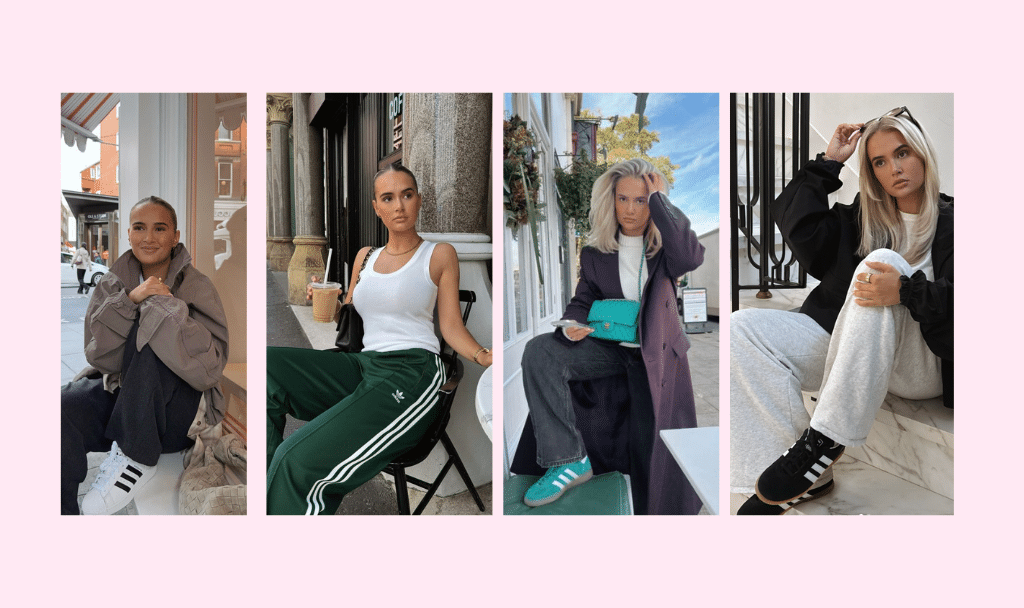
Seus seguidores viram a Adidas em suas postagens no Instagram, no Stories, em roupas do dia a dia. Nenhuma explicação foi necessária. Nenhuma legenda tentando vender nada.
Isso é mais importante do que a maioria das marcas imagina 👇
O público não aceita subitamente as associações de marca no dia do anúncio. Eles as aceitam por meio da repetição. Por meio da familiaridade. Por meio do hábito.
Quando a Adidas formalizou a parceria, o público da Molly-Mae já havia feito a conexão.
É por isso que essa colaboração não pareceu um pivô.
Parecia um próximo passo natural.
Da afinidade orgânica a uma mudança comercial de £ 20 milhões
A ascensão de Molly-Mae não aconteceu da noite para o dia.
Antes de se tornar uma das figuras de estilo de vida mais influentes do Reino Unido, ela construiu seu público sendo consistente, acessível e comercialmente inteligente. O que começou como criação de conteúdo rapidamente se transformou em construção de marca.
Ela não é apenas uma influenciadora que promove produtos.
Ela é uma fundadora, uma operadora e uma mulher de negócios.
Ao longo dos anos, Molly-Mae lançou e ampliou seus próprios empreendimentos, principalmente Maebe, A empresa está se preparando para a criação de uma marca de moda, mantendo relacionamentos de longo prazo com parceiros selecionados, em vez de ficar pulando de negócio em negócio. Essa abordagem é importante.
Isso indica disciplina.
Quando a Adidas formalizou a colaboração em calçados, Molly-Mae já era vista por seu público como alguém que:
- Faz escolhas intencionais de marca
- Repete parcerias nas quais acredita genuinamente
- Cria negócios, não apenas campanhas
Relatórios da mídia estimam seu patrimônio líquido em cerca de £20 milhões após o acordo com a Adidas não são apenas um reflexo da fama. Eles refletem sua capacidade de transformar confiança em valor comercial de longo prazo.
Para a Adidas, essa não foi uma aposta em uma tendência.
Foi uma parceria com alguém que entende o valor da marca dos dois lados da mesa.
É isso que transforma uma afinidade orgânica em uma ação comercial séria.
Métricas de desempenho Adidas x Molly-Mae
Usando Análise de cliques, Se não for possível, podemos ir além das manchetes e avaliar o que de fato aconteceu quando a colaboração entrou em operação.
Destaques do desempenho da campanha
▶️4,8 milhões de visualizações no Instagram
Mais de 500.000 curtidas
💬Mais de 2.000 comentários
👀 441.000 visualizações no TikTok
@mollymaehague ADI X MM... o que começou como um sonho anos atrás agora está se tornando realidade. Minha própria coleção de calçados com a adidas, em breve. (PINCH ME😭) #fyp #adidas Som original - Molly-Mae
Esses números são importantes porque demonstram atenção, não apenas exposição.
As pessoas não rolaram a tela para além desse conteúdo.
Eles se envolveram com isso.
Mas o desempenho por si só não explica por que essa parceria funciona.
O insight mais profundo está nos dados do público 👇
A sobreposição de público mostra por que essa parceria é escalável
Um dos erros mais comuns no marketing de influenciadores é ignorar sobreposição de público.
O Click Analytic torna isso visível instantaneamente.
Nesse caso:
ℹ️ Cerca de 4% dos seguidores da Adidas UK no Instagram já seguem Molly-Mae
ℹ️ Apenas cerca de 0,77% do público da Molly-Mae segue a Adidas
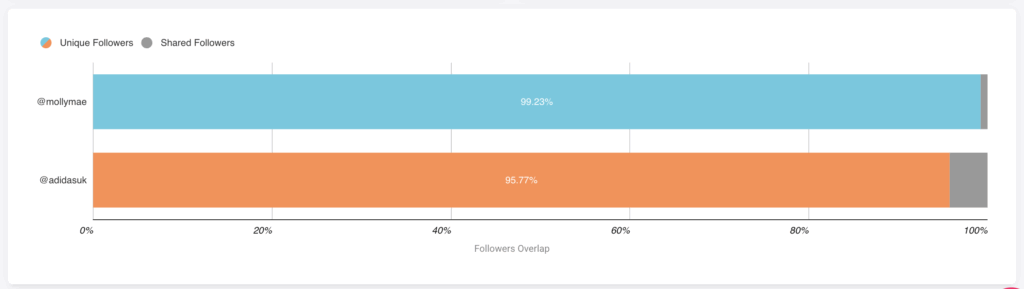
Esse é um sinal forte.
Isso significa que a Adidas não está pagando para alcançar pessoas que já conhecem a marca.
Eles estão acessando uma nova demanda.
Isso é crescimento incremental.
Alcance não reciclado.
Do ponto de vista demográfico, a adequação é clara. O público da Molly-Mae é jovem, feminino e voltado para a moda. Exatamente onde a Adidas quer reforçar sua relevância hoje.
Esse é o aspecto do alinhamento quando ele é medido, e não presumido.
Por que as parcerias com influenciadores orgânicos sempre têm melhor desempenho
O público é extremamente bom em detectar parcerias forçadas.
A maioria dos profissionais de marketing já viu isso acontecer:
Criadores que promovem produtos que nunca mais usarão
Celebridades que mudam de categoria de marca da noite para o dia
Seções de comentários chamando a atenção para a desconexão imediatamente
Essas campanhas não têm apenas um desempenho ruim. Elas prejudicam silenciosamente a confiança.
Exemplos bem conhecidos, como o Campanha da Pepsi e Kendall Jenner ou a promoção do influenciador em torno do Fyre Festival ainda é mencionada anos depois porque o problema não foi a execução.
Era a credibilidade.
A parceria começou com um contrato, não com um comportamento.
A Adidas x Molly-Mae seguiu o caminho oposto ✅.
Sua comunidade já estava acostumada a ver a Adidas como parte de sua identidade. Ela usava o produto com frequência. Ela já havia colaborado com a marca antes. O público aceitou a associação muito antes de ela se tornar oficial.
A campanha não introduziu algo novo.
Isso confirmou algo familiar.
Essa é a diferença entre vender e reforçar a crença.
Como as marcas podem replicar essa estratégia
Essa abordagem não se limita a celebridades globais. É um processo que pode ser repetido para qualquer marca 👇
Etapa 1️⃣: Identifique os criadores que já estão mencionando ou comprando seu produto
Antes da divulgação, as marcas devem fazer uma pergunta simples.
Quem já está falando sobre nós?
Com Análise de cliques, Com o aplicativo de marketing de marca, as marcas podem identificar os criadores que mencionaram organicamente seus produtos no Instagram, no TikTok e no YouTube. Essas menções não são motivadas por pagamento. Elas são motivadas pelo uso genuíno.
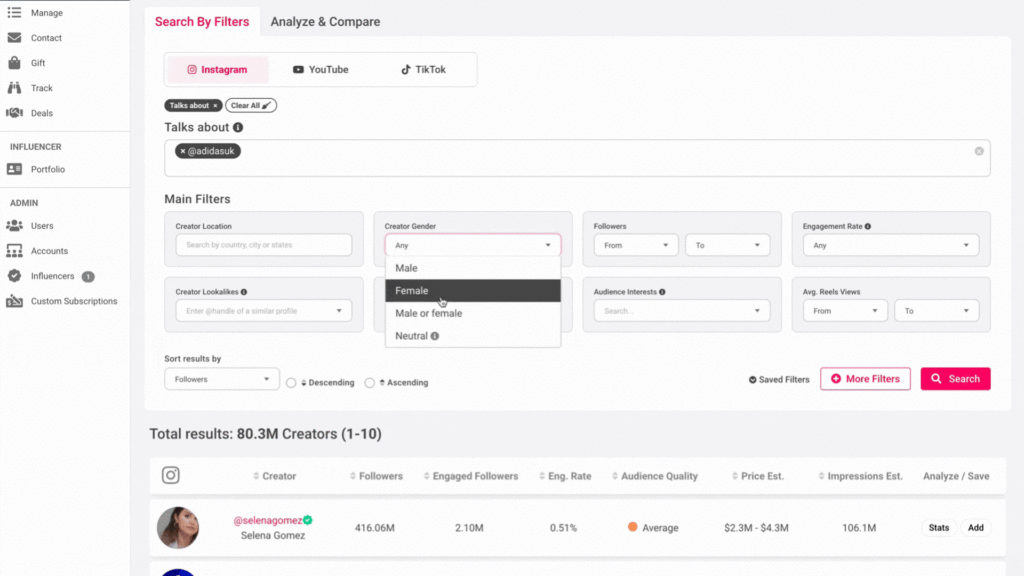
Esse é o sinal mais forte a partir do qual você pode começar.
Se um criador já escolher seu produto sem ser pago, o risco de alinhamento cai imediatamente.
Etapa 2️⃣: Selecione os melhores ajustes usando dados reais de desempenho
Nem toda menção orgânica merece uma parceria.
É nesse ponto que os dados eliminam as suposições.
Usando Análise de cliques, As marcas podem avaliar TUDO!
É nesse ponto que a Molly-Mae é um exemplo de como fazer isso corretamente.
No papel, ela é uma grande criadora.
Mas o que realmente a torna uma parceira forte não é o número de seguidores.
É assim que seu público se comporta 👇
Usando o Click Analytic, vários sinais se destacam:
Primeiro, qualidade do engajamento.
Seu conteúdo gera consistentemente alta interação, não apenas visualizações. A colaboração com a Adidas gerou +5 milhões de visualizações em todas as plataformas.
Isso indica que as pessoas não estão apenas vendo o conteúdo. Elas estão parando, observando e reagindo.
Ela tem mais de 10 milhões de seguidores no Instagram e no TikTok e pode alcançar um grande número de pessoas.
-> 13,7 milhões de visualizações em média no IG Reels
-> 4,5 milhões de visualizações em média no TikTok por conteúdo
Segundo, engajamento que se mantém em escala.
Em vídeos do Instagram Reels e do TikTok, seu conteúdo gera regularmente:
- Forte índice de visualizações por seguidor
- Alto volume de likes em relação ao alcance
- Atividade de comentário significativa, não apenas emojis
Isso é importante porque muitos criadores de conteúdo de grande porte perdem o engajamento à medida que crescem. Molly-Mae não perdeu. Esse é um sinal importante de desempenho para marcas que buscam confiabilidade, não picos.
Terceiro, dados demográficos do público que se encaixam nas marcas de estilo de vida.
Seu público é heterogêneo:
- Predominantemente feminino
- Fortemente concentrado em faixas etárias mais jovens
- Fortemente orientado para estilo de vida, moda e beleza
Isso se alinha extremamente bem com o posicionamento de estilo de vida e calçados da Adidas, especialmente para o uso diário, em vez de produtos apenas de desempenho.
Quarto, consistência da plataforma.
Um dos maiores riscos do marketing de influenciadores são os criadores que atuam em uma plataforma, mas não cumprem o que prometem em outras.
Molly-Mae apresenta o padrão oposto.
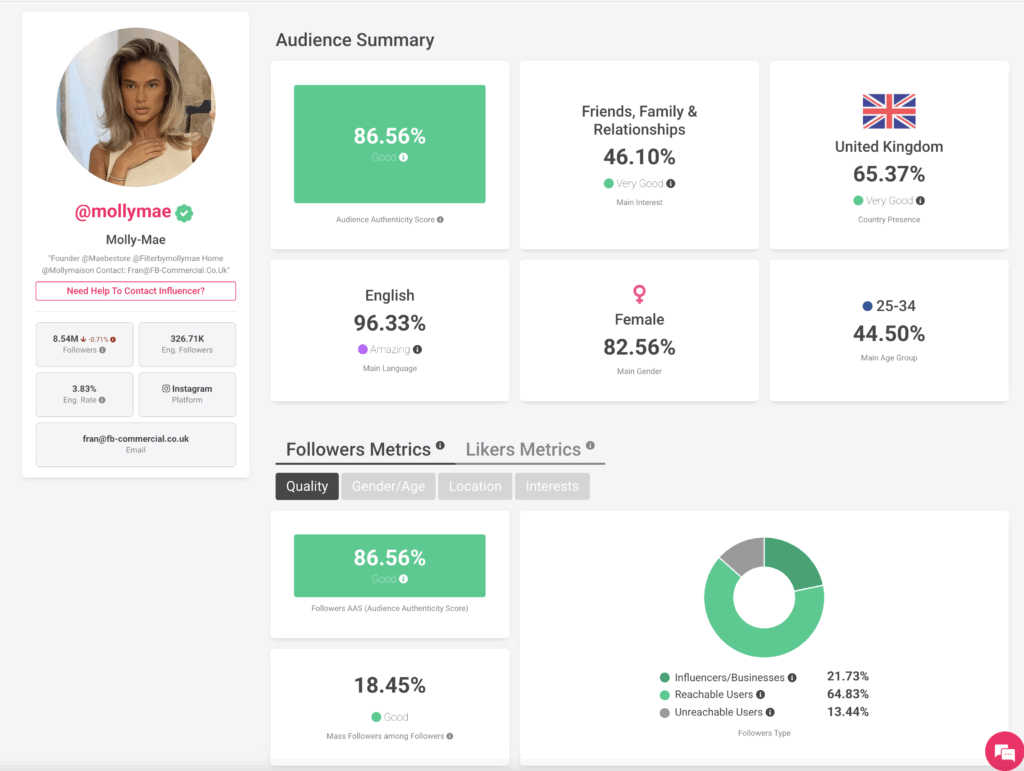
Seus públicos no Instagram e no TikTok são altamente engajados, o que significa que a Adidas não está dependendo de um único canal de distribuição. A parceria é bem-sucedida em todos os formatos, de Reels a vídeos do TikTok e Stories.
Simplificando, Molly-Mae não foi selecionada porque fica bem em um baralho de campanha.
Ela foi selecionada porque os dados mostram:
- Desempenho consistente
- Forte adequação entre o público e a marca
- Oportunidade real de crescimento
É assim que a “seleção do melhor ajuste usando dados de desempenho” realmente se parece na prática.
Etapa 3️⃣: Construir relacionamentos de longo prazo com os embaixadores
A parceria Molly-Mae funciona porque não é um caso isolado.
As colaborações de longo prazo criam familiaridade. Elas reduzem o atrito criativo. Elas geram confiança.
Com o tempo, o público deixa de questionar a parceria e começa a aceitá-la como parte da história da marca.
É nesse momento que o marketing do criador muda de campanhas para a construção da marca.
O que isso significa para o marketing de influência
Adidas x Molly-Mae não se trata de substituir um rosto por outro.
Isso reflete uma mudança mais ampla na forma como a influência funciona.
Os criadores não são mais apenas canais de distribuição.
Eles são filtros culturais.
As marcas que vencerão serão aquelas que:
Observar o comportamento antes de assinar contratos
Validar o alinhamento com os dados
Priorize a consistência em vez da propaganda
Essa parceria é um exemplo claro de como essa abordagem funciona em escala.
Conclusão final para os profissionais de marketing
A Adidas não criou relevância com a Molly-Mae ❌
➡️ Eles o reconheceram.
➡️ Eles notaram um comportamento que já existia.
➡️ Eles o validaram com dados.
➡️ Em seguida, eles o formalizaram.
Esse é o futuro do marketing de influência.
As melhores parcerias não parecem ser lançamentos.
Eles parecem óbvios.
E quando eles se sentem óbvios, o desempenho geralmente vem em seguida.