But financially, commercially, and strategically, its impact is far from over ❌

Was ist passiert?
💡In January 2026, an Italian court cleared Chiara Ferragni of aggravated fraud charges linked to the so-called Pandoro Gate charity cake scandal.
The ruling ended one of the most closely watched influencer trials Europe has ever seen and marked a legal victory for one of the world’s most famous digital entrepreneurs.
Yet despite the acquittal, the case triggered millions in losses for the Italian content creator, the collapse of key partnerships, and a fundamental shift in how brands, regulators, and consumers perceive influencer-led commerce.
This article breaks down 👇
👉 What Chiara Ferragni Pandoro Gate really was
👉 Why Chiara Ferragni was cleared
👉 How big her influence was before the scandal
👉 What it cost her commercially
👉 And why she still matters today
(All covered with proprietary audience data and clear lessons for marketers)
Ready? Let’s uncover ⏬
What Is the Chiara Ferragni Pandoro Gate Scandal?
Ok let’s recap!
The Chiara Ferragni Pandoro Gate scandal began as a Christmas charity campaign, and quickly became a national controversy.
In late 2022, Ferragni partnered with Balocco, one of Italy’s best-known confectionery brands, to promote a limited-edition pink pandoro Christmas cake.

The campaign suggested that purchasing the product would help support a children’s hospital in Turin.
The problem was not the donation itself, but how it was communicated...
What authorities found
Subsequent investigations revealed that:
👉 The hospital received a fixed donation of €50,000, made before the campaign launched
👉 The donation was not linked to sales volume
👉 Marketing communication implied that each purchase contributed to the charitable cause
👉 Ferragni’s companies received substantial commercial compensation from the campaign
Italian consumer protection authorities concluded that the campaign was misleading, even if no funds were misappropriated.
The result:
💰 Administrative fines exceeding €1 million
🗞️ A national backlash
🚔 A broader investigation into influencer marketing practices in Italy
What started as a marketing controversy quickly escalated into a criminal fraud investigation, commonly referred to by Italian media as Pandoro Gate.
Now, let’s check the result of the investigation 👇
Why Chiara Ferragni Was Cleared of Fraud Charges
In January 2026, a Milan court cleared Chiara Ferragni of aggravated fraud charges related to the Pandoro Gate charity cake campaign.
The decision marked the end of the criminal investigation that had followed Ferragni for more than a year and attracted intense public and media scrutiny.
What the court actually ruled
According to court findings, prosecutors failed to establish the elements required for criminal fraud, in particular:
❌ Lack of proven criminal intent
The court concluded there was insufficient evidence that Ferragni intentionally sought to deceive consumers for personal gain in a way that met the threshold for aggravated fraud.
❌ Administrative vs criminal responsibility
Judges determined that the conduct fell under consumer protection and advertising law, not criminal law.
Those violations had already been sanctioned by Italy’s competition authority through fines and corrective measures.
❌ No personal criminal liability
While Ferragni was the public face of the campaign, the court ruled she could not be held personally criminally responsible for the structure and execution of the commercial agreement at the level required for a fraud conviction.
💡In short, the court treated Pandoro Gate as a case of misleading commercial communication, not a criminal scam.
This distinction is critical:
Ferragni was not declared “innocent” in a moral or commercial sense, but rather not criminally liable under Italian law.
Why the acquittal does not fully close the chapter
Although the criminal fraud case is now closed, Pandoro Gate ist not entirely behind her.
Several legal and financial issues remain unresolved:
- Civil and commercial lawsuits
Ferragni’s company is still involved in commercial litigation linked to terminated partnerships, including disputes over licensing agreements and alleged damages following the scandal. - Contractual claims from former partners
Some former partners have sought compensation, arguing that the controversy triggered contractual breaches or economic harm. - Potential appeals and procedural follow-ups
While the criminal ruling stands, Italian legal procedure allows for appeals or related proceedings in connected cases, even if the main criminal charge has been dismissed. - Ongoing regulatory scrutiny
The case has already contributed to tighter regulation of influencer marketing in Italy, and Ferragni’s future campaigns are likely to face heightened oversight.
As a result, while Ferragni has cleared the most serious criminal risk, the legal and financial cleanup is still ongoing.
Why this matters beyond the courtroom
From a business and marketing perspective, the acquittal highlights a growing reality in influencer marketing:
-> A creator can win legally and still lose commercially.
The court ruling removed the threat of prison and criminal liability.
It did nicht:
- Restore brand trust overnight
- Reverse lost partnerships
- Recover lost revenue
From a legal standpoint, the criminal case ended there.
But from a business standpoint, the damage had already been done 👇
Before Pandoro Gate: How Big Was Chiara Ferragni?
Before the Chiara Ferragni Pandoro Gate scandal, Ferragni was widely regarded as one of the most influential figures in global influencer marketing.
Her scale and business footprint placed her closer to a media and consumer brand company than a traditional content creator.
A decade-long rise to global influence
Ferragni launched The Blonde Salad in 2009 as a fashion blog. Over the following decade, it evolved into a multi-platform brand encompassing content, commerce, licensing, and partnerships.
By the early 2020s, her influence extended well beyond social media.
Key indicators of Ferragni’s pre-scandal reach
At her peak, Ferragni’s digital presence and business ecosystem included:
🌐 One of the most-followed influencers worldwide
Diesen Beitrag auf Instagram anzeigen
🖥️ The Blonde Salad reaching approximately 800,000 website visits per day at its height

🤝 A portfolio of partnerships with global brands across fashion, beauty, luxury, and consumer goods
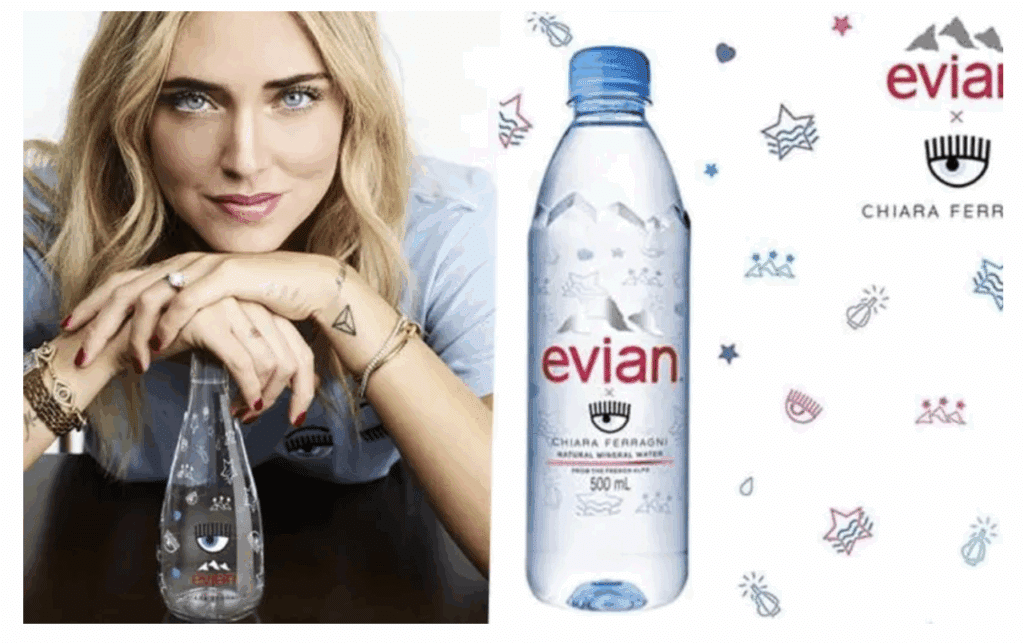
💰 Multiple revenue streams including licensing agreements, product collaborations, appearances, and equity-backed ventures.
Diesen Beitrag auf Instagram anzeigen
An estimated business valuation of around $82 million, according to Forbes reporting
Her influence was frequently cited as a reference point for:
- How creators could scale into full-fledged businesses
- How social media audiences could be monetized across channels
- How personal branding could translate into long-term enterprise value
From influencer to industry benchmark
Ferragni’s model helped define what influencer-led entrepreneurship looked like at scale. She appeared at major fashion events, collaborated with multinational corporations, and was often referenced in discussions about the professionalization of creator marketing.
This level of visibility is precisely why Pandoro Gate resonated far beyond Italy.
The controversy did not affect a niche online personality.
It affected one of the most established influencer businesses in Europe.
Let’s see the details 👇
The Commercial Impact of Pandoro Gate
Although Ferragni was cleared of criminal charges, the commercial fallout was immediate and severe.
Brand partnerships frozen or terminated
After the scandal broke:
❌ Several major collaborations were paused or terminated
❌ Safilo, her eyewear licensing partner, ended its contract
❌ A Coca-Cola commercial, filmed for Italy’s Sanremo Festival, was never released
❌ Other brands quietly stepped back due to brand-safety concerns
For brands, the issue wasn’t legality; it was a PR risk.
In influencer marketing, perceived trust is often more important than legal nuance.
Follower loss and trust erosion
Public reaction was swift.
Within weeks:
👉 Ferragni lost ~150,000–200,000 Instagram followers
👉 Engagement rates dipped
👉 Sentiment across Italian media turned sharply negative
For a creator of her size, the follower loss alone was not existential.
But it was a visible signal of trust erosion.
The real damage: revenue collapse
The most significant impact of Pandoro Gate was financial.
Reported figures show:
- Revenue at her main company dropped from ~€11–12M to ~€2M
- Combined losses across her businesses reached ~€5.7M
- Ferragni personally injected €7M of her own capital to keep operations alive
Despite winning in court, Pandoro Gate wiped out the majority of her business value.
This is the key contradiction at the heart of the case:
Legal innocence did not prevent economic consequences.
Structural Change: Why She Can Rebuild
One of the less discussed consequences of Chiara Ferragni Pandoro Gate is how profoundly it reshaped the structure of her business.
Before the scandal, Ferragni was operating within a multi-shareholder, partnership-heavy model, where growth depended on licensing partners, external investors, and brand collaborations.
After Pandoro Gate, that structure changed dramatically.
A shift in ownership and control
Prior to the crisis, Ferragni reportedly owned around 32% of her main operating company. Following recapitalization and the €7M personal capital injection, she now controls approximately 99% of the business.
This gives her:
- Full strategic control over brand direction
- The ability to simplify decision-making
- Freedom to rebuild without aligning with multiple external stakeholders
In practical terms, Ferragni moved from being a minority founder in a complex structure to a sole decision-maker.
That matters.
From scale-at-all-costs to selective rebuilding
At her peak, Ferragni’s growth model was built on:
High-volume brand collaborations. Broad licensing agreements
And… maximum exposure across categories.
Pandoro Gate exposed the fragility of that approach when trust is questioned.
Rebuilding likely requires a different strategy:
✔️ Fewer partnerships, stronger alignment
✔️ Clear separation between commercial deals and cause-based messaging
✔️ Longer-term collaborations rather than short-term campaigns
✔️ Transparent communication around sponsorships, donations, and incentives
In other words, moving from maximum monetization to maximum credibility.
Leveraging owned assets over partnerships
Unlike many influencers, Ferragni still controls:
👉 A globally recognized personal brand
👉 A direct relationship with 28M+ followers
👉 Owned channels and first-party audience data
This allows her to rebuild by prioritizing:
- Direct-to-consumer initiatives
- Product drops under her own brand, with fewer intermediaries
- Controlled storytelling without external brand pressure
- Reduced reliance on licensing partners
Owning the audience — rather than renting reach — gives her flexibility to experiment without reputational spillover from third parties.
Repositioning from influencer to founder again
One potential rebuilding path is reframing her public narrative.
Instead of returning immediately to mass influencer marketing, Ferragni can:
- Lean into a founder-led positioning
- Focus on behind-the-scenes business rebuilding
- Re-establish credibility through transparency and consistency
- Reduce frequency, increase substance
This approach mirrors how some founders recover post-crisis:
less promotion, more explanation.
Why the audience still gives her room to rebuild
Despite everything, Ferragni’s audience remains large and demographically valuable but also aligned with fashion and lifestyle content.
Crucially, audience erosion has been limited relative to her scale.
This suggests that while trust was damaged, it was not erased.
For Ferragni, rebuilding does not require regaining millions of followers.
It requires redefining how she monetizes the ones she already has.
The real constraint: brand trust, not reach
The biggest obstacle to rebuilding is not visibility.
It’s brand safety perception.
Many brands will now require:
- Stricter contracts
- Clearer disclosures
- Stronger legal and reputational safeguards
Rebuilding therefore becomes a longer, slower process — but also a more resilient one if successful.
Why this matters beyond Chiara Ferragni
Ferragni’s situation highlights a broader shift in influencer marketing:
Creators can lose monetization before they lose influence.
Her ability to rebuild will likely depend less on follower growth and more on:
- Structural discipline
- Transparency
- Selective partnerships
- Long-term trust rebuilding
If successful, her comeback would not just be personal — it would redefine what post-crisis influencer recovery looks like in a more regulated era.
📊 Click Analytic — Chiara Ferragni Audience Snapshot (Instagram)
To understand why Ferragni still matters, it’s important to look at the data from Klick-Analytik.
Despite the scandal, her audience remains one of the most valuable in influencer marketing.

Audience overview
- Platform: Instagram
- Follower: 28,057,810
- Recent growth: –1.26%
Gender breakdown
- Female: 69.58%
- Male: 30.42%
Age distribution
- 25–34: 45.20%
- 18–24: 30.32%
- 35–44: 14.59%
- 45–64: 5.57%
Top countries
- Italy: 42.00%
- United States: 6.09%
- Brazil: 4.64%
Top interests
- Fashion, clothing, accessories
- Beauty and lifestyle
- Travel and premium experiences
- Food and restaurants
Metriken zum Engagement
- Estimated engagement rate: 0.88%
- Average likes: ~246,000
- Average Reel views: ~4.19M
What this means
Ferragni still reaches:
- A female-skewed, purchase-driven audience
- One of the most valuable age brackets (25–34)
- An international consumer base aligned with fashion and lifestyle brands
👉 The audience value is still there.
👉 The reputational risk is what brands now evaluate differently.
What Marketers Can Learn From Chiara Ferragni Pandoro Gate
The Chiara Ferragni Pandoro Gate case is no longer just a celebrity story.
Es ist ein case study in modern influencer economics.
Key lessons
1️⃣ Legal compliance does not equal commercial safety
2️⃣ Trust is the true currency of influencer marketing
3️⃣ Large audiences can survive controversy — monetization often cannot
4️⃣ Cause-related marketing must be transparent, provable, and precise
5️⃣ Influencers are now treated like media companies, not individuals
Ferragni didn’t lose her influence overnight.
She lost the ease with which brands could safely monetize it.
Chiara Ferragni Pandoro Gate: FAQs
Is Chiara Ferragni guilty?
No. She was cleared of aggravated fraud charges in January 2026.
What is Pandoro Gate?
A scandal involving a misleading charity-linked pandoro cake campaign.
Did she lose money?
Yes. Pandoro Gate cost her millions in lost revenue and partnerships.
Is the case fully over?
The criminal case is closed. Civil and commercial disputes remain.
The Question That Remains
Chiara Ferragni was cleared of fraud charges.
Aber Pandoro Gate still cost her millions.
With a premium audience still in place and full control of her company, the final question is simple:
Can one of the world’s most famous influencers rebuild trust — or did Pandoro Gate permanently change the rules of influencer marketing?