Si vous avez déjà regardé un rapport de campagne et que vous vous êtes demandé pourquoi les impressions sont plus élevées que la portée, Vous n'êtes pas seul...
La différence entre la portée et les impressions est l'une des suivantes les sujets les plus méconnus du marketing 🤔
Pourtant, la compréhension Portée vs Impressions a un impact direct sur la manière dont vous évaluez les performances, allouez le budget et communiquez les résultats aux parties prenantes.
Pour comprendre comment ces mesures s'intègrent dans un cadre de mesure plus large, il convient d'explorer les points suivants notre guide complet des indicateurs de performance des médias sociaux.
Dans ce guide, vous apprendrez :
-
Ce que la portée et les impressions mesurent réellement
-
Les principales différences entre les deux
-
Exemples concrets sur Instagram et TikTok
-
Quelle mesure privilégier en fonction de votre objectif ?
-
Comment les spécialistes du marketing et les marques doivent-ils rendre compte correctement de ces deux éléments ?
Décomposons-le 👇
Qu'est-ce que Reach (définition simple) ?
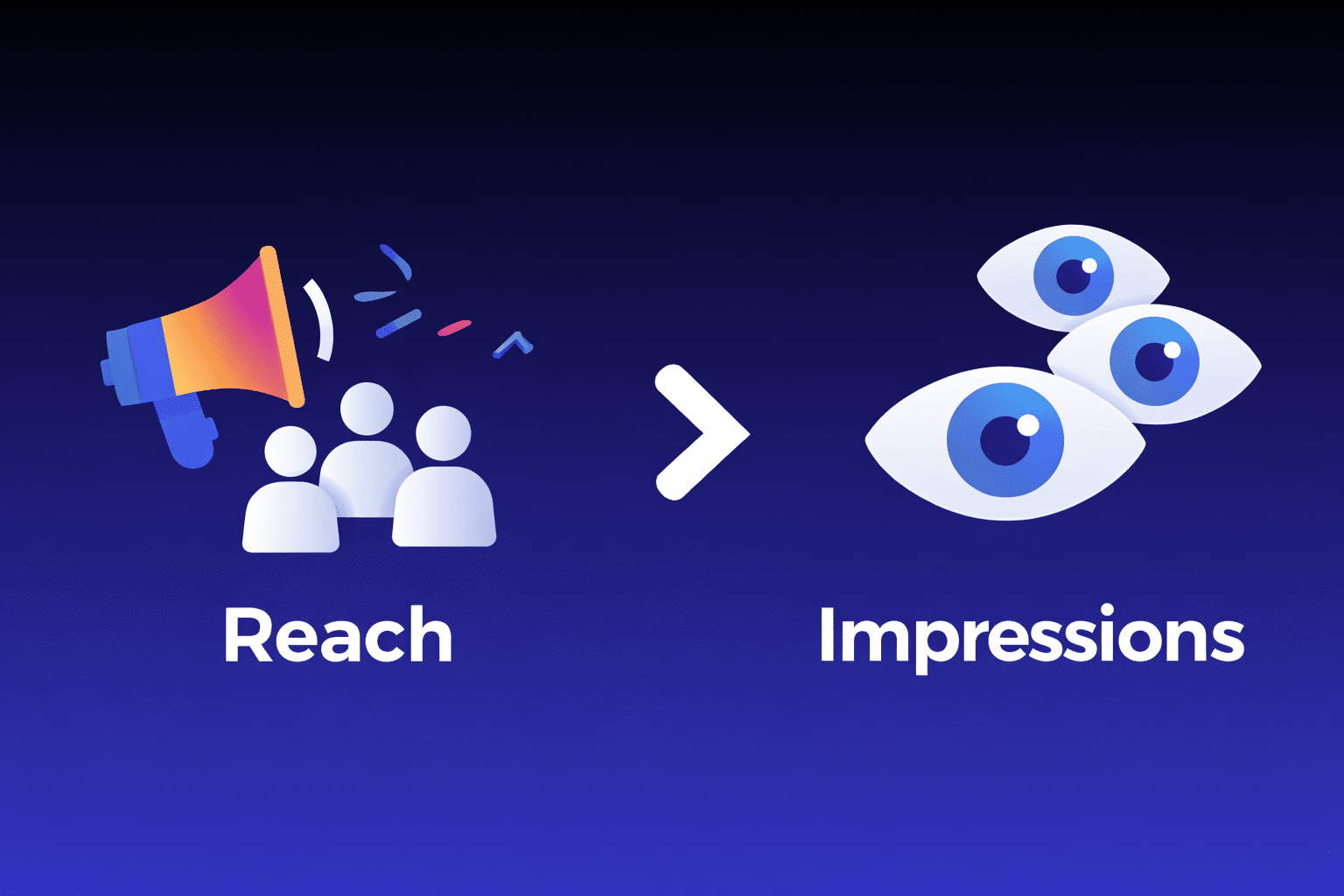
Atteindre est le nombre de des personnes uniques qui voient votre contenu au moins une fois.
Si 100 utilisateurs différents voient votre message, votre portée est de 100.
Même si certains d'entre eux le voient plusieurs fois, ils comptent toujours une fois.
Reach répond à une question essentielle :
-> Combien de personnes mon contenu a-t-il touché ?
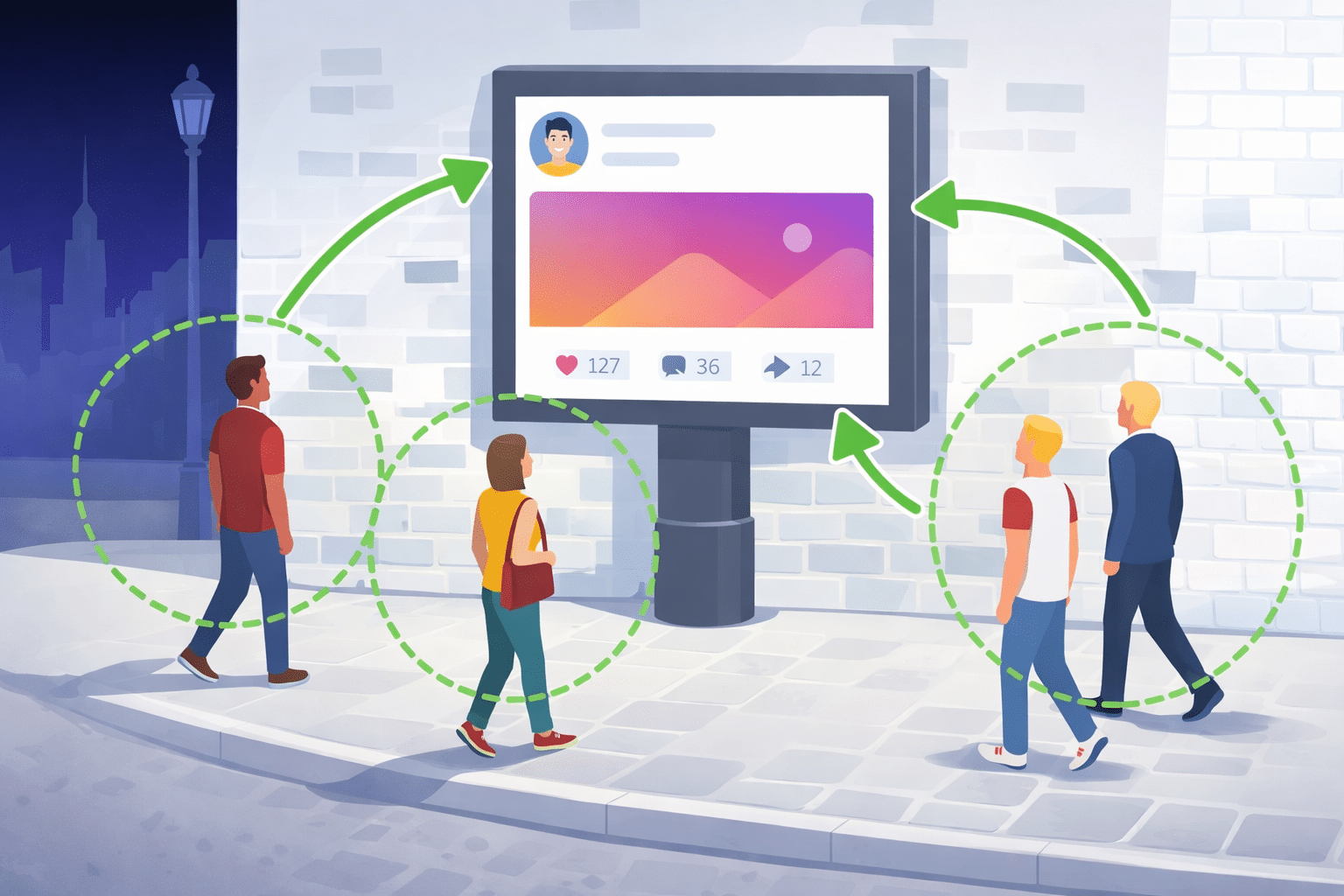
L'importance de la portée
-
Mesures exposition
-
Utile pour notoriété de la marque
-
Indique dans quelle mesure votre contenu est diffusé au-delà de votre public actuel.
Portée organique ou payante
-
Portée organique provient des flux, des recommandations et des partages
-
Portée payée proviennent des publicités et des posts boostés
La portée est particulièrement importante lorsque votre objectif est de se confronter à de nouvelles personnes.
Que sont les impressions ? (Définition simple)
Impressions mesurer la nombre total de fois votre contenu est affiché.
Contrairement à la portée, les impressions peut compter plusieurs fois la même personne.
Si un utilisateur voit votre message trois fois, cela équivaut à.. :
👉 Reach : 1
👉 Impressions : 3
Les impressions répondent à une autre question :
-> Combien de fois mon contenu a-t-il été diffusé ?

L'importance des impressions
-
Mesures visibilité et répétition
-
Utile pour les annonces, la narration et la mémorisation
-
Aide à comprendre fréquence
Sur la plupart des plateformes, les impressions sont comptabilisées lorsque le contenu est servis, mais pas nécessairement cliqué ou regardé en entier.
Portée vs Impressions : Comparaison côte à côte
Comprendre la portée par rapport aux impressions devient beaucoup plus facile lorsque vous voyez les deux mesures l'une à côté de l'autre.
Bien qu'ils soient souvent utilisés de manière interchangeable, la portée et les impressions sont deux choses différentes. mesurer deux choses très différentes. L'un d'entre eux se concentre sur combien de personnes uniques a vu votre contenu. L'autre se concentre sur à quelle fréquence il a été montré.
En les examinant côte à côte, les spécialistes du marketing peuvent rapidement choisir le bon ICP en fonction des objectifs de la campagne, qu'il s'agisse de la notoriété de la marque, de la performance des influenceurs ou de l'optimisation des médias payants.
Le tableau ci-dessous présente de manière simple et visuelle la portée par rapport aux impressions 👇
| Métriques | Atteindre | Impressions |
|---|---|---|
| Mesures | 👤 Utilisateurs uniques | ▶️ Affichage du total |
| La même personne a été comptée deux fois ? | ❌ Non | ✅ Oui |
| Meilleur pour | 🌐 Sensibilisation | 🔁 Fréquence |
| Utilisé en | 📈 Analyse de la croissance | ⚙️ Optimisation |
En bref :
👉 Reach = combien de personnes
👉 Impressions = combien de fois
Mais le véritable pouvoir réside dans l'utilisation conjointe des deux.
Portée vs Impressions & Fréquence (Formule clé)
Il existe une relation simple que tous les spécialistes du marketing devraient connaître :
Fréquence = Impressions ÷ Portée
Exemple :
-
Portée : 1,000
-
Impressions : 3,000
-
Fréquence : 3
Cela signifie que la personne moyenne a vu votre contenu trois fois.
Pourquoi cela est-il important ?
💡 Une faible fréquence peut signifier une faible mémorisation
💡 Une fréquence élevée peut être un signe de fatigue, en particulier dans les publicités.
Exemples réels sur les plateformes de médias sociaux
Comprendre la portée par rapport aux impressions devient beaucoup plus clair lorsque l'on examine la manière dont les plateformes distribuent réellement le contenu.
Instagram et TikTok n'exposent pas la portée de manière aussi transparente que les vues, en particulier pour les créateurs et les marques travaillant à grande échelle. C'est pourquoi les spécialistes du marketing doivent souvent estimer la portée en fonction des vues et des comportements.
Voici des moyens pratiques et réalistes d'y réfléchir 👇
Portée vs Impressions sur Instagram
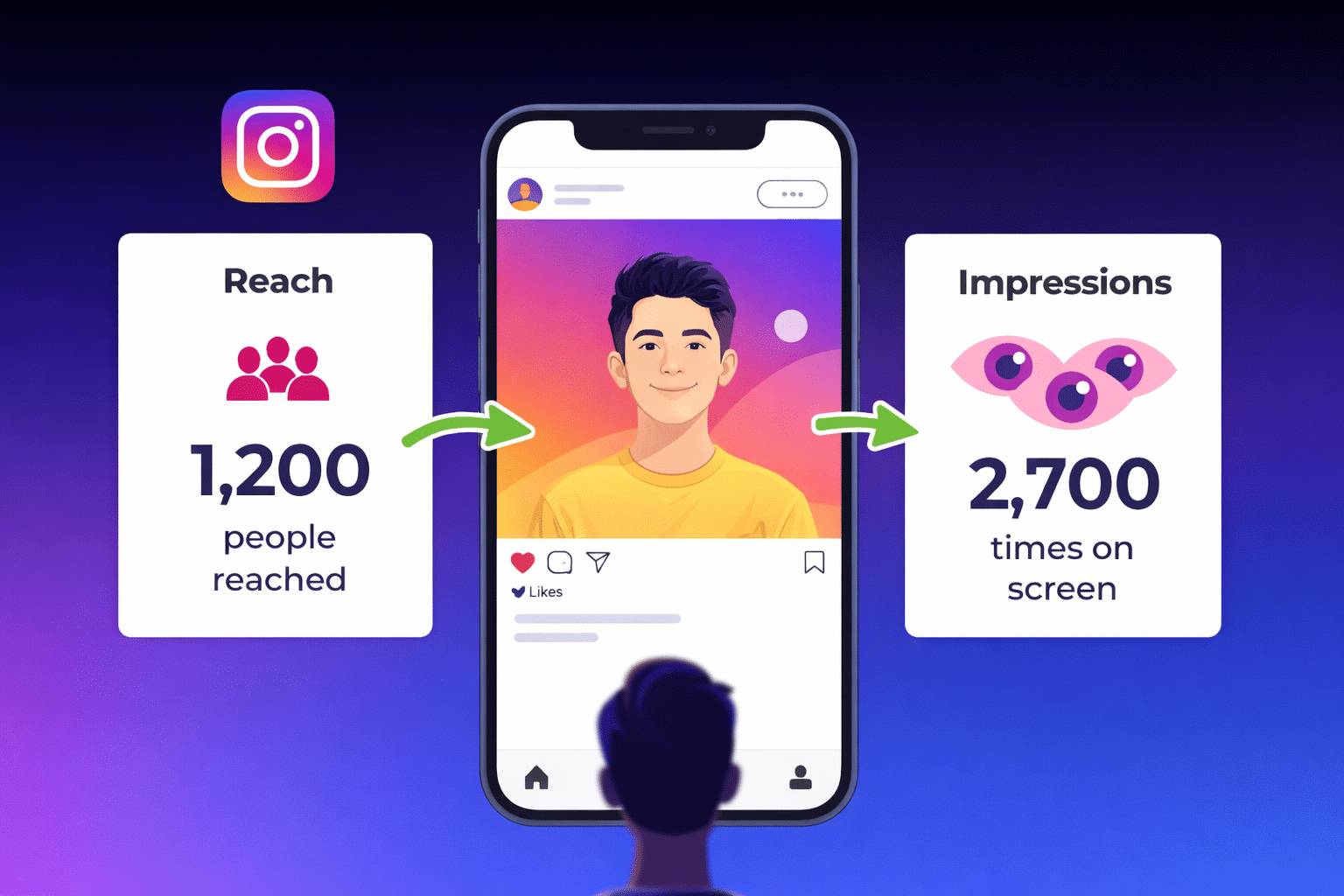
Sur Instagram, il est important de le savoir :
-
Les bobines génèrent souvent plus d'impressions que de portée
-
Le contenu est montré plusieurs fois aux mêmes utilisateurs
-
Une grande partie de l'audience provient de non suiveurs, en particulier pour les bobines
Un exemple typique Bobine Instagram pourrait :
-
Générer 40 000 vues
-
Atteindre 18 000-25 000 utilisateurs uniques
-
Résultat en 1,6-2,2 impressions par personne
Comment la portée est généralement estimée à partir des vues (Instagram).
Instagram ne fournit pas publiquement de formule fixe, Mais d'après les études sur les créateurs et le comportement des plateformes, les spécialistes du marketing ont souvent recours à cette logique :
Portée estimée ≈ Vues ÷ Fréquence
Où ?
-
La fréquence moyenne des bobines se situe généralement entre 1,5 et 2,5
-
Les bobines les plus performantes ont tendance à être montrées de manière répétée aux utilisateurs engagés.
Exemple
-
Vues de la bobine : 40,000
-
Fréquence estimée : 2
-
Portée estimée ≈ 20 000
Cette estimation correspond à la façon dont Instagram établit ses priorités :
-
Exposition répétée aux utilisateurs engagés
-
Distribution au-delà des suiveurs sans saturation totale
Pourquoi c'est important
-
Les opinions seules gonflent la performance perçue
-
Reach vous aide à comprendre taille fidèle au public
-
Pour comparer les créateurs, il faut normaliser les impressions par rapport à la portée.
Portée vs Impressions sur TikTok
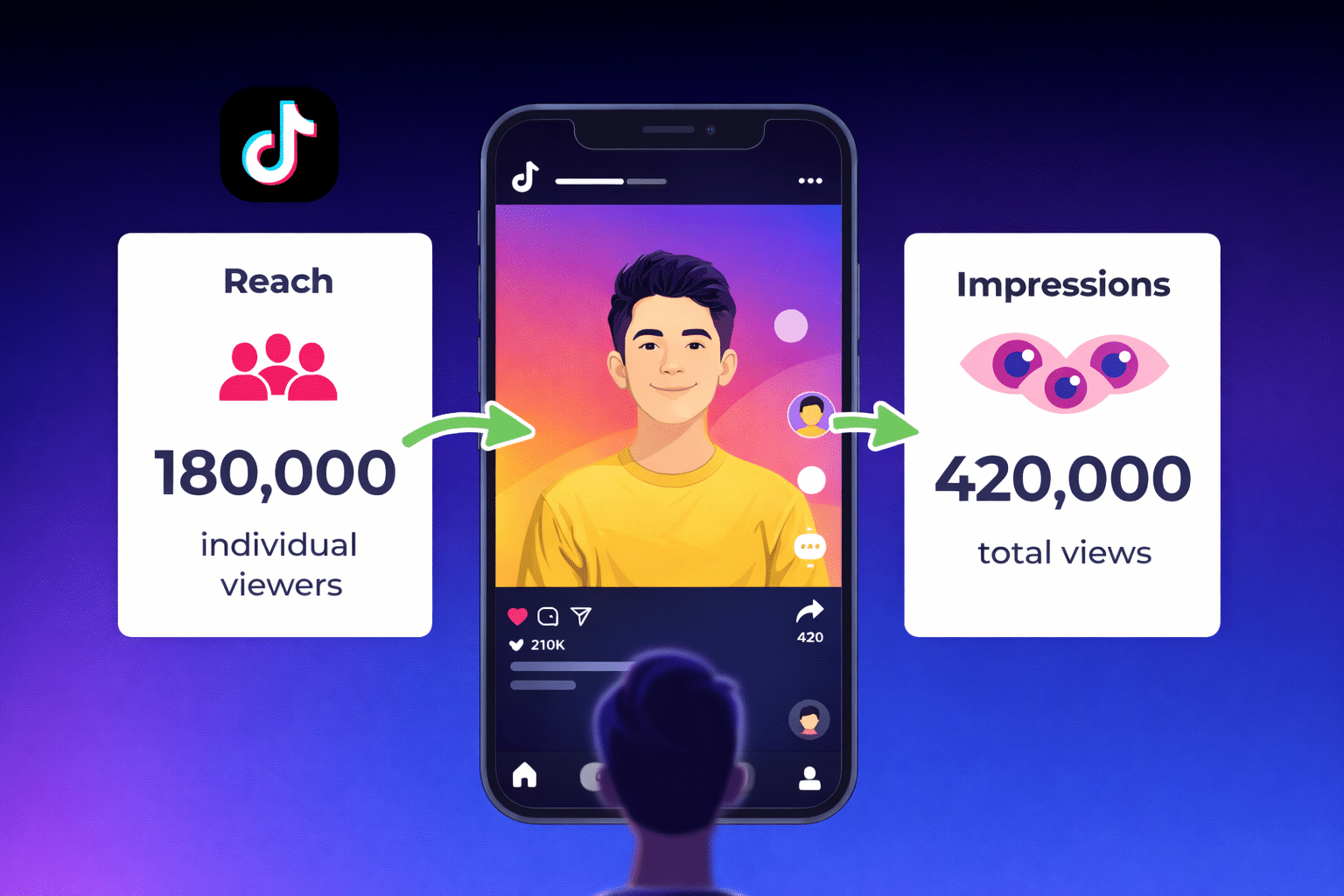
TikTok se comporte très différemment.
Sur TikTok :
-
Les vidéos sont distribuées en vagues algorithmiques multiples
-
Le même utilisateur peut voir la même vidéo plusieurs fois
-
Les vues s'adaptent plus rapidement que la portée unique
Une vidéo TikTok avec :
-
100 000 vues
-
Ne peut atteindre que 55 000-75 000 utilisateurs uniques
C'est parce que TikTok favorise fortement :
-
Rewatching
-
Boucle
-
Redistribution du contenu à des groupes d'intérêt avérés
Comment la portée est estimée à partir des vues sur TikTok
En se basant sur le comportement de la plateforme et sur les rapports des créateurs, les spécialistes du marketing appliquent souvent un modèle d'évaluation des risques. hypothèse de fréquence inférieure qu'Instagram, mais toujours supérieur à 1.
Une gamme de travail commune :
-
Fréquence TikTok moyenne : 1.3-1.8
Portée estimée ≈ Vues ÷ 1,3 à 1,8
Exemple
-
Vues TikTok : 100,000
-
Fréquence présumée : 1,5
-
Portée estimée ≈ 66 000
Les fréquences plus élevées sont souvent un signal :
-
Forte valeur de relecture
-
Le contenu est rediffusé au même public
-
Un élan viral plutôt qu'une portée plus large
Principales informations sur TikTok
Un nombre élevé de vues n'est pas toujours synonyme d'une plus grande exposition.
Ils signifient souvent une plus forte répétition au sein des mêmes groupes d'intérêt.
Portée ou impressions dans le marketing d'influence
C'est là que de nombreux rapports échouent.
Dans les campagnes de créateurs :
-
Spectacles de portée combien de personnes ont été exposées
-
Impressions la force de la répétition de l'histoire
Le contenu d'influence bénéficie des avantages suivants fréquence naturelle.
Voir le même créateur plusieurs fois est moins intrusif que les publicités.
C'est pourquoi les impressions sont plus importantes que ne le pensent de nombreuses marques.
Rapports de performance à grande échelle
Sur Click Analytic, plateforme de recherche d'influenceurs, nous estimons les impressions à travers :
-
Histoires Instagram
-
Postes Instagram
-
Bobines Instagram
-
Vidéos TikTok
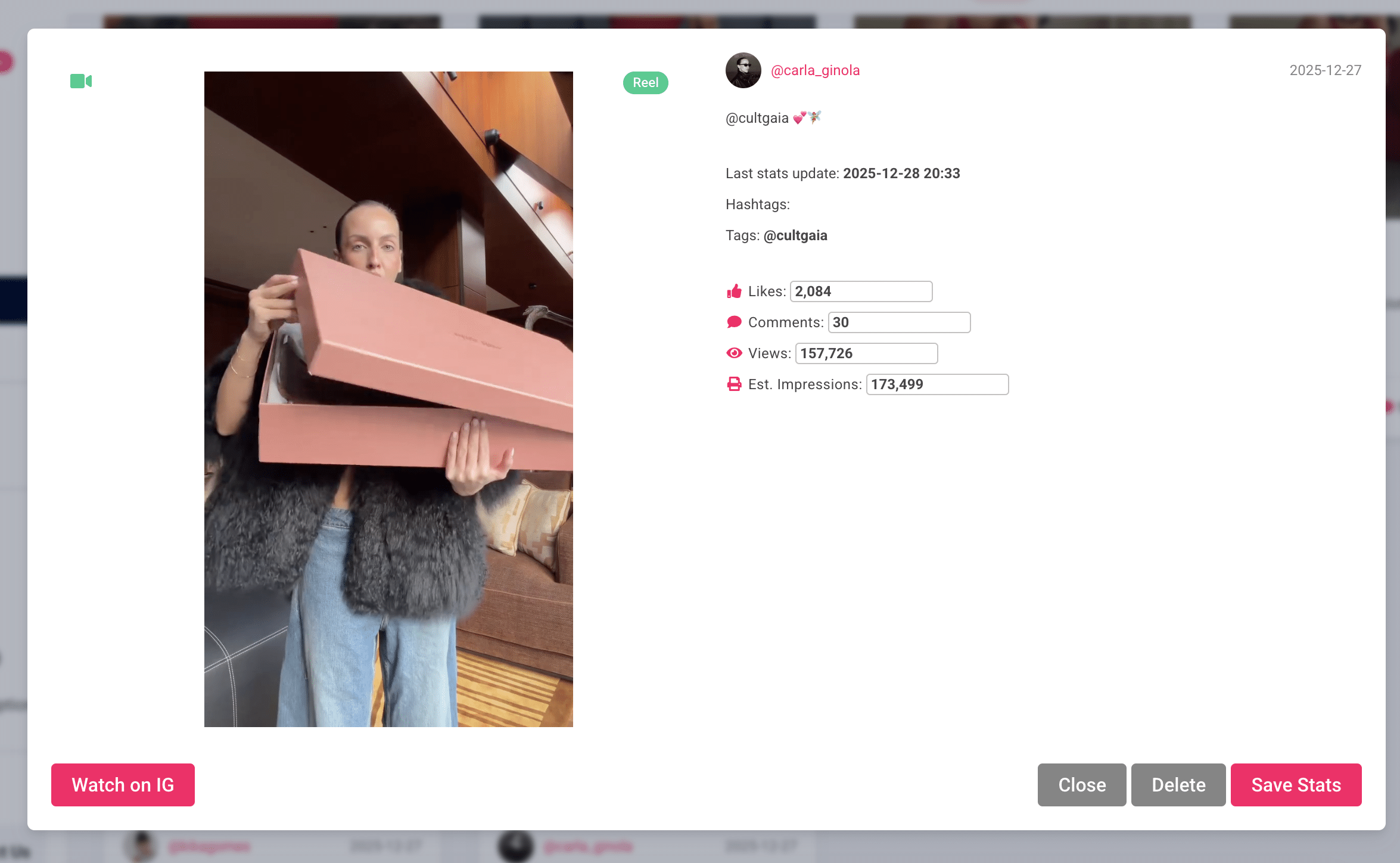
Cela permet aux spécialistes du marketing de automatiser les rapports de performance, Les données de la plateforme native ne sont pas cohérentes, elles sont comparées équitablement entre les créateurs.
Il en résulte des rapports plus clairs et une analyse plus rapide des campagnes.
Portée vs Impressions dans la publicité payante
Dans les médias payants, les impressions jouent un rôle plus important.
-
Le CPM est basé sur les impressions
-
Le reciblage repose sur la répétition
-
Un nombre élevé d'impressions avec une faible portée peut indiquer une surexposition.
Exemple :
Campagnes de prospection → priorité à la portée
Campagnes de reciblage → priorité aux impressions et à la fréquence
Le contexte est essentiel.
Portée vs Impressions par objectif de campagne
| Objectif de la campagne | Métrique primaire | Métrique de soutien |
|---|---|---|
| Notoriété de la marque | 🟠 Reach | 🟡 Impressions |
| Lancement du produit | 🟠 Reach | 🔵 Fréquence |
| Reciblage | 🟡 Impressions | 🔵 Fréquence |
| L'ensemencement d'influenceurs | 🟠 Reach | 🟡 Impressions |
L'erreur n'est pas de choisir la mauvaise mesure.
Il s'agit d'en choisir un sans contexte.
Qu'est-ce qu'une “bonne” portée ou impression ?
Il n'y a pas de référence universelle.
Mais les fourchettes typiques permettent de fixer les attentes.
La portée organique représente souvent une fraction des suiveurs
Les impressions des influenceurs dépassent généralement la portée en raison de la répétition.
Les impressions payantes s'adaptent au budget et à la taille de l'audience
Évaluer en permanence les performances par rapport à l'objectif de la campagne, et non de manière isolée.
Les erreurs courantes des spécialistes du marketing
❌ Traiter les impressions comme des personnes
❌ Rapport sur la portée sans fréquence
❌ Comparaison de campagnes ayant des objectifs différents
❌ Utiliser des indicateurs de vanité au lieu d'indicateurs de performance clés
Des mesures sans contexte conduisent à de mauvaises décisions.
Comment utiliser conjointement la portée et les impressions
Un cadre simple :
1️⃣ Définissez l'objectif de votre campagne
2️⃣ Choisissez votre ICP principal
3️⃣ Utiliser la deuxième métrique comme validation
Les rapports restent ainsi honnêtes et exploitables.
Comment rapporter la portée par rapport aux impressions (sans induire les parties prenantes en erreur) ?
Un bon rapport se présente comme suit :
-> “Nous avons atteint 120 000 utilisateurs uniques”
-> “Avec une fréquence moyenne de 2,6”
-> “La mémorisation du message est forte”
Éviter de rapporter uniquement des impressions.
Expliquez toujours ce qu'ils représentent.
Portée vs Impressions : Aide-mémoire
💡 Utilisation atteindre lorsque vous souhaitez une exposition
💡 Utilisation Impressions quand la répétition est importante
💡 Utilisation à la fois pour comprendre l'impact réel
Portée vs Impressions : FAQ
Quelle est la différence entre la portée et les impressions ?
La portée compte les utilisateurs uniques. Les impressions comptent le nombre total de vues.
Pourquoi les impressions sont-elles plus élevées que la portée ?
Parce qu'une même personne peut voir le contenu plusieurs fois.
Une plus grande portée est-elle toujours préférable ?
Seulement si la prise de conscience est votre objectif.
Quelle est la mesure la plus importante pour les influenceurs ?
Les deux. La portée montre l'exposition. Les impressions montrent le pouvoir de narration.
La portée peut-elle être supérieure aux impressions ?
Les impressions sont toujours égales ou supérieures à la portée.
Conclusion
La portée et les impressions ne sont pas rivales.
Ils ne font que mesurer différentes choses.
Reach vous dit combien de personnes a vu votre contenu.
Les impressions vous disent combien de fois il a été montré.
Lorsque vous regardez Portée vs Impressions ensemble, les choses deviennent plus claires :
-
Vous comprenez la portée de votre contenu
-
Vous voyez si les gens l'ont vu une ou plusieurs fois
-
Vous avez une meilleure idée de l'impact réel
La plupart des erreurs se produisent lorsque les équipes ne considèrent qu'un seul chiffre.
Une forte impression sans portée peut être synonyme de répétition.
Une portée élevée sans impressions peut être synonyme de faible mémorisation.
La portée et les impressions ne sont que deux de nombreux indicateurs de performance les spécialistes du marketing surveillent les différentes plateformes.
Les bons spécialistes du marketing ne cherchent pas à obtenir de gros chiffres.
Ils regardent le la bonne mesure pour le bon objectif, Ils expliquent les résultats d'une manière compréhensible pour tous.
C'est à ce moment-là que les notions de portée et d'impressions cessent d'être confuses et commencent à être utiles.