Les acronymes des médias sociaux sont partout. Dans les DM. Dans les commentaires. Dans les légendes. Dans les vidéos TikTok qui supposent que tout le monde sait déjà ce que signifie “POV”, “FYP” ou “PV”.
S'il vous est déjà arrivé de vous arrêter en lisant un commentaire et de vous demander ce que cela signifiait, vous n'êtes pas le seul...
Le langage des médias sociaux évolue rapidement. Des acronymes apparaissent, changent de signification et disparaissent parfois en l'espace de quelques mois.
Premier malentendu peut entraîner des confusions, des réponses maladroites, voire des erreurs de marque. ❌
And many of these terms relate directly to performance tracking and campaign reporting.
Ce guide présente ~Plus de 199 acronymes parmi les plus courants dans les médias sociaux, expliqué dans des mots très simples, avec contexte d'utilisation réelle sur Instagram, TikTok, X (Twitter), LinkedIn et dans les messages privés.
Vous apprendrez :
La signification de chaque acronyme
💡Où il est utilisé
💡Comment les gens l'utilisent réellement
💡Quand l'utiliser et quand l'éviter
Mais d'abord, commençons par les bases 👇
Que sont les acronymes des médias sociaux ?
Vous ouvrez une section de commentaires.
Vous avez lu “ICYMI, POV hits different RN 😭”.
Vous en comprenez une partie, mais pas la totalité.
De nombreuses équipes de marketing s'appuyer sur des listes d'acronymes établies par des plateformes sectorielles pour rester à jour.
👉 Médias sociaux Les acronymes sont des mots ou des expressions raccourcis que les internautes utilisent pour communiquer plus rapidement. Ils remplacent des phrases complètes par quelques lettres porteuses d'un sens partagé.
Ils existent parce que :
1️⃣ La dactylographie rapide est importante en ligne
2️⃣ Les plateformes récompensent la rapidité et l'engagement
3️⃣ La communication dans les médias sociaux est informelle par défaut
Certains acronymes des médias sociaux sont universels et compris partout. D'autres n'ont de sens que sur une plateforme spécifique ou au sein d'une communauté particulière.
Comprendre les acronymes des médias sociaux vous aide :
✅ Suivre des conversations sans confusion
✅ Répondre naturellement au lieu de deviner
✅ Éviter d'utiliser l'argot au mauvais endroit
Ces abréviations sont largement utilisées sur toutes les plates-formes et sont documentées dans la plupart des grands systèmes d'information. glossaires des médias sociaux.
Maintenant que le concept est clair, commençons par l'endroit où la plupart des acronymes sont utilisés en premier :
Messages privés 👇
Acronymes des médias sociaux pour les DM et les discussions privées
C'est dans les messages privés que les acronymes des médias sociaux semblent les plus naturels. Les gens tapent rapidement, sautent la ponctuation et supposent qu'ils partagent le même contexte.
Ces acronymes de médias sociaux sont le plus souvent utilisés sur les sites suivants DMs Instagram, WhatsApp, Messenger, Snapchat, Telegram et X DMs.
DM
Définition 🟰Direct Message
Un message privé envoyé sur une plateforme de médias sociaux.
Exemple :
“Envoyez-moi les détails en DM”
PM
Définition 🟰Private Message
PM est l'une des plus anciennes abréviations de l'internet et elle est encore largement utilisée aujourd'hui.
Que signifie PM sur Snapchat ?
Sur Snapchat, PM signifie envoyer un chat privé direct, et non une réponse à un article public.
Exemple :
“Je vous enverrai le lien par courrier électronique.”
PV
Définition 🟰Message privé ou Vue privée
Qu'est-ce que le PV sur les médias sociaux ? Signifie généralement “parlons en privé”, surtout en dehors des États-Unis.
Sur certaines plateformes, cela peut également signifier Vue privée lorsqu'il s'agit de l'accès au contenu.
Le PV est souvent utilisé lorsque quelqu'un souhaite passer d'une conversation publique à une conversation privée.
Les gens cherchent souvent :
- Qu'est-ce que la photovoltaïque ?
- pv signification
- pv meaning on social media
Exemple :
“Pouvez-vous répondre en PV ?”
IRL
Définition 🟰In Real Life
Utilisé pour séparer les interactions en ligne des interactions hors ligne.
Exemple :
“Nous devrions nous rencontrer IRL un jour”
BRB
Définition 🟰 Right Back
Signale une courte pause dans la conversation.
Exemple :
“BRB, je prends un café”
AFK
Définition 🟰Away From Keyboard
Signifie que la personne est temporairement indisponible.
Exemple :
“AFK pendant 10 minutes”
HMU
Définition 🟰Hit Me Up
Signifie “contactez-moi”.
Exemple :
“HMU si vous voulez le lien”
RN
Définition 🟰Right Now
Se réfère à l'instant présent.
Exemple :
“Je suis épuisé RN”.”
IMO
Définition 🟰In My Opinion
Utilisé pour adoucir une opinion.
Exemple :
“IMO, cette version est meilleure”
IMHO
Définition 🟰In My Honest Opinion
Plus fort et plus personnel que l'IMO.
Exemple :
“IMHO, cette collaboration a du sens”.”
POUR INFO
Définition 🟰For Your Information
Utilisé pour partager des informations de manière neutre.
Exemple :
“Pour info, la date limite a été déplacée”
LE PLUS TÔT POSSIBLE
Définition 🟰As Soon As Possible
Signale l'urgence.
Exemple :
“Pouvez-vous répondre le plus rapidement possible ?”
NVM
Définition 🟰Never Mind
Permet d'annuler un message précédent.
Exemple :
“NVM, je l'ai trouvé”
TL;DR
Définition 🟰Too Long ; Didn't Read
Souvent utilisé pour résumer de longs messages.
Exemple :
“TL;DR, la réunion est reportée”
BBL
Définition 🟰 Be Back Later
Souvent utilisé pour dire à quelqu'un que vous lui répondrez plus tard.
Exemple :
“Je me dirige vers une réunion, BBL.”
BBIAB
Définition 🟰 Be Back In A Bit
Utilisé lorsque vous reviendrez très bientôt.
Exemple :
“Pause café, BBIAB ☕”
CTN
Définition 🟰 Can't Talk Now
Signale que vous n'êtes pas disponible pour discuter.
Exemple :
“Conduire maintenant, CTN.”
HMB
Définition 🟰 Hit Me Back
Demande à quelqu'un de répondre lorsqu'il le pourra.
Exemple :
“Envoyez les détails, HMB quand vous verrez ça.”
MMB
Définition 🟰 Message Me Back
Une demande informelle de réponse.
Exemple :
“Je vérifie juste, MMB plus tard.”
GMS
Définition 🟰 Message
Version abrégée de “message”.”
Exemple :
“Envoyez-moi un message quand vous êtes libre.”
L8R
Définition 🟰 Plus tard
C'est un adieu pour l'instant.
Exemple :
“Il faut sauter, L8R !”
TTYS
Définition 🟰 Talk To You Soon
Une façon sympathique de mettre fin à une conversation.
Exemple :
“Merci pour la mise à jour, TTYS.”
BCNU
Définition 🟰 Be Seeing You
Une façon décontractée de dire au revoir.
Exemple :
“Superbe rattrapage, BCNU”.”
YW
Définition 🟰 You're Welcome
Réponse polie à “merci”.”
Exemple :
“Pas de soucis, YW 😊”
MMB
Définition 🟰 Message Me Back
Une demande décontractée demandant à quelqu'un de répondre quand il aura le temps, souvent utilisée dans des conversations amicales ou informelles.
Exemple :
“Je vérifie juste ça, MMB quand tu seras libre.”
TTFN
Définition 🟰Ta-Ta For Now
Une manière légère et amicale de dire au revoir sans mettre un terme définitif à la conversation.
Exemple :
“Je dois répondre à un autre appel, TTFN !”
G2G
Définition 🟰Got To Go
Signale que vous devez quitter la conversation immédiatement ou très bientôt.
Exemple :
“La batterie est sur le point de s'éteindre, G2G.”
W8
Définition 🟰Wait
Une façon abrégée de demander à quelqu'un de faire une courte pause pendant que vous vérifiez ou faites quelque chose.
Exemple :
“W8, je remonte le doc maintenant.”
CUL8R
Définition 🟰See You Later
Un adieu ludique et informel couramment utilisé dans les chats.
Exemple :
“Finissons-en plus tard, CUL8R !”
BBS
Définition 🟰Be Back Soon
Indique une courte pause dans la conversation.
Exemple :
“Je prends un café, BBS.”
CU / CYA
Définition 🟰See You / See Ya
Une façon rapide et informelle de dire au revoir.
Exemple :
“Merci pour la mise à jour, CYA !”
LGN
Définition 🟰 Not Gonna Lie
Utilisé pour introduire une opinion honnête ou directe.
Exemple :
“NGL, cette ligne temporelle est serrée”.”
Les acronymes des chats privés sont une question de rapidité et de familiarité.
Voici un questions que beaucoup de gens se posent :
Que signifie " .com " ?
Définition 🟰 Commercial
“Le ”.com" est un domaine de premier niveau créé à l'origine pour les sites web commerciaux.
Contexte sur les médias sociaux :
Aujourd'hui, “.com” est souvent utilisé de manière désinvolte pour signifier que quelque chose est officiel, professionnel ou lié aux affaires.
Exemple :
“Cette page a l'air légitime, avec toute l'énergie d'un .com.”
Ensuite, examinons les acronymes des médias sociaux que les gens utilisent publiquement pour réagir et s'engager 👇.
Acronymes des médias sociaux pour l'engagement et les réactions
Faire défiler les commentaires peut donner l'impression de décoder des émotions à grande vitesse. Les acronymes de réaction aident les gens à exprimer rapidement leurs sentiments sans avoir à taper des phrases complètes.
Vous verrez ces acronymes de médias sociaux dans les commentaires, les réponses, les légendes, les histoires et les chats en direct.
LOL
Définition 🟰Laugh Out Loud
Utilisé lorsque quelque chose est drôle.
Exemple :
“Cette vidéo LOL 😂”
LMAO
Définition 🟰Laughing My A** Off
🔥Stronger version of LOL
Exemple :
“LMAO, c'est fou”
ROFL
Définition 🟰Rolling On the Floor Laughing (Rouler sur le sol en riant)
Rire extrême. Moins courant aujourd'hui, mais toujours compris
SMH
Définition 🟰Shake My Head
Montre de la déception ou de l'incrédulité.
Exemple :
“SMH à ce commentaire”
TBH
Définition 🟰To Be Honest
Introduit une opinion honnête.
Exemple :
“TBH, je ne m'attendais pas à cela”.”
FOMO
Définition 🟰Fear Of Missing Out (peur de manquer)
L'anxiété de manquer quelque chose d'excitant.
Exemple :
“J'ai réservé le voyage à cause du FOMO”.”
IDC
Définition 🟰I Don't Care
Peut sembler dédaigneux ou dur.
Exemple :
“IDC ce qu'ils pensent”
IDK
Définition 🟰I Don't Know
Incertitude simple
IKR
Définition 🟰I Know, Right ?
Accord avec mise en exergue.
FR
Définition 🟰For Real
Utilisé pour souligner la sincérité.
OMG
Définition 🟰Oh My God
Exprime sa surprise.
WTF
Définition 🟰What The F***
Montre le choc ou la frustration. A utiliser avec précaution.
Avertissement
Il ne s'agit pas d'un acronyme, mais il est souvent associé à un acronyme.
Exprime un malaise.
NP
Définition 🟰 No Problem
Montre sa volonté d'aider.
Exemple :
“Pouvez-vous renvoyer le fichier ?”
“NP !”
GG
Définition 🟰 Good Game
Utilisé pour saluer un effort ou un résultat.
Exemple :
“Cette campagne l'a écrasée. GG”.”
GL
Définition 🟰 Good Luck
Souhaiter le succès à quelqu'un.
Exemple :
“Grand lancement aujourd'hui. GL !”
HTH
Définition 🟰 Hope This Helps
Souvent utilisé après avoir donné un conseil.
Exemple :
“J'ai partagé le doc. HTH”.”
FWIW
Définition 🟰 For What It's Worth
Ajoute un contexte ou une opinion personnelle.
Exemple :
“Pour notre part, nous avons obtenu de meilleurs résultats avec TikTok.”
NC
Définition 🟰 No Comment
Refuser de donner un avis.
Exemple :
“Que pensez-vous de ce drame ?”
“NC”.”
YNT
Définition 🟰 Why Not
Accord occasionnel.
Exemple :
“Le poster ce soir ?”
“YNT”.”
ZZZ
Définition 🟰Dormir ou s'ennuyer
Indique l'ennui ou le manque d'intérêt.
Exemple :
“Ce fil est ZZZ.”
GR8
Définition 🟰Great
Réaction positive ou approbation.
Exemple :
“GR8 travail sur les visuels”.”
IDGAF
Définition 🟰 I Don't Give A F***
Exprime une forte indifférence ou un rejet. A utiliser avec précaution.
Exemple :
“A ce stade, je me fiche de ce qu'ils pensent.”
LOLZ
Définition 🟰Laugh Out Loud (forme ludique)
Version sarcastique ou exagérée de LOL.
Exemple :
“Bien sûr, cette mise à jour va tout arranger... LOLZ”.”
BRUH
Définition 🟰Expression d'incrédulité ou de frustration
Utilisé pour réagir à quelque chose de surprenant ou de ridicule.
Exemple :
“Bruh, ils ont vraiment posté ça ?”
FML
Définition 🟰 F*** My Life
Souvent utilisé de manière humoristique lorsque quelque chose ne va pas.
Exemple :
“Suppression du mauvais fichier, FML”.”
LMAOO
Définition 🟰Laughing My A** Off (souligné)
Une version plus forte de LMAO pour plus d'humour.
Exemple :
“Cette section de commentaires m'a fait LMAOO”.”
PMSL
Définition 🟰 Peeing Myself Laughing
Indique un rire extrême, plus courant dans l'argot britannique.
Exemple :
“Cette vidéo était très drôle.”
OCI
Définition 🟰Oh, I See
Utilisé pour reconnaître la compréhension.
Exemple :
“OIC, cela explique la chute.”
NBD
Définition 🟰No Big Deal
Réduit l'importance d'une chose.
Exemple :
“Tout va bien, NBD”.”
OMS
Définition 🟰 Oh My Sh*t
OMS est un acronyme de réaction exprimant le choc, l'excitation ou l'incrédulité. Il est souvent utilisé dans le cadre de discussions ou de commentaires informels, et non dans un contexte professionnel.
Exemple :
“OMS, avez-vous vu cette chute ?”
SSA
Définition 🟰 Same Same, Anyway / Sorry, Sorry, Apologies (basé sur le contexte)
Les significations du SSA varient en fonction de la région et de la plate-forme, c'est pourquoi les gens font souvent des recherches à ce sujet.
Exemple :
“J'ai raté l'appel, SSA.”
Les acronymes de réaction aident les gens à montrer rapidement leurs émotions.
Passons maintenant aux acronymes des médias sociaux qui décrivent le contenu lui-même 👇
Acronymes des médias sociaux pour les contenus et les formats
C'est là que les plateformes commencent à se sentir très différentes. Les plateformes de vidéos comme TikTok et Instagram Reels ont créé un vocabulaire entièrement nouveau.
Ces acronymes de médias sociaux aident les utilisateurs à reconnaître instantanément les formats de contenu.
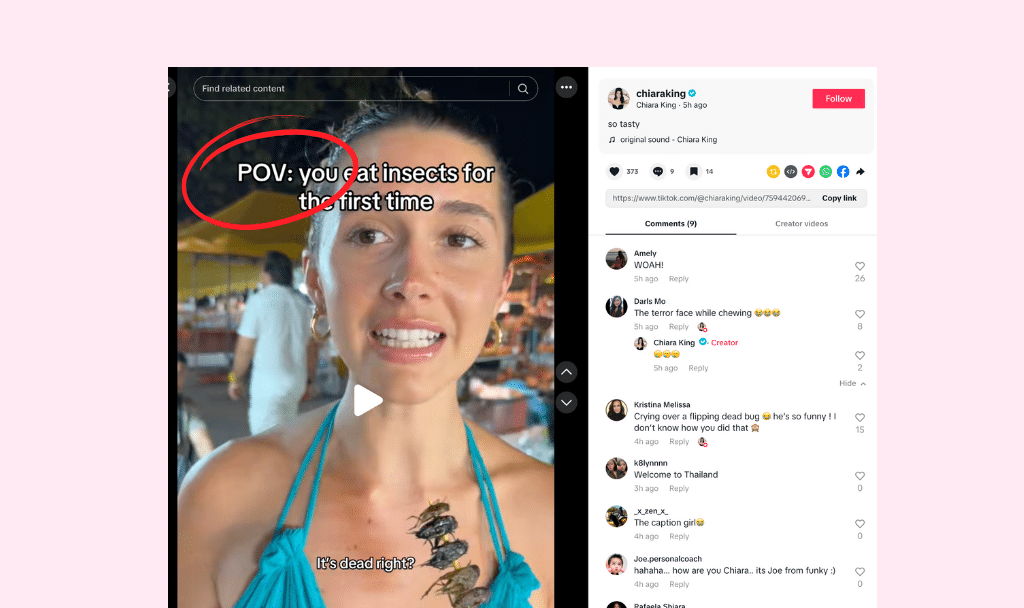
POV
Définition 🟰Point de vue
Une vidéo filmée d'un point de vue spécifique.
@misscarolineflett Que signifie POV ? C'est l'une des grandes questions que les gens ont peur de poser lorsqu'ils commencent à créer du contenu sur TikTok. Il s'agit d'un point de vue. Les POV sont très populaires pour les tendances TikTok et c'est aussi un excellent moyen d'entrer en contact avec votre public idéal et de gagner des adeptes plus rapidement. #Socialmediatips #tiktoktips #contentides #contentcreatortips #tiktokgrowthtips #tiktoktutorial #tiktokgrowth #tiktokforbeginners #howtotiktok #POV 1TP5Point de vue ♬ son original - Caroline Flett | TikTok Growth
Exemple :
“POV : vous ouvrez TikTok à 2 heures du matin”
BTS
Définition 🟰Behind The Scenes
Montre ce qui se passe hors caméra.
Exemple :
“BTS du tournage d'aujourd'hui”.”
FYP
Définition 🟰For You Page
Le flux de découverte principal de TikTok
Exemple :
“J'espère que cela va toucher le FYP”
OOTD
Définition 🟰Outfit Of The Day
Courant dans le domaine de la mode.
GRWM
Définition 🟰Get Ready With Me
Format vidéo populaire montrant la préparation.
DC
Définition 🟰Dance Credit
Utilisé pour créditer la chorégraphie.
OP
Définition 🟰Original Poster
La personne qui a créé le message.
AMA
Définition 🟰Ask Me Anything
Invite les personnes qui le suivent à poser des questions.
NSFW
Définition 🟰Not Safe For Work
Avertit de la présence de contenus sensibles.
TBT
Définition 🟰Throwback Thursday
Utilisé pour partager d'anciens contenus.
OOO
Définition 🟰Out Of Office
Parfois utilisé de manière humoristique dans les histoires.
Vlog
Définition 🟰 Blog vidéo
Contenu personnel de type vidéo.
Exemple :
“Le nouveau blog de voyage est en ligne.”
POTD
Définition 🟰 Photo du jour
Met en évidence une photo.
Exemple :
“L'heure d'or frappe différemment. POTD”.”
QOTD
Définition 🟰Quote du jour
Utilisé pour les messages d'inspiration quotidiens.
Exemple :
“QOTD : Le progrès plutôt que la perfection”.”
OOTW
Définition 🟰Outfit Of The Week
Thème du contenu de la mode.
Exemple :
“Des vibrations neutres cette semaine. OOTW”.”
MM
Définition 🟰 Lundi de la musique
Articles hebdomadaires consacrés à la musique.
Exemple :
“Throwback playlist. MM 🎧”
FF
Définition 🟰 Follow Friday
Recommande des comptes à suivre.
Exemple :
“ Les créateurs que j'aime. FF 👇”
SYAC
Définition 🟰Saved You A Click
Résume rapidement le contenu.
Exemple :
“SYAC : lancement de l'émission, à guichets fermés”.”
MOE
Définition 🟰End Of Message
Clarifie, ne donne pas plus d'informations.
Exemple :
“Réunion reportée à vendredi. EOM”.”
PFP
Définition 🟰Profile Picture
L'image principale représentant un compte sur les plateformes sociales.
Exemple :
“Nouveau PFP pour correspondre à la nouvelle image de marque.”
DP
Définition 🟰Display Picture
Un autre terme pour la photo de profil, souvent utilisé sur les anciennes plateformes.
Exemple :
“J'ai mis à jour mon DP aujourd'hui.”
LFL
Définition 🟰Like For Like
Une tactique d'engagement où les utilisateurs échangent des likes.
Exemple :
“LFL sur les messages récents”.”
C4C
Définition 🟰Comment For Comment
Utilisé pour encourager les commentaires mutuels.
Exemple :
“Nouvelle bobine, C4C !”
VLOG
Définition 🟰Video Blog
Contenu vidéo documentant la vie quotidienne ou des événements.
Exemple :
“Le vlog de voyage est en ligne maintenant”.”
SMP
Définition 🟰Social Media Post
Terme général désignant le contenu publié sur les plateformes sociales.
Exemple :
“Ce SMP a dépassé les attentes.”
LBR
Définition 🟰Like Back Request
Demande à quelqu'un de lui retourner un "like".
Exemple :
“Vous venez de soutenir votre poste, LBR ?”
@me
Définition 🟰Tag Me
Demander à être mentionné ou à recevoir une réponse.
Exemple :
“@moi quand vous le partagez”.”
Les acronymes de contenu permettent de structurer les flux et les tendances.
Passons maintenant au langage spécifique à la plate-forme, en commençant par X 👇
Explication des acronymes de X (Twitter)
X est rapide, public et contextuel. La limitation du nombre de caractères a créé une culture de l'abréviation et de la sténographie.
Ces acronymes de médias sociaux sont courants dans les lignes de temps et les réponses de X.
RT
Définition 🟰Retweet
Partager le message de quelqu'un d'autre.
MT
Définition 🟰Modified Tweet
Le MT est utilisé lorsque quelqu'un reprend un tweet mais le modifie légèrement au lieu de le partager exactement tel qu'il a été écrit.
Courant sur X (Twitter) parmi les journalistes, les spécialistes du marketing et les créateurs.
Exemple :
“MT : l'argot des médias sociaux évolue chaque année.”
QT
Définition 🟰Quote Tweet
Partage avec commentaires supplémentaires.
ICYMI
Définition 🟰In Case You Missed It
Utilisé pour faire resurgir des contenus plus anciens.
TL
Définition 🟰Timeline
Votre alimentation.
FF
Définition 🟰Follow Friday
Utilisé pour recommander des comptes.
DMCA
Définition 🟰Digital Millennium Copyright Act (loi sur le droit d'auteur du millénaire numérique).
Utilisé lorsque le contenu est supprimé.
NS
Définition 🟰No Source.
Utilisé pour rappeler les citations manquantes.
RTFM
Définition 🟰 Lire le manuel
Suggère que la réponse existe déjà.
Exemple :
“C'est dans la documentation. RTFM”.”
ICYDK
Définition 🟰 In Case You Didn't Know
Partage des informations utiles.
Exemple :
“ICYDK, cet outil est gratuit.”
Subtweet
Définition 🟰Indirect post about someone
Commun sur la culture X.
Exemple :
“Pas de noms, mais certaines marques ont besoin de meilleurs slips”.”
Rapporté
Définition 🟰Replies exceed likes
Indique un engagement négatif.
Exemple :
“Cette prise s'est vite transformée en ratio”.”
OP
Définition 🟰Original Poster
Désigne la personne qui a lancé un fil de discussion.
Exemple :
“L'OP a clarifié ce point dans les réponses.”
DMCA
Définition 🟰Digital Millennium Copyright Act (loi sur le droit d'auteur du millénaire numérique)
Il s'agit de la suppression d'un contenu en raison d'une revendication de droits d'auteur.
Exemple :
“Le clip a été retiré après une notification DMCA.”
OOT
Définition 🟰Out Of Touch
Critique les opinions qui semblent déconnectées de la réalité.
Exemple :
“Cette prise de vue est complètement oubliée”.”
QRT
Définition 🟰Quote Retweet
Partager un article en y ajoutant un commentaire.
Exemple :
“QRT avec vos pensées”.”
TL
Définition 🟰Timeline
Flux d'un utilisateur sur X.
Exemple :
“C'est tout ce qu'il y a dans ma TL aujourd'hui”.”
Comme nous l'avons mentionné, de nombreux Les acronymes sont apparus sur les premiers Twitter en raison de la limitation du nombre de caractères. Aujourd'hui, les acronymes X sont synonymes de rapidité et de commentaires.
Ensuite, nous passons à Instagram, où le ton et l'intention changent à nouveau 👇.
Les acronymes d'Instagram expliqués
Instagram donne l'impression d'être décontracté, mais il est stratégique.
Les gens défilent rapidement, réagissent vite et s'attendent à un langage visuel d'abord.
Acronymes Instagram ou L'argot d'Instagram concernent souvent engagement, visibilité et relations.
IG
Définition 🟰Instagram.
Utilisé comme abréviation pour la plate-forme.
Exemple :
“Envoyez-moi un DM sur IG”.”
CF
Définition 🟰Close Friends.
Une liste d'histoires privées.
Exemple :
“Posting this on CF only.”
L4L
Définition 🟰Like For Like.
Une tactique d'échange d'engagement.
Exemple :
“L4L quelqu'un ?”
💡En savoir plus sur Ici, c'est du pareil au même.
F4F
Définition 🟰Follow For Follow.
Une autre tactique d'engagement.
Exemple :
“F4F nouveaux comptes”.”
💡En savoir plus sur suivre pour suivre ici.
S4S
Définition 🟰Shoutout For Shoutout.
Deux comptes se font la promotion l'un de l'autre.
Exemple :
“S4S ce week-end ?”
OOTN
Définition 🟰Outfit Of The Night.
Utilisé dans les articles de mode.
OOTW
Définition 🟰Outfit Of The Week.
Contenu hebdomadaire sur la mode.
VSCO
Définition 🟰Réfère au style d'édition ou à l'application.
Souvent utilisé pour décrire l'esthétique.
Lien dans la bio
Il ne s'agit pas d'un acronyme, mais d'un langage Instagram essentiel.
Utilisé pour diriger le trafic.
Enrouleur
Ce n'est pas un acronyme, mais il est souvent associé à d'autres.
Le format vidéo court d'Instagram.
Lancement en douceur
Faire allusion à quelque chose sans le révéler complètement.
Souvent des relations ou des produits.
Lancement difficile
Annonce officielle.
GRWM
Définition 🟰Get Ready With Me.
Très populaire dans les Reels. En savoir plus sur la tendance ici.
Ces bobines sont vues des millions de fois sur Instagram et TikTok.
BTS
Définition 🟰Behind The Scenes.
Souvent associé à des bobines ou à des histoires.
Par exemple, Prime Video a récemment publié un Documentaire sur le marketing d'influence de BTS.
UGC
Définition 🟰User Generated Content (contenu généré par les utilisateurs).
Souvent utilisé par les marques et les créateurs.
Si vous êtes un spécialiste du marketing, apprenez les 5 meilleures tactiques et astuces pour utiliser l'UGC dans les publicités.
FBF
Définition 🟰 Flashback Friday
Partager des contenus plus anciens le vendredi.
Exemple :
“Installation du premier bureau. FBF”.”
PPL
Définition 🟰 Personnes
Forme abrégée et décontractée.
Exemple :
“Merci pour ces PPL.”
FBO
Définition 🟰Facebook Official
Relation annoncée publiquement.
Exemple :
“Ils sont finalement devenus FBO”.”
IGTV
Définition 🟰 Instagram TV
Format vidéo Instagram long format.
Exemple :
“Les anciennes séries d'IGTV sont toujours d'actualité.”
💡Learn more about IGTV ici.
SFS
Définition 🟰Shoutout For Shoutout
Promotion mutuelle entre les comptes.
Exemple :
“SFS avec mes créateurs préférés”.”
Les acronymes Instagram mélangent langage décontracté et tactiques de croissance.
Passons maintenant à TikTok, où l'argot évolue à la vitesse de l'éclair 👇
Les acronymes et l'argot de TikTok expliqués
TikTok ne se contente pas de créer des tendances.
Il crée le langage.
De nombreux acronymes TikTok sont d'abord des blagues, puis deviennent courants.
Le contexte est plus important ici que sur n'importe quelle autre plateforme.
FYP
Définition 🟰For You Page.
Le principal flux de découverte de TikTok.
Exemple :
“S'il vous plaît, frappez le FYP”.”
💡Learn more about FYP ici.
POV
Définition 🟰Point de vue.
Vidéo filmée d'un point de vue spécifique.
Exemple :
“POV : vous avez encore oublié votre mot de passe”.”
GRWM
Définition 🟰Get Ready With Me
Format TikTok très populaire.
IYKYK
Définition 🟰If You Know, You Know.
Utilisé pour les blagues internes.
Il y a +3M de messages sur TikTok sur IYKYK.
OOMF
Définition 🟰One Of My Followers.
Souvent utilisé de manière sarcastique.
Exemple :
“OOMF est à nouveau fou”.”
RN
Définition 🟰Right Now.
Très utilisé dans les légendes.
Rizz
Définition 🟰Charme ou charisme.
Argot populaire de la génération Z.
Exemple :
“Il a des rizz de personnage principal”.”
Delulu
Définition 🟰Playfully delusional.
Utilisé avec humour.
Exemple :
“Je suis délirant, mais je crois que cela va devenir viral”.”
💡Learn more about Delulu ici.
Gyatt
Une exclamation.
Souvent utilisé dans les commentaires.
Moyen
Signifie moyen ou peu impressionnant.
Exemple :
“Cette prise est moyenne”.”
Parier
Signifie "d'accord".
Exemple :
“Poste à 8 heures ?”
“Pari”.”
Tentative de suicide
Signifie que quelque chose est grand ou impressionnant.
Ate
Il a fait quelque chose de très bien.
Exemple :
“Elle a mangé avec ce regard”.”
Pas de capuchon
Cela signifie qu'il ne faut pas mentir.
Découvrez les explications de Charlie D'amelio sur le “No Cap” et les principales questions sur la génération Z.
@jayshetty Comment j'ai fait ? 😂😂 @charli d'amelio #charlidamelio #damelioshow ♬ son original - Jay Shetty
Capuchon
Signifie un mensonge.
Personnage principal
Se réfère à la confiance ou à l'attention.
PNJ
Personnage non joueur.
Utilisé de manière humoristique pour les comportements répétitifs.
Cœur de métier
Utilisé pour décrire l'esthétique ou l'identité.
Exemple :
“C'est le cottagecore”.”
GRWM
Répété intentionnellement dans les sections précédentes parce qu'il domine la culture TikTok.
Oof
Définition 🟰Reaction aux moments délicats
Exprime une gêne secondaire.
Exemple :
“Ce montage a manqué le rythme. Oof.”
Ick
Définition 🟰Sudden turn-off
Souvent utilisé dans les contenus de rencontres.
Exemple :
“Cette réponse m'a donné la nausée.”
Salé
Définition 🟰Amère ou ennuyée
Décrit les réactions émotionnelles.
Exemple :
“Pourquoi ce sel à ce sujet ?”
Hype
Définition 🟰 Énergie d'excitation
Utilisé à l'occasion de lancements ou de tendances.
Exemple :
“Le battage médiatique est réel.”
Humeur
Définition 🟰Relatable feeling
Utilisé pour exprimer une émotion partagée.
Exemple :
“Cette vidéo est une humeur.”
Pog
Définition Awesome ou impressionnant
L'argot des jeux vidéo est devenu courant.
Exemple :
“Cette transition était pog”.”
Aight
Définition 🟰 Alright ou okay
Accord occasionnel.
Exemple :
“Très bien, affichons-le”.”
Extra
Définition 🟰Over-the-top behavior
Utilisé avec humour.
Exemple :
“Cette réaction était supplémentaire.”
IB
Définition 🟰Inspired By
Remercie le créateur original d'une tendance ou d'une idée.
Exemple :
“IB @creatorname pour le concept.”
PNJ
Définition 🟰Personnage non jouable
Il s'agit d'un comportement répétitif ou scénarisé en ligne.
Exemple :
“Ces commentaires ressemblent à des PNJ.”
W
Définition 🟰Win
Utilisé pour saluer un succès ou une bonne prise.
Exemple :
“Cette stratégie est un ”W".”
L
Définition 🟰Loss
Indique un échec ou une mauvaise décision.
Exemple :
“Poster cette capture d'écran était un L”.”
RN
Définition 🟰Right Now
Met l'accent sur l'immédiateté ou la pertinence.
Exemple :
“Cette tendance se retrouve partout dans le RN.”
FR FR
Définition 🟰For Real, For Real
Met l'accent sur la sincérité.
Exemple :
“FR FR, ça marche”.”
DTF
Définition 🟰Down To (Do Something)
Indique la volonté ou l'intérêt.
Exemple :
“DTF pour tester cette idée”.”
LMS
Définition 🟰Like My Status
Demande d'engagement sur un article.
Exemple :
“Nouvelle mise à jour, LMS.”
La langue TikTok se répand plus rapidement que n'importe quelle autre plateforme en raison de la vitesse des tendances.
Ce qui fonctionne aujourd'hui peut sembler dépassé l'année prochaine.
Passons maintenant aux espaces professionnels 👇
Acronymes de LinkedIn et des médias sociaux professionnels
LinkedIn est plus formel, mais les acronymes des médias sociaux sont encore omniprésents.
Elles sont souvent axées sur l'entreprise et les résultats.
B2B
Définition 🟰Business To Business.
Des entreprises qui vendent à des entreprises.
B2C
Définition 🟰Business To Consumer.
Les entreprises qui vendent aux particuliers.
ICP
Définition 🟰Indicateur clé de performance.
Un indicateur utilisé pour mesurer le succès.
ROI
Définition 🟰Retour sur investissement.
L'argent gagné par rapport à l'argent dépensé.
OKR
Définition 🟰Objectifs et résultats clés.
Cadre de définition des objectifs.
POUR INFO
Définition 🟰For Your Information.
Ton neutre.
LE PLUS TÔT POSSIBLE
Définition Dès que possible.
Indique l'urgence.
EOD
Définition 🟰End Of Day.
Date limite de référence.
TBD
Définition 🟰To Be Determined.
La décision n'est pas définitive.
TL;DR
Utilisé pour résumer les longs messages.
CTA
Définition 🟰Call To Action.
Instruction d'agir.
PIC
Définition 🟰Ideal Customer Profile.
Terme de marketing.
SaaS
Définition 🟰Software As A Service (logiciel en tant que service).
ARR
Définition 🟰Revenus annuels récurrents.
MRR
Définition 🟰Revenus mensuels récurrents.
GTM
Définition 🟰Go To Market.
FY
Définition 🟰Année fiscale.
TBA
Définition 🟰 À annoncer
Les détails viendront plus tard.
Exemple :
“Date de lancement. TBA”.”
A CONFIRMER
Définition 🟰To Be Confirmed
En attente de la décision finale.
Exemple :
“Liste des orateurs. A CONFIRMER”.”
EOW
Définition 🟰 Fin de semaine
Date limite de référence.
Exemple :
“Je partagerai les mises à jour EOW”.”
IC
Définition 🟰I See
Accusé de réception.
Exemple :
“IC. C'est logique.”
IIRC
Définition 🟰If I Remember Correctly
Signale poliment son incertitude.
Exemple :
“IIRC, nous avons testé cela l'année dernière”.”
EOD
Définition 🟰End Of Day
Utilisé pour fixer des échéances avant la fermeture de l'entreprise.
Exemple :
“J'enverrai le rapport à l'EOD.”
OOO
Définition 🟰Out Of Office
Indique une indisponibilité temporaire.
Exemple :
“Je suis OOO jusqu'à lundi.”
LA FMH
Définition 🟰Travail à domicile
Se réfère au travail à distance.
Exemple :
“Travail à temps partiel aujourd'hui en raison des conditions météorologiques”.”
PTO
Définition 🟰Temps libre rémunéré
Congé autorisé.
Exemple :
“En congé de maladie la semaine prochaine”.”
NDA
Définition 🟰Accord de non-divulgation
Accord juridique empêchant l'échange d'informations.
Exemple :
“Je ne peux pas donner de détails en raison d'un accord de confidentialité.”
ALS
Définition 🟰Service Level Agreement (accord de niveau de service)
Définit les attentes des parties en matière de services.
Exemple :
“Le temps de réponse est défini dans l'accord de niveau de service.”
NPS
Définition 🟰Net Promoter Score (score du promoteur net)
Mesure de la satisfaction et de la fidélité des clients.
Exemple :
“Notre taux de fréquentation a augmenté après le lancement.”
Les acronymes des médias sociaux professionnels doivent être utilisés avec prudence. Leur utilisation excessive peut donner une impression d'impersonnalité.
Ensuite, comparons les acronymes des médias sociaux par plateforme 👇
Comparaison des acronymes des médias sociaux par plateforme
Même acronyme.
Signification différente.
C'est là que les gens s'embrouillent.
POV
Sur TikTok : format vidéo.
Sur Instagram : storytelling angle.
Sur LinkedIn : opinion post.
DM
Sur Instagram : message privé.
Sur X : réponse privée.
Sur LinkedIn : sensibilisation des professionnels.
BTS
Sur TikTok : des coulisses décontractées.
Sur Instagram : les coulisses polies.
Sur LinkedIn : culture d'entreprise.
CTA
Sur TikTok : “à suivre pour la deuxième partie”.
Sur Instagram : “lien dans la bio”.
Sur LinkedIn : “book a call”.
Comprendre le contexte de la plateforme permet d'éviter les erreurs.
Parlons maintenant de ce que les gens se trompent souvent 👇
Erreurs courantes dans les acronymes des médias sociaux
Tout le monde commet des erreurs avec les acronymes des médias sociaux.
La plupart d'entre eux se produisent sans mauvaises intentions.
Le problème n'est pas d'utiliser les acronymes des médias sociaux.
Le problème est de les utiliser au mauvais endroit, avec les mauvaises personnes ou sur le mauvais ton.
Cette confusion est fréquemment mis en évidence dans les ventilations sectorielles de l'utilisation abusive d'acronymes.
Examinons les erreurs les plus courantes que les gens commettent en ligne 👇
Utiliser l'argot TikTok sur les plateformes professionnelles
L'argot TikTok est ludique et rapide.
LinkedIn ne l'est pas.
L'utilisation d'acronymes de médias sociaux tels que “slay”, “rizz” ou “delulu” dans un commentaire professionnel crée souvent une confusion au lieu d'une connexion. Ce qui semble drôle sur TikTok peut sembler peu professionnel dans un contexte professionnel.
Exemple concret :
Une marque commente “cette campagne est géniale” sur LinkedIn.
Les gens le remarquent. Et pas dans le bon sens du terme.
Adaptez toujours les acronymes des médias sociaux à la plateforme sur laquelle vous vous trouvez...
En supposant que tout le monde comprenne l'acronyme
Tout le monde ne vit pas en ligne au même rythme.
Ce qui vous semble évident peut être complètement obscur pour quelqu'un d'autre.
Les acronymes des médias sociaux tels que PV, OOMF ou ICYMI ne sont pas universels. Partir du principe qu'il s'agit d'une connaissance commune peut aliéner une partie de votre public.
Règle générale :
Si la clarté est importante, il faut l'expliquer une fois.
L'utilisation excessive d'acronymes dans la communication de marque
Les acronymes des médias sociaux permettent de gagner de la place.
Mais ils ne permettent pas toujours d'attirer l'attention.
Lorsque les marques surchargent les légendes ou les réponses avec des acronymes de médias sociaux, le message devient plus difficile à lire. Il peut sembler paresseux ou impersonnel.
❌Mauvais exemple :
“ICYMI KPI ROI CPM 📈”
Meilleure approche :
Utilisez les acronymes des médias sociaux avec parcimonie et expliquez-les si nécessaire.
Mélanger le langage personnel et celui de la marque
Ce qui fonctionne dans un DM ne fonctionne pas toujours dans une légende.
Ce qui fonctionne dans une légende ne fonctionne pas toujours dans un commentaire de presse.
L'utilisation d'acronymes de médias sociaux comme IDC ou WTF dans une réponse de marque peut rapidement envenimer la situation. Le ton compte autant que le sens.
Utiliser des acronymes pour éviter de dire clairement quelque chose
Les acronymes des médias sociaux cachent parfois des incertitudes.
Ou éviter les responsabilités.
Les gens utilisent TL;DR au lieu de résumer.
Ils utilisent IDC au lieu d'expliquer.
La clarté crée la confiance. Les acronymes des médias sociaux doivent la soutenir et non la remplacer.
Maintenant que nous savons ce qu'il ne faut pas faire, voyons comment utiliser correctement les acronymes des médias sociaux 👇.
Comment utiliser correctement les acronymes des médias sociaux ?
Bien utiliser les acronymes des médias sociaux n'a rien à voir avec le fait de paraître à la mode.
Il s'agit de paraître naturel.
Voici des lignes directrices simples qui s'appliquent à toutes les plateformes.
Correspondre à la plate-forme
Chaque plateforme a sa propre culture.
💡TikTok privilégie l'argot et l'humour
💡Instagram favorise un langage décontracté mais visuel
💡X favorise la vitesse et le commentaire
💡LinkedIn favorise la clarté et le professionnalisme
Avant d'utiliser un acronyme, posez-vous la question suivante : -> où êtes-vous en train de poster ?
S'adapter au public
À qui parlez-vous ?
Les acronymes qui paraissent normaux à la génération Z peuvent dérouter les publics plus âgés. Les acronymes marketing peuvent perdre les créateurs. L'argot des créateurs peut dérouter les clients.
En cas de doute, préférez la clarté à la rapidité.
Expliquer une fois, puis réutiliser
Pour les marques et les créateurs, l'approche la plus sûre est simple.
👉Première mention : épeler
👉Mentions suivantes : utiliser l'acronyme
Le contenu reste ainsi accessible sans être ralenti.
Éviter de forcer l'argot
L'argot forcé est facile à repérer.
Et il est rare que les résultats soient satisfaisants.
L'utilisation d'acronymes dans les médias sociaux uniquement parce qu'ils sont à la mode peut donner une impression d'inauthenticité au contenu. Les gens savent reconnaître un langage qui n'est pas naturel.
Si vous ne le dites pas à voix haute, ne le publiez pas ❌
Redoubler de prudence en cas de conflit
Les acronymes des médias sociaux peuvent rapidement faire monter la tension.
Les réponses courtes telles que IDC, SMH ou TL;DR peuvent sembler efficaces, mais elles sont souvent dédaigneuses. Lors de conversations délicates, il est préférable d'utiliser des phrases complètes.
Un langage calme est plus efficace que des raccourcis astucieux.
Les meilleures pratiques étant couvertes, répondons aux questions les plus courantes des internautes 👇.
FAQ sur les acronymes des médias sociaux
Que signifie le PV dans les médias sociaux ?
PV signifie généralement message privé ou vue privée. Il est couramment utilisé sur Instagram et dans les conversations européennes. Lorsque quelqu'un vous demande de répondre en PV, il vous demande de poursuivre la conversation en privé plutôt que dans les commentaires publics.
Que signifie BTS en argot ?
BTS signifie "derrière les coulisses". Il s'agit d'un contenu qui montre ce qui se passe hors caméra. Sur les médias sociaux, le contenu BTS est populaire parce qu'il semble plus authentique et personnel que les posts polis.
En outre, plusieurs plateformes ont publié leurs propres descriptions des produits les plus couramment utilisés. abréviations des médias sociaux.
Que signifie MT sur X ?
MT signifie modified tweet (tweet modifié). Il est utilisé lorsque quelqu'un retweete un message mais modifie une partie du texte original. MT indique que le contenu a été légèrement modifié.
Que signifie POV dans les médias sociaux ?
POV signifie point de vue. Sur TikTok et Reels, les vidéos POV sont filmées d'un point de vue spécifique. Elles placent souvent le spectateur directement dans une situation ou un scénario.
Que signifie FYP sur TikTok ?
FYP signifie For You Page. Il s'agit du principal flux de découverte de TikTok, où les vidéos sont recommandées en fonction du comportement des utilisateurs. Les créateurs mentionnent souvent FYP dans l'espoir que leur vidéo atteigne un public plus large.
Les acronymes des médias sociaux sont-ils différents selon les plateformes ?
Oui. C'est très différent.
Un même acronyme peut sembler naturel sur une plateforme et déplacé sur une autre. Il est tout aussi important de comprendre la culture de la plateforme que de comprendre l'acronyme lui-même.
Les marques doivent-elles utiliser des acronymes pour les médias sociaux ?
Les marques peuvent utiliser des acronymes de médias sociaux, mais avec prudence.
Les acronymes doivent rendre les messages plus clairs ou plus courts, et non les rendre plus tendance. Les marques doivent éviter l'argot qu'elles ne comprennent pas parfaitement et toujours privilégier la clarté.
Pourquoi les acronymes des médias sociaux changent-ils si vite ?
Les médias sociaux évoluent à la vitesse de la culture. Les nouvelles plateformes, tendances et communautés créent un nouveau langage. Les acronymes évoluent parce que les gens veulent des moyens de communication plus rapides et plus expressifs.
Certains acronymes de médias sociaux durent des années. D'autres disparaissent en quelques mois.
C'est pourquoi il est important de rester informé.
Il s'agit à présent de faire le tour de la question.
Que signifie PM sur Snapchat ?
PM sur Snapchat signifie envoyer un message de chat privé, et non une réponse à un article.
Que signifie @ dans les médias sociaux ?
Le symbole “@” est utilisé pour mentionner ou étiqueter un autre utilisateur.
Il les avertit et établit un lien direct avec leur profil.
Exemple :
“Merci @nomdutilisateur pour son aide.”
Que signifie HAGO ?
HAGO signifie Passez un bon moment. C'est une façon amicale de mettre fin à une conversation.
Que signifie OMS dans le texte ?
OMS signifie généralement Oh My Sh*t, qui exprime la surprise ou l'excitation.
Que signifie SSA dans le texte ?
Les significations du SSA varient selon le contexte, mais impliquent généralement une reconnaissance ou des excuses.
Qu'est-ce que le TT dans les médias sociaux ?
TT fait souvent référence à TikTok ou Sujet d'actualité, selon le contexte.
Que signifie BTS en argot ?
BTS signifie En coulisses. Il est généralement utilisé pour le contenu des coulisses ou du processus.
Pourquoi le langage des médias sociaux ne cesse de changer
L'argot des médias sociaux évolue parce que les plateformes évoluent.
Les nouveaux formats créent de nouveaux comportements :
▶️ Les vidéos courtes créent un langage plus court
💬 Les DM créent une sténographie privée
📈 Les tendances créent des phrases virales
C'est pourquoi les acronymes et l'argot des médias sociaux se développent chaque année.
Il ne s'agit pas de tout mémoriser.
Il s'agit de comprendre les modèles.
Pourquoi les acronymes des médias sociaux sont importants (Deep Dive : Brand, Culture, Psychology)
Les acronymes des médias sociaux ne sont pas seulement des raccourcis pour économiser des caractères.
Ils sont une forme de langage corporel numérique.
Tout comme le ton, les émojis ou la ponctuation, les acronymes des médias sociaux influencent la manière dont les messages sont perçus sur le plan émotionnel. Ils indiquent si un message est amical, sérieux, dédaigneux, ludique ou urgent. Et comme les médias sociaux suppriment les expressions faciales et les signaux vocaux, les acronymes des médias sociaux font souvent ce travail à leur place.
C'est pourquoi ils sont plus importants que ne le pensent la plupart des marques.
Les acronymes comme marqueurs culturels
Chaque communauté en ligne développe son propre langage.
Les joueurs, les créateurs, les spécialistes du marketing, les utilisateurs de la génération Z et les professionnels utilisent tous les acronymes des médias sociaux de manière différente.
L'argot de la génération Z se propage sur des plateformes comme TikTok et Instagram à une vitesse record.
Lorsque vous utilisez les “bons” acronymes de médias sociaux, vous indiquez que vous appartenez à ce groupe. Lorsque vous utilisez les mauvais acronymes, vous vous démarquez instantanément.
Voici pourquoi :
👉L'argot TikTok est naturel sur TikTok
👉Twitter shorthand works on X
👉Les acronymes des entreprises semblent normaux sur LinkedIn
L'utilisation d'un mauvais langage au mauvais endroit crée des frictions.
La psychologie derrière l'adoption d'un acronyme
D'un point de vue psychologique, les acronymes des médias sociaux se répandent parce qu'ils réduisent l'effort.
Ils :
✔️Save temps
✔️Reduce dactylographie
✔️Increase vitesse d'interaction
✔️Create compréhension commune
Mais ils créent aussi In-groupes.
Lorsque quelqu'un comprend immédiatement un acronyme, il se sent inclus. Dans le cas contraire, elle se sent exclue ou confuse. Cette réaction émotionnelle se produit inconsciemment, mais elle affecte fortement l'engagement.
Les marques qui utilisent systématiquement un langage compréhensible par leur public se sentent plus proches d'eux et plus dignes de confiance.
Les acronymes comme raccourcis de tonalité de marque
Les acronymes des médias sociaux agissent comme des interrupteurs de tonalité.
Comparer :
-> “Veuillez consulter la mise à jour ci-dessous”.”
-> “ICYMI, voici la mise à jour”.”
Les deux disent la même chose. Mais l'un semble formel. L'autre donne l'impression d'être une conversation.
C'est pourquoi les acronymes des médias sociaux jouent un rôle dans :
👉 Personnalité de la marque
👉Community building
👉La loyauté à long terme
Ils sont modestes, mais leur impact s'amplifie au fil du temps.
Ensuite, voyons comment les acronymes des médias sociaux passent de la culture à une véritable stratégie marketing 👇.
Utilisation stratégique des acronymes dans le marketing et l'analyse
Dans les équipes de marketing, les acronymes des médias sociaux ne sont pas facultatifs.
Ils sont le système d'exploitation.
De la planification des campagnes au reporting, les acronymes des médias sociaux déterminent la manière dont les équipes communiquent, définissent les priorités et exécutent.
Les spécialistes du marketing suivent l'impact de la langue sur l'engagement et la conversion sur les différentes plates-formes grâce à les outils de marketing des médias sociaux.
Les acronymes comme outils d'efficacité interne
Le marketing évolue rapidement. Les acronymes des médias sociaux aident les équipes à suivre le mouvement.
Au lieu de dire :
“Nous devons améliorer le pourcentage de personnes qui cliquent sur l'annonce”
Les équipes disent :
“Nous devons améliorer le CTR.”
Ce raccourci partagé permet :
👉 Des réunions plus rapides
👉 Des slips plus clairs
👉 Moins d'ambiguïté
Mais cela ne fonctionne que si tout le monde comprend les mêmes définitions.
Acronymes dans le suivi des performances
La plupart des tableaux de bord des médias sociaux sont construits autour d'acronymes de médias sociaux.
Si vous ne les comprenez pas, vous ne comprenez pas la performance.
Voici quelques exemples :
- ER pour Engagement Rate (taux d'engagement)
- CPM pour Coût Par Mille Impressions
- CPC pour Coût par clic
- ROAS pour Return On Ad Spend (retour sur investissement publicitaire)
Une mauvaise interprétation d'un indicateur peut conduire à de mauvaises décisions, à un gaspillage de budget ou à des conclusions erronées.
C'est pourquoi la maîtrise des acronymes marketing est aussi importante que la créativité.
For a detailed comparison of Reach and Impressions, see our explanation of the difference between these two metrics.
Acronymes dans le marketing des créateurs et des influenceurs
Le marketing des créateurs ajoute une autre couche de raccourci.
(Si vous cherchez des moyens d'identifier les meilleurs influenceurs/créateurs pour votre entreprise, cliquez ici. consultez notre guide complet)
Les exemples les plus courants sont les suivants :
- UGC pour User Generated Content (contenu généré par l'utilisateur)
- SOW pour Statement of Work (cahier des charges)
- La FTC pour le respect des obligations d'information
- GC pour la collaboration avec les personnes douées
- Liste blanche pour les autorisations publicitaires
L'utilisation d'un acronyme erroné ou une mauvaise compréhension de l'acronyme peut.. :
⬇️ Ralentir les négociations
👮 Créer un risque juridique
💔 Dégradation de la confiance avec les créateurs
L'alphabétisation des acronymes stratégiques protège à la fois les performances et les relations.
Voyons maintenant comment rester à la page face à l'évolution constante de la langue 👇
Comment identifier et adopter de nouveaux acronymes (processus + outils)
Le langage des médias sociaux évolue constamment.
Les nouveaux acronymes des médias sociaux émergent :
👉 Caractéristiques de la plate-forme
👉 Tendances virales
👉 Blagues communautaires
👉 Moments culturels
Le défi n'est pas de trouver de nouveaux acronymes.
C'est savoir quels sont ceux à adopter et quand.
Étape 1️⃣ : Observer des conversations réelles
Le moyen le plus rapide de repérer les nouveaux acronymes des médias sociaux est d'observer la façon dont les gens parlent entre eux.
Pas dans les légendes des marques.
Dans les commentaires, les réponses et les messages instantanés.
C'est là que la langue évolue en premier.
Les créateurs et les adeptes de la première heure expérimentent une nouvelle terminologie bien avant qu'elle ne devienne courante.
Étape 2️⃣ : Comprendre le contexte avant le sens
Un acronyme peut avoir des significations différentes en fonction de.. :
- Plate-forme
- Public
- Pays
- Sous-culture
Avant d'utiliser un nouvel acronyme, posez la question :
Qui l'utilise ?
Dans quelles situations ?
Avec quel ton ?
Cela permet d'éviter les abus maladroits ou offensants.
Étape 3️⃣ : Tester dans des environnements à faible risque
Les marques ne devraient jamais commencer à utiliser un nouvel argot :
- Annonces
- Réponses aux crises
- Articles épinglés
Au lieu de cela, faites un test :
👉 Réponses
👉 Histoires
👉 Commentaires de la communauté
Cela vous permet d'évaluer les réactions sans risque pour votre réputation.
Étape 4️⃣ : Créer des lignes directrices linguistiques internes
Les marques matures documentent les choix linguistiques.
Une simple ligne directrice peut définir :
- Acronymes approuvés
- Acronymes restreints
- Règles spécifiques à la plateforme
Cela permet de garantir la cohérence, même lorsque les équipes s'agrandissent.
Cette discipline devient essentielle lorsque les choses tournent mal 👇
Acronymes dans la gestion des crises et de la réputation
En période de crise, la langue est plus importante que jamais. Il n'est pas facile de trouver les mots justes...
Et les acronymes des médias sociaux sont souvent la première chose qui devrait disparaître.
En effet, un langage court peut amplifier les malentendus dans les moments sensibles.
Pourquoi les acronymes sont mal perçus en temps de crise
Les crises exigent :
👉 Empathie
👉 Clarté
👉 Sérieux
Les acronymes compriment le langage.
Cette compression peut sembler dédaigneuse, précipitée ou froide.
Même les acronymes neutres comme “FYI” ou “ASAP” peuvent être perçus comme insensibles lorsque les émotions sont fortes.
La permanence des captures d'écran
Les erreurs commises dans les médias sociaux ne disparaissent pas.
Même les messages supprimés peuvent l'être :
- Capture d'écran
- Partagé
- Sorti de son contexte
Un acronyme qui semblait inoffensif en interne peut devenir préjudiciable lorsqu'il est perçu par des personnes extérieures.
C'est pourquoi les marques doivent ralentir le langage dans les moments sensibles.
Meilleures pratiques en matière de communication de crise
En cas de crise :
💡 Écrire tout en toutes lettres
💡 Utiliser des phrases complètes
💡 Éviter l'argot et la sténographie
💡 Privilégier la clarté à la rapidité
Les acronymes peuvent revenir plus tard, une fois la confiance rétablie.
Acronymes dans les excuses
Les excuses publiques devraient éviter complètement les acronymes.
Excuses requises :
- Poids émotionnel
- Précision
- Responsabilité
Les acronymes nuisent à ces trois éléments.
Même les plus connus peuvent donner l'impression que le message est écrit ou manque de sincérité.
Une règle simple à retenir
Si un acronyme semble inapproprié lorsqu'il est prononcé à haute voix lors d'une réunion sérieuse, il n'a pas sa place dans une réponse à une crise.
Vous pouvez également consulter ici le 13 mots et expressions à bannir de la communication de crise.
Cette règle permet à elle seule d'éviter la plupart des erreurs.
Dernier point stratégique à retenir
Les acronymes des médias sociaux ne sont pas seulement de l'argot internet.
Il s'agit de
🌟 Marqueurs culturels
🌟 Outils stratégiques
🌟 Signaux psychologiques
🌟 Risques de réputation
Utilisés à bon escient, ils permettent aux marques de se connecter plus rapidement et de se sentir plus humaines.
Utilisés sans précaution, ils créent une distance ou nuisent à la confiance.
La maîtrise des acronymes des médias sociaux n'est pas une question de mémorisation.
Ça concerne comprendre le contexte, le public et l'intention.
Et c'est cette compréhension qui distingue les marques fluides des marques oubliables.
Conclusion
Les acronymes des médias sociaux accélèrent la communication en ligne.
Mais surtout, les comprendre permet de rendre la communication en ligne plus efficace. meilleur.
Dans un monde numérique où l'attention est limitée et où les conversations se déroulent rapidement, les acronymes font désormais partie de la manière dont les gens expriment leur ton, leur émotion, leur urgence et leur intention. Ils permettent de comprimer le sens en signaux courts que les autres reconnaissent instantanément. Lorsque vous comprenez ces signaux, vous ne vous contentez pas de suivre. Vous participez en toute confiance.
Lorsque vous comprenez les acronymes des médias sociaux, vous êtes en mesure de.. :
☑️ Suivre des conversations sans confusion, même lorsqu'elles se déroulent rapidement
☑️ Éviter les réponses maladroites dues à une mauvaise compréhension du ton ou de l'intention
☑️ Communiquer plus naturellement dans les commentaires, les DM et les légendes
☑️ Adaptez votre langage à chaque plateforme, à chaque public et à chaque contexte
Cette capacité est importante, que vous soyez un utilisateur occasionnel, un créateur, un spécialiste du marketing ou une marque.
Les acronymes ne sont pas seulement argot internet. Ils font partie de la culture numérique moderne. Ils reflètent la façon dont les communautés se forment, dont les tendances se répandent et dont les gens établissent des relations en ligne. Savoir ce qu'ils signifient permet de comprendre non seulement les mots, mais aussi la culture qui les sous-tend.
Par ailleurs, les acronymes sont des outils et non des raccourcis vers la crédibilité.
L'utilisation d'acronymes n'améliore pas automatiquement la communication. Dans un contexte inapproprié, ils peuvent semer la confusion, aliéner ou même nuire à la confiance. L'utilisation excessive de l'argot peut donner l'impression que le message est forcé. L'utilisation du mauvais acronyme sur la mauvaise plateforme peut donner à une marque l'impression d'être déconnectée. Enfin, l'utilisation d'abréviations dans des moments délicats peut donner l'impression d'être négligent ou dédaigneux.
C'est pourquoi le contexte compte autant que la définition.
Les communicateurs en ligne les plus efficaces ne sont pas ceux qui utilisent le plus d'acronymes. Ce sont ceux qui savent quand de les utiliser et quand ne pas le faire. Ils comprennent leur public. Ils adaptent leur ton. Ils préfèrent la clarté à l'intelligence lorsque cela est important.
Le langage des médias sociaux va continuer à évoluer. De nouvelles plateformes apparaîtront. De nouvelles fonctionnalités façonneront la façon dont les gens parlent. De nouveaux acronymes et expressions argotiques apparaîtront, se répandront et disparaîtront parfois tout aussi rapidement.
Il n'est pas nécessaire de mémoriser tous les nouveaux termes pour rester pertinent.
Ce dont vous avez besoin, c'est d'un cadre pour comprendre comment fonctionne le langage des médias sociaux, comment il évolue et comment l'utiliser de manière intentionnelle. C'est ce que ce guide a pour but de vous apporter.
Grâce à cette ressource, vous pourrez décoder les conversations plus facilement, communiquer avec plus d'assurance et naviguer dans les espaces de médias sociaux sans deviner le sens des choses ni craindre de vous tromper.
Les acronymes des médias sociaux ne sont pas des barrières.
Quand on les comprend, ils deviennent des ponts.
Et maintenant, vous avez un guide pour évoluer avec eux.